
Plumbing issues can arise at any time. A leaky faucet or a clogged drain can disrupt your day. Knowing how to handle these problems is essential for homeowners.
Having the right plumbing tools is crucial. They empower you to tackle minor repairs and maintenance tasks. This saves time and money.
Understanding plumbing and fittings is the first step. It helps you identify the right tools for each job. This knowledge is invaluable.
A well-equipped plumbing toolkit is a homeowner’s best friend. It includes essential items like a pipe wrench and plunger. These tools are versatile and easy to use.
Plumbing pipes and fittings come in various types. Each has its specific use and benefits. Familiarity with these components is key.
Safety is paramount when handling plumbing tasks. Proper precautions prevent accidents and ensure successful repairs. Always prioritize safety.
Knowing when to call a professional is important. Some issues require expert intervention. This prevents further damage.
Finding a reliable local plumbing team near you is beneficial. It provides access to quality plumbing equipment and advice. Local providers offer personalised service.
Empower yourself with plumbing knowledge. It enhances your confidence and capability as a homeowner. Embrace the challenge and learn the essentials.
Understanding Plumbing and Fittings: The Basics
Understanding plumbing and fittings is more than just twisting pipes. It’s about knowing the system’s intricacies. A solid grasp helps in pinpointing problems quickly.
Plumbing systems consist of various components. These include pipes, fittings, and valves. Each plays a crucial role in water flow and management.
Pipes are the backbone of any plumbing system. They transport water throughout your home. Different materials are suitable for different functions.
Fittings connect one pipe to another. They can change the direction or diameter of the flow. Common fittings include elbows, tees, and reducers.
Valves regulate the flow of water in your system. They can completely stop the flow or adjust it as needed. Knowing how to operate them is essential.
Here’s a quick rundown of essential components:
- Pipes: PVC, copper, PEX
- Fittings: Elbows, tees, unions
- Valves: Ball, gate, globe
Plumbing fittings might seem insignificant, but they can make a significant difference. Choose the right materials and types for your specific needs. This can enhance efficiency and prevent leaks.
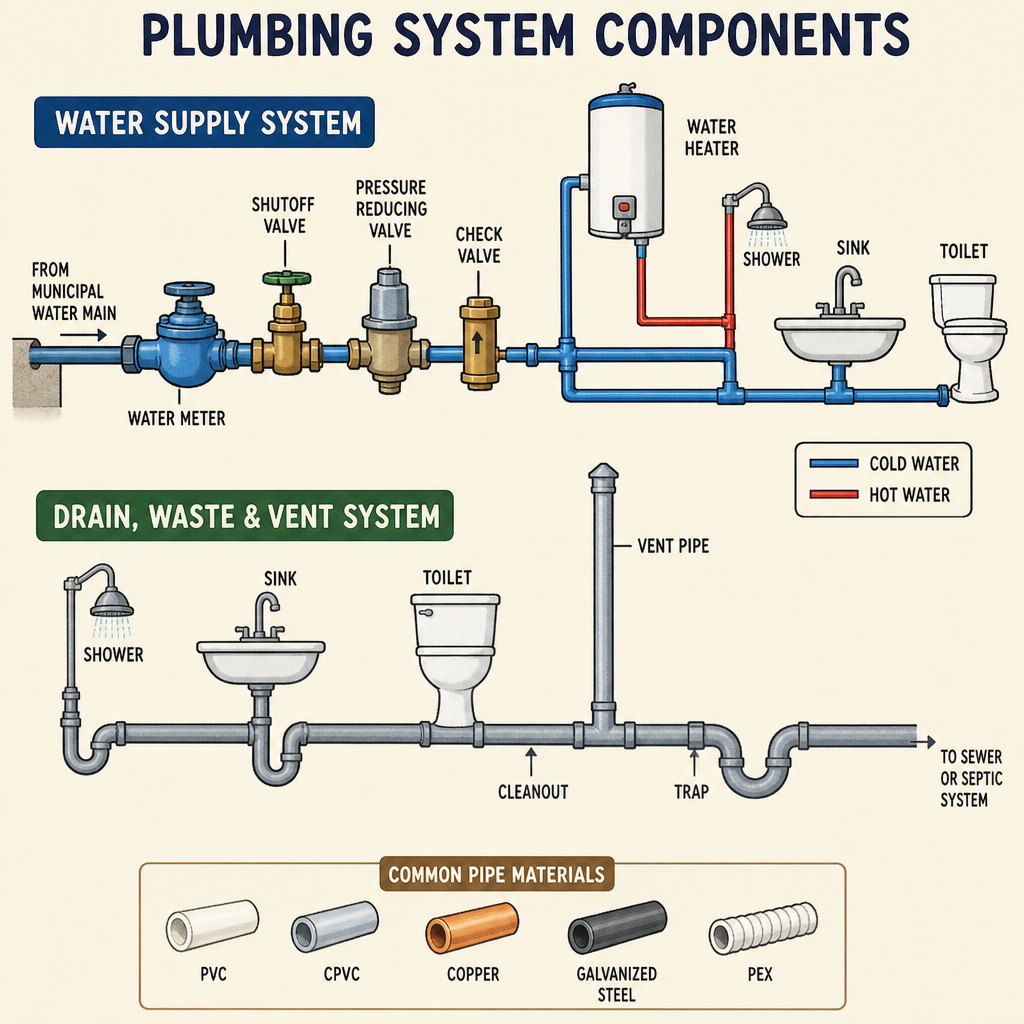
Understanding the basic structure of your home’s plumbing system is empowering. It guides you in diagnosing issues and choosing suitable tools. This knowledge simplifies maintenance tasks.
Regular inspections can prevent costly repairs. Look for signs of wear or potential leaks. Addressing these early is cost-effective and prevents water damage.
Equip yourself with these basics to make informed decisions. This understanding can transform plumbing from a daunting task into manageable home maintenance.
Why Every Homeowner Needs Plumbing Tools
Plumbing mishaps are inevitable in any home. Leaks, clogs, or minor repairs can arise unexpectedly. Having the right tools makes a significant difference.
Owning basic plumbing tools provides numerous advantages. It empowers homeowners to handle minor issues immediately. This ability can save both time and money.
Imagine a leaking pipe on a weekend. Without tools, you’d face calling an expensive emergency plumber. With the right tools, you can fix it yourself.
Here’s why every homeowner should have plumbing tools:
- Address emergencies without waiting
- Save money on minor repairs
- Learn and improve DIY skills
Furthermore, plumbing tools aren’t just for emergencies. Routine maintenance tasks also require specific tools. Simple inspections can prevent larger issues.
Homeownership comes with responsibilities. Among them is maintaining a sound plumbing system. Tools are an investment toward efficient home management.
DIY plumbing tasks also provide a learning opportunity. They enhance understanding of your home’s systems. This comprehension fosters confidence and self-reliance.
Thus, equipping yourself with basic plumbing tools is vital. It ensures you’re prepared for both urgent fixes and regular upkeep. The right tools make home maintenance more manageable.
Essential Plumbing Tools for Homeowners
Every homeowner should own a set of basic plumbing tools. This collection helps in tackling everyday plumbing challenges. With the right tools, minor issues won’t escalate.
Having a well-rounded toolkit is like having a security blanket. It prepares you for unexpected plumbing troubles. Let’s examine some essential plumbing tools you should have.
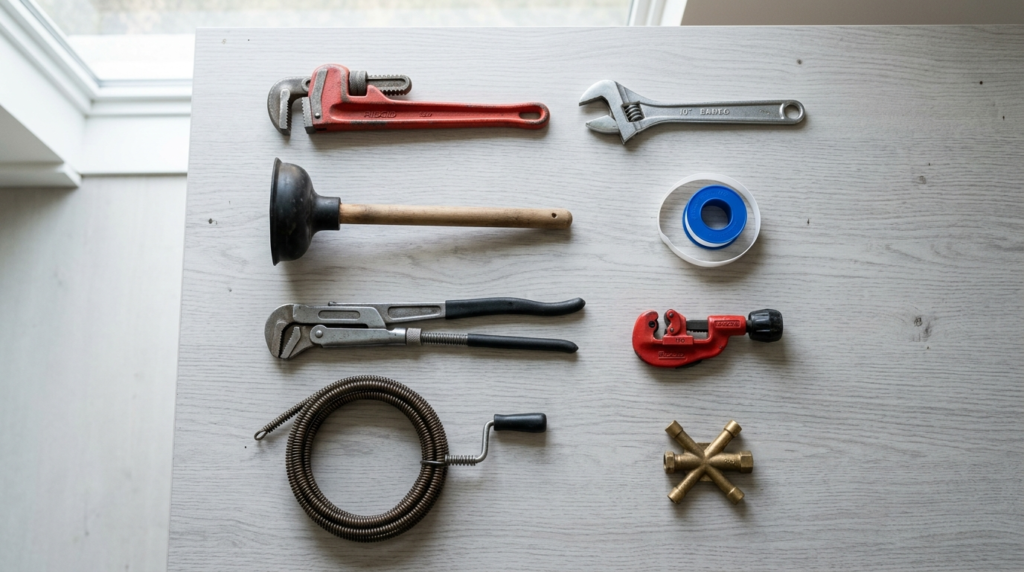
Begin with a pipe wrench. This tool is critical for gripping pipes. Its robust design makes it indispensable for any plumbing project.
Next is a reliable plunger. A plunger can effectively clear clogged drains and toilets. It’s a must-have for avoiding plumbing disasters.
Include an adjustable wrench in your kit. It’s versatile for tightening nuts and bolts. This tool will prove handy in many situations.
Add plumber’s tape, also known as Teflon tape. It’s vital for sealing pipe threads. This tape helps to prevent leaks and ensure water-tight connections.
A basin wrench is another crucial tool. It reaches into tight spaces under sinks. Its design allows for easy maneuvering in compact areas.
Don’t overlook a pipe cutter. This tool provides clean cuts on pipes. It’s essential for fitting pipes to precise lengths.
A drain snake helps clear tough blockages. It’s effective in unclogging drains. This tool is more efficient than chemical drain cleaners.
Complete your kit with a faucet key. It’s used to turn outdoor faucets on and off. This simple tool can save time when working outside.
Owning these tools will transform how you handle plumbing tasks. You’ll gain confidence and improve DIY skills. With preparation, future plumbing issues become less daunting.
For a quick checklist, ensure your toolkit includes:
- Pipe wrench
- Plunger
- Adjustable wrench
- Plumber’s tape
- Basin wrench
- Pipe cutter
- Drain snake
- Faucet key
Equipped with these tools, you’re ready for a range of plumbing tasks. Your toolkit isn’t complete without them. Investing in these tools is investing in a well-maintained home.
Pipe Wrench
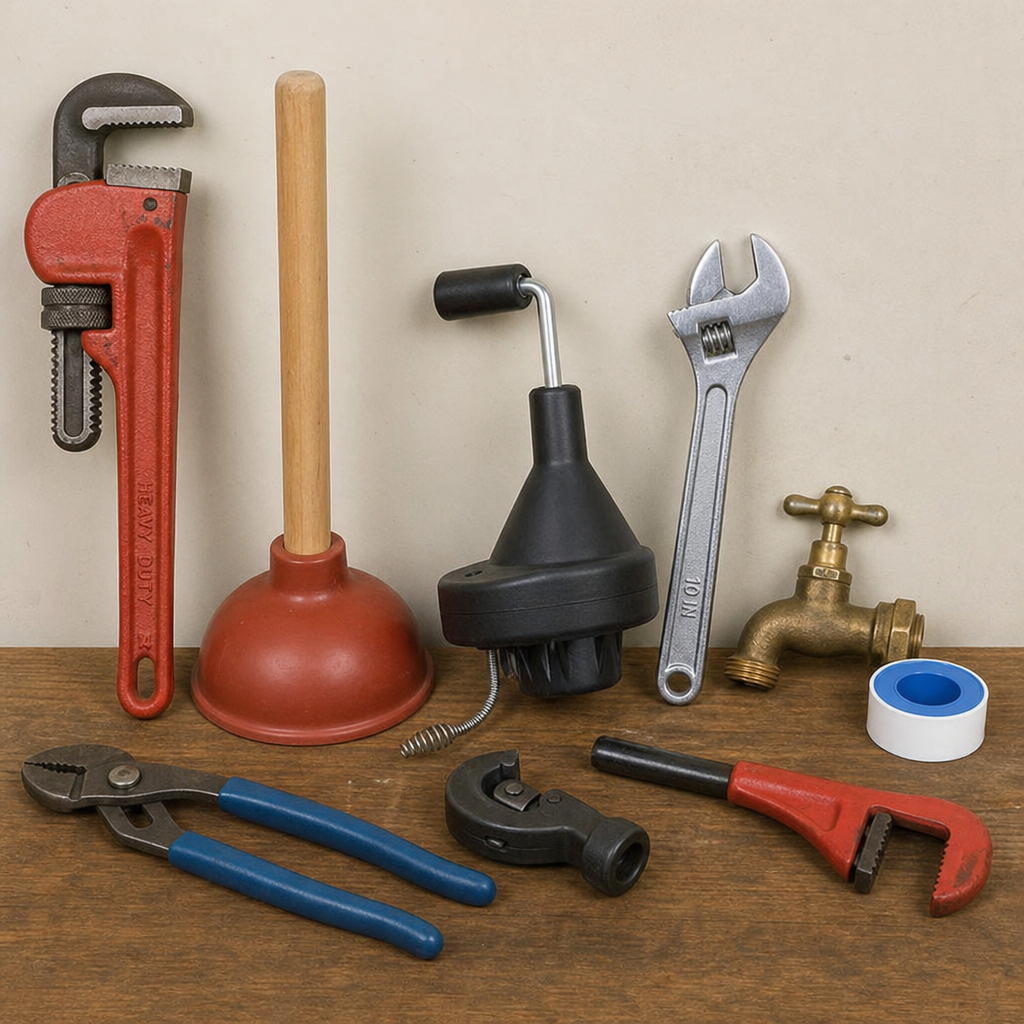
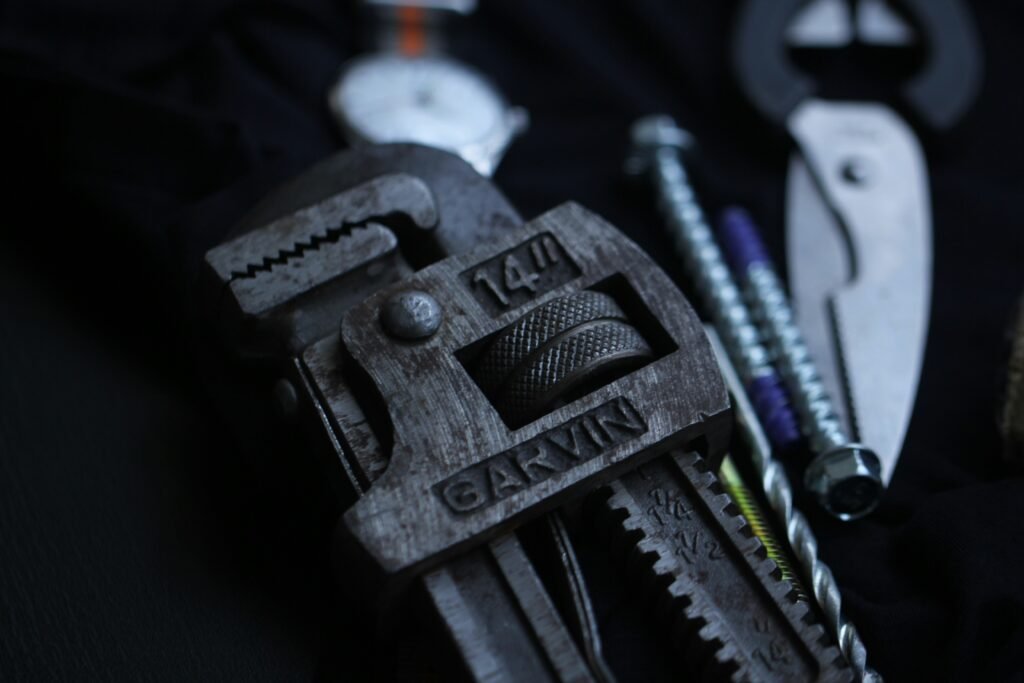
The pipe wrench is a plumber’s best friend. Its design allows it to grip round surfaces. This makes it ideal for turning pipes and fittings.
Pipe wrenches come in different sizes. Choose a wrench suited for your needs. A medium-sized wrench is versatile for most tasks.
Its use is straightforward. Adjust the wrench to fit the pipe’s width. Then, apply pressure and turn to tighten or loosen.
Key features of a pipe wrench include:
- Serrated jaws for a strong grip
- Adjustable jaw size for versatility
- Long handle for improved leverage
Plunger
The plunger is indispensable for unclogging drains and toilets. Its simplicity and effectiveness make it a household staple.
A plunger works by creating a vacuum. This pressure helps dislodge clogs. Make sure the plunger fits well over the drain.
Here’s how to use a plunger effectively:
- Ensure a secure seal over the drain
- Use firm, consistent pressure
- Repeat until the clog clears
Adjustable Wrench
An adjustable wrench is vital for plumbing. It adjusts to fit various nut and bolt sizes. This versatility makes it a must-have tool.
Its flat jaws help in tight spaces. Unlike a pipe wrench, it does not damage surfaces. This makes it ideal for polished fixtures.
To operate, simply turn the screw to adjust size. Use it to:
- Tighten or loosen hexagonal nuts
- Secure bolts
- Handle different fittings
Plumber’s Tape (Teflon Tape)
Plumber’s tape, also known as Teflon tape, is essential for sealing. It creates leak-proof pipe connections. The tape is thin and easy to use.
Wrap it around pipe threads before connecting them. This ensures a tight seal. It’s particularly useful in metal and plastic fittings.
Steps to use plumber’s tape:
- Clean the pipe threads
- Wrap tightly in a clockwise direction
- Overlap layers for better sealing
Basin Wrench
The basin wrench is designed for accessing hard-to-reach nuts under sinks. Its long shaft and pivoting head make it uniquely suited for confined spaces.
Utilizing a basin wrench is simple. Position the head around the nut. Then, twist the handle to loosen or tighten as needed.
When to use a basin wrench:
- When working under sinks
- For faucet installations
- To remove or tighten mounting nuts
Pipe Cutter
The pipe cutter is indispensable for cutting pipes to length. It offers clean, precise cuts quickly. This tool is better than a hacksaw for cutting pipes.
Select a pipe cutter based on the pipe material. They vary for PVC, copper, and other materials. The blade’s sharpness ensures smooth cuts.
Benefits of a pipe cutter include:
- Clean cuts with minimal effort
- Easy to operate
- Suitable for different pipe materials
Drain Snake (Auger)
A drain snake is powerful in removing tough clogs. It’s a flexible tool that snakes through pipes to reach blockages. Use it when plungers fail to clear drains.
For use, insert into the drain and crank the handle. The snake latches onto clogs, pulling or breaking them apart.
Advantages of a drain snake:
- Unclogs without chemicals
- Reaches deeply embedded blockages
- Cost-effective for persistent drain issues
Faucet Key
A faucet key is simple yet essential. It’s used to operate outdoor faucets. This key removes the guesswork from turning external valves.
By having a faucet key, you’ll no longer struggle. This tool simplifies watering gardens or working on outdoor plumbing.
When a faucet key proves useful:
- During gardening tasks
- For outdoor plumbing maintenance
- In controlling irrigation systems
Equipped with these tools, tackling plumbing tasks becomes more manageable. Each tool has a unique role in maintaining efficient home plumbing. The right tools can save time, reduce stress, and even provide the satisfaction of a job well done.
Plumbing Pipes and Fittings: Types and Uses
Understanding plumbing pipes and fittings is vital for any homeowner. Different pipes serve various purposes. Each material has distinct benefits and drawbacks.
Plumbing systems rely on different pipe types. Selecting the right one is crucial for system efficiency. Let’s explore common materials used in plumbing.
PVC pipes are popular for their light weight and resistance to corrosion. They are excellent for carrying cold water.
Copper pipes are known for durability and heat tolerance. They are often used in hot water supply lines.
PEX pipes offer flexibility and are easy to install. They can handle both hot and cold water, making them versatile.
Knowing the fittings is equally important. Fittings connect pipes, allowing water to flow where needed. Understanding the common types of fittings can simplify installation.
Elbows, tees, and couplings are frequently used fittings. Each facilitates specific pipe connections for desired water flow. Elbows, for instance, change the direction of piping.
Couplings connect straight sections of pipe. Tees split the flow to multiple directions. Each fitting serves a unique purpose in system design.
Invest time in understanding the range of available components. It helps in choosing the right part for the job. Learning about materials and fittings empowers homeowners. If a section of ageing or mismatched pipework needs replacing rather than repairing, that’s a job for pipe replacement and relining specialists rather than a DIY fix.
Plumbing systems function efficiently with the right pipes and fittings. They ensure that water flows without interruption. Knowing your options contributes to better plumbing decisions.
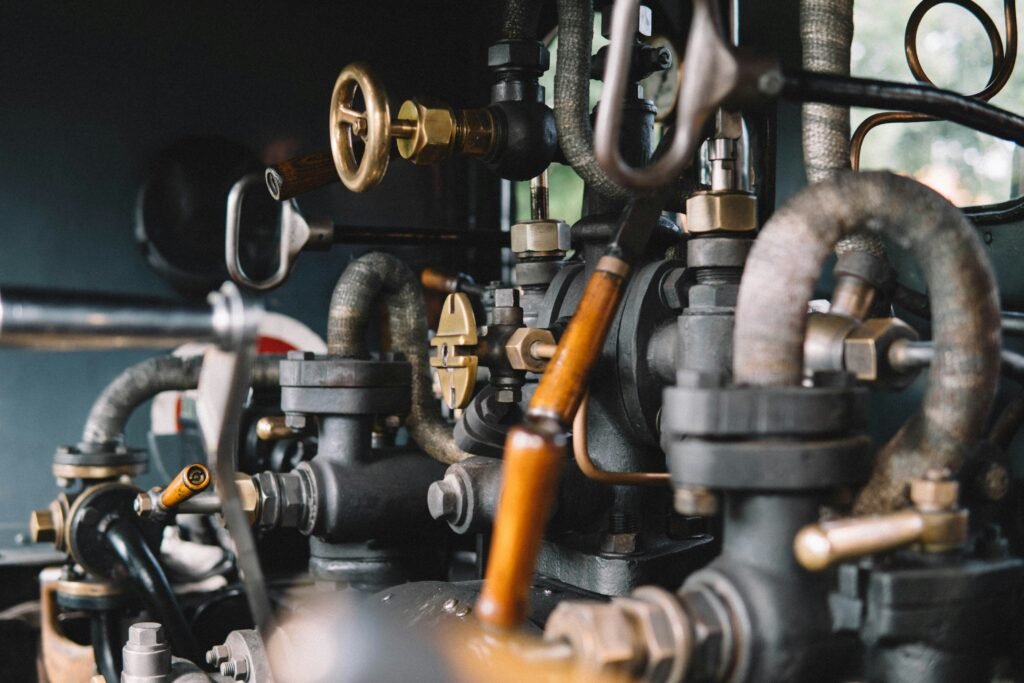
Common Pipe Materials: PVC, Copper, PEX, and More
Choosing the right pipe material impacts your plumbing’s longevity and efficiency. PVC, copper, and PEX are leading choices. Each has properties suited to different needs.
PVC is affordable and easy to work with. It resists corrosion but cannot handle hot water well. It’s mostly used for drainage and vent lines.
Copper is durable, has a long lifespan, and resists bacterial growth. Ideal for water supply lines, copper tolerates high temperatures.
PEX is flexible and simple to install. It’s perfect for both cold and hot water supply. PEX is less susceptible to bursting in freezing conditions.
Galvanized steel pipes, although less common now, were once a staple. They resist rust but are heavy and require frequent maintenance.
Choosing the right pipe involves considering these factors:
- Pipe size and thickness
- Temperature and pressure ratings
- Compatibility with existing materials
Determining suitable pipe materials fosters efficient and lasting plumbing systems. Match the material to the system’s needs for optimal performance.
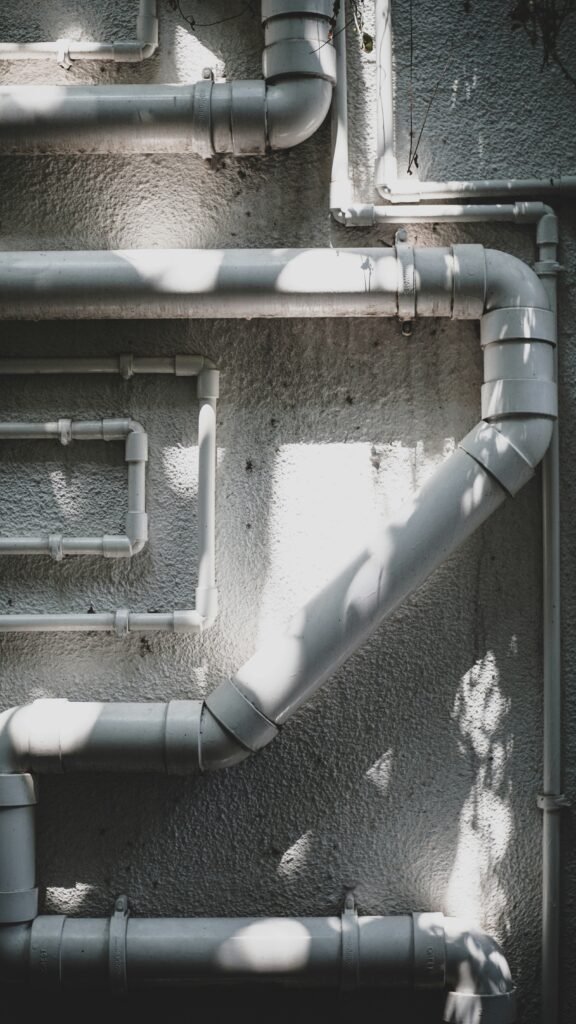
Key Plumbing Fittings and Components Explained
Fittings are crucial for connecting and directing pipes. They vary by size, shape, and purpose. Understanding their role aids in successful plumbing installation.
Consider elbows, which change pipe direction. They’re necessary for navigating corners without kinking pipes.
Tees split or combine water flows. They facilitate branch connections, essential in complex plumbing systems.
Couplings join two pipes of the same size. They ensure a continuous, leak-free water supply throughout the home.
Unions allow for easy disconnection and maintenance. They are useful in areas needing periodic equipment replacement.
Reducers connect different pipe sizes, adjusting flow accordingly. They allow for transitions between different pipe dimensions. For a closer look at how waste-side fittings like traps and connectors are chosen and fitted, our plumbing waste fittings guide covers this in detail.
Key components for a successful plumbing system include:
- Valves to control flow
- Clamps for securing pipes
- Caps to close off lines
Selecting the correct fitting ensures system efficiency and integrity. Each component plays a vital role in a home’s plumbing network. Understanding these fittings enhances DIY plumbing skills and confidence.
Plumbing Fixtures: Maintenance and Upkeep
Plumbing fixtures like faucets, sinks, and toilets are essential to any home. Regular care is crucial to ensuring their optimal function.
Fixtures often suffer from wear and tear over time. Simple maintenance can prevent more significant issues from developing. This approach also helps extend the fixture’s lifespan.
Keeping fixtures clean is the first step. Regular cleaning prevents mineral buildup and mold growth. Pay close attention to hidden areas where dirt accumulates.
Check for leaks routinely. Even a small drip can waste gallons of water over time. Tightening connections or replacing washers may solve the issue.
Another key aspect is inspecting the water pressure. Excessive pressure can harm plumbing components. Adjust it using a pressure regulator if necessary — or have a water pressure issue diagnosed professionally if it doesn’t resolve.
Be mindful of unusual sounds. Gurgles or clanking may indicate underlying problems. Prompt investigation can prevent further damage.
Maintaining plumbing fixtures includes:
- Cleaning aerators to improve water flow
- Using a vinegar solution to remove limescale
Regular upkeep fosters efficient plumbing and preserves water. Attend to minor issues promptly. They can escalate into significant problems if neglected.
Equally important is using fixtures appropriately. Avoid forcing controls or flushing unsuitable items. Treat your fixtures gently to enhance their durability.
Benefits of plumbing fixture maintenance:
- Reduced repair costs
- Prolonged fixture lifespan
By maintaining your plumbing fixtures, you sustain the value and functionality of your home. Implement these upkeep tips to enjoy trouble-free plumbing. Maintain your fixtures routinely, and they’ll serve you well in the long run.
Building Your DIY Plumbing Toolkit
Assembling a DIY plumbing toolkit is a smart move for any homeowner. Having the right tools on hand ensures you’re prepared for common plumbing tasks.
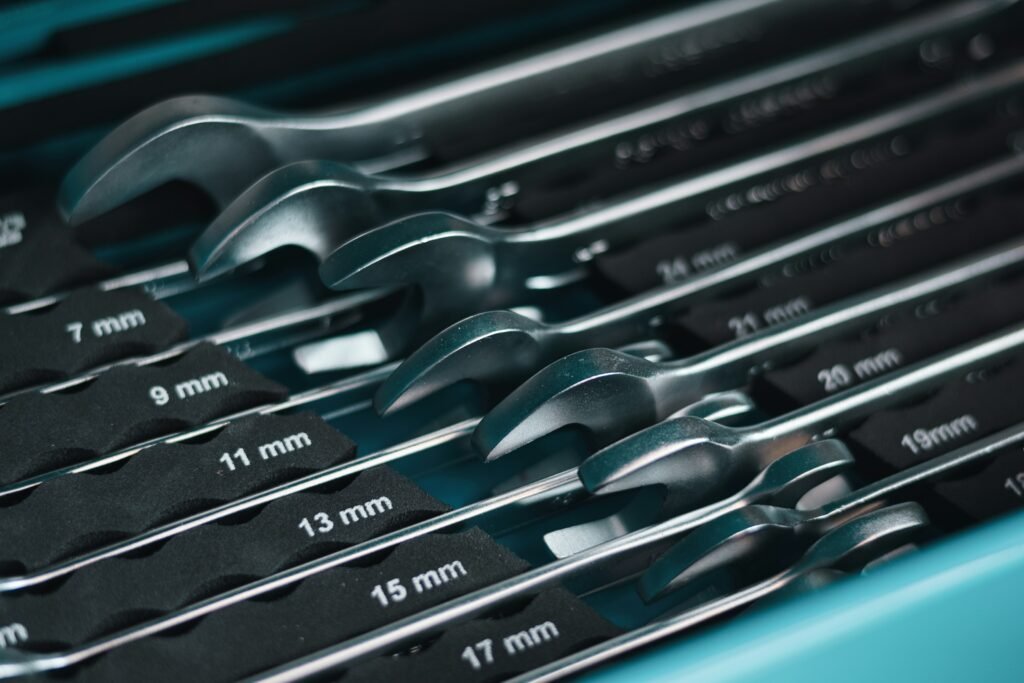
Start with the basics. Essential tools like a pipe wrench, adjustable wrench, and plunger are crucial. These tools help tackle leaks and clogs effectively.
Consider adding a basin wrench. It’s specifically designed to fit into tight spaces under sinks. This tool is indispensable for removing or installing fixtures.
Don’t forget a pipe cutter. It allows you to cut pipes to the desired length cleanly. Choose one suitable for materials like PVC, copper, or PEX.
Stock up on plumber’s tape and washers. They are vital for sealing joints and preventing leaks. A toolkit lacking these components can lead to incomplete repairs.
Expanding your toolkit can include:
- A drain snake for stubborn clogs
- A caulking gun for sealing joints — handy for the kind of finishing work covered in a full bathroom fitting
You may also want to keep some advanced tools. These are useful for more specific tasks. Collect these gradually, as your skills and needs grow.
Advanced additions might include:
- A soldering kit for joining copper pipes
- A pipe locator for identifying underground pipes
Building your DIY plumbing toolkit is an investment in your home. It empowers you to handle plumbing challenges with confidence. It prepares you for unexpected plumbing issues, minimizing the need for professional intervention.
Safety Tips for DIY Plumbing
Safety must always come first in DIY plumbing. Simple precautions can prevent accidents. This is crucial when working with water and tools.
Start by turning off the water supply. This prevents flooding and potential water damage while you work. Know the location of all shut-off valves in your home.
Wear the right gear. Protective gloves prevent cuts and chemical exposure. Safety goggles shield your eyes from debris and harmful splashes.
Be careful with tools. Always read the instructions before use. Handling them incorrectly can lead to injuries.
It’s also important to ventilate your workspace. Plumbing often involves chemicals. Good airflow reduces inhalation risks. Ensure your plumbing area is well-lit for clear visibility.
Remember these key safety tips:
- Turn off the water supply
- Wear gloves and goggles
- Ensure proper ventilation
- Handle tools with care
Prioritizing safety ensures your plumbing activities are both successful and injury-free. Safe practices contribute to effective and efficient repairs. If a job involves a burst pipe or a supply line you can’t isolate safely, stop and call in a professional rather than risk flooding your home.
When to Call a Professional Plumber
DIY plumbing can be fulfilling, but it’s crucial to know your limits. Complex issues often require a professional touch. Recognizing when to seek expert help can save you time and money.
If you notice persistent leaks, it might be time for professional intervention. Leaks can cause significant damage if not handled appropriately. Professionals have the tools and experience to identify hidden issues through proper leak detection and repair.
Major sewer line problems should be left to experts. These issues can be more dangerous and involve significant health risks. Proper expertise ensures safe and thorough solutions.
Consider hiring a plumber when:
- The issue is beyond your skill level
- Major sewer repairs are needed
- Persistent leaks recur without clear source
- Complicated plumbing codes and permits are involved
Ultimately, knowing when to call a plumber helps maintain your home’s plumbing efficiency. It prevents minor issues from becoming costly repairs. Do not hesitate if you’re unsure about tackling a problem on your own — you can book a plumber online in minutes, or reach the 24/7 emergency line for anything that can’t wait.
Where to Buy Plumbing Equipment and Components
Finding quality plumbing equipment is essential for successful DIY projects. Reputable suppliers offer a wide range of products. Visiting local stores can provide valuable insights and hands-on product evaluation.
Searching for the right plumbing components can be time-consuming. Consider seeking recommendations from friends or neighbours. Word-of-mouth can lead you to trusted suppliers.
Online platforms also offer an extensive selection of plumbing fixtures. Sites like Amazon or specialised plumbing retailers often have user reviews. This feedback can guide your purchasing decisions and ensure reliability.
Consider the following when choosing a supplier:
- Product quality and brand reputation
- Customer service and return policies
- Range of plumbing pipes and fittings
- Price competitiveness and special offers
In some cases, local suppliers may even provide professional advice. Retailers with extensive experience often offer guidance. They can help you choose products best suited for your needs.
Finding a Pipe Shop Near Me or Water Pipes Shop Near Me
Locating a nearby pipe shop can simplify your plumbing tasks. Many local shops specialise in plumbing equipment and fittings. A quick online search will reveal options close to your location.
Visiting a local store allows for immediate product access. It eliminates waiting time associated with online purchases. Moreover, seeing items in person ensures you get precisely what you need.
Here’s how to locate a shop:
- Use search terms like “pipe shop near me” or “water pipes shop near me”
- Check online maps for store locations and reviews
- Ask neighbours for recommendations and personal experiences
These local shops are often more personable and customer-focused. Many offer workshops or knowledge sessions. They educate homeowners on tool use and maintenance practices. If parts alone won’t solve the problem, our plumbers covering North London can take it from there.
FAQs
Understanding plumbing and fittings can be complex for beginners. Here are some frequently asked questions to help clear up uncertainties.
What is the difference between plumbing fixtures and fittings?
Fixtures are devices connected to the plumbing system, like sinks or toilets. Fittings are the connectors and components that join pipe segments.
How do I know what type of pipe to use?
It depends on the application. PVC is common for waste lines, copper for water supply, and PEX for its flexibility.
Can I replace fixtures myself?
Yes, with the right tools and guidance. However, always ensure to follow safety protocols and local regulations — for larger jobs like a full bathroom fitting, it’s usually worth bringing in a professional.
How often should I inspect plumbing systems?
Regular bi-annual inspections help catch problems early. This can prevent costly repairs later.
When is it essential to call a professional plumber?
Major installations or complex repairs often require professional experience. Don’t hesitate to call for help when needed — our residential plumbing team covers everything from one-off repairs to planned maintenance across London.
Conclusion
Equipping yourself with plumbing know-how provides independence and confidence. With essential tools on hand, minor repairs become stress-free tasks.
Understanding plumbing and fittings not only saves you time but also reduces unexpected expenses. Knowledge gained ensures safer and more effective maintenance practices.
As you explore and learn more, remember that some situations require expert help. Balancing DIY efforts with professional assistance promotes lasting plumbing solutions. When that time comes, Catalyst Home Services is on hand across London to help.