
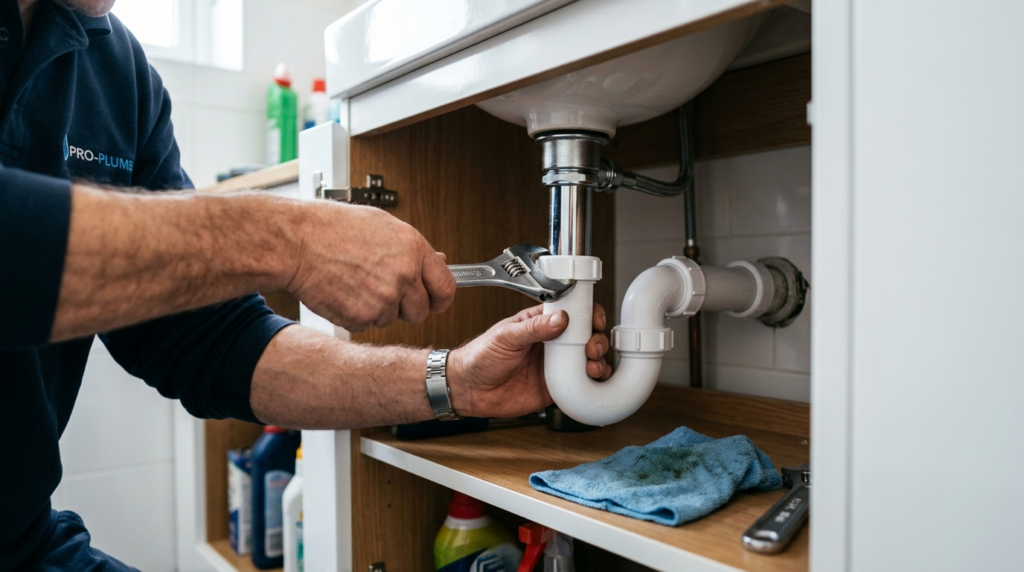
Plumbing waste fittings rarely get a second thought — until one of them starts leaking under the sink, smelling musty in the bathroom, or backing up at the worst possible moment. These small components quietly carry every drop of waste water out of your home, and when one fails, the mess is usually immediate and obvious.
At Catalyst Home Services, our engineers replace, repair, and install waste fittings across London properties every week. This guide pulls together what we see most often: the different types of waste fittings, how they’re meant to work, the warning signs of a fitting on its way out, and when a job is genuinely a DIY task versus one that needs a qualified plumber.
Call +44 7400 265421 or book a plumber online if you’d rather skip straight to getting it sorted.
What Are Plumbing Waste Fittings?
A waste fitting is any component that carries used water away from a sink, bath, shower, basin, or toilet and into the property’s drainage system. This includes the waste outlet itself (the fitting at the bottom of the basin or sink), the trap beneath it, and the various pipes, joints, and connectors that link everything through to the main waste pipe.
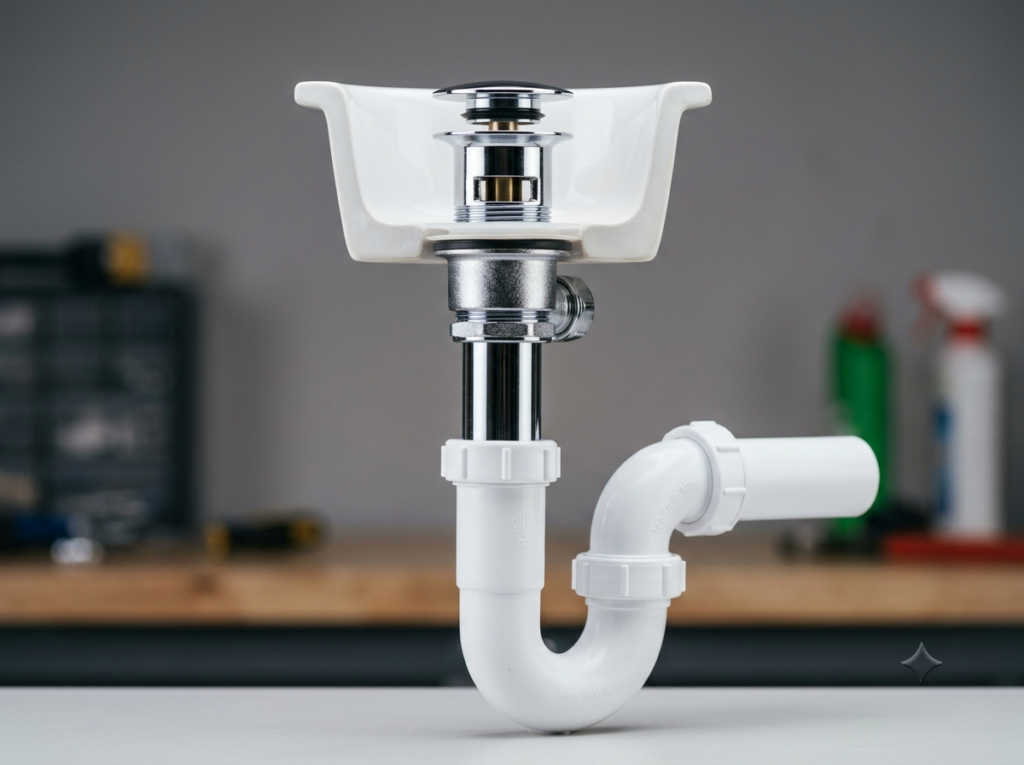
Waste fittings sit between two very different worlds — the tap water you can see, and the drainage network you generally can’t. Get them right, and you never think about them again. Get one wrong, and you’ll know within days.
It’s worth distinguishing waste fittings from supply fittings. Supply fittings (including taps — see our tap and faucet repair page) bring clean water in. Waste fittings take used water away. The two systems are connected at the basin or sink, but they fail for completely different reasons and need different fixes.
Why Plumbing Waste Fittings Matter
It’s easy to assume any pipe under the sink will do the job, but waste fittings carry more responsibility than they get credit for.
They stop drain smells entering your home. The trap built into most waste fittings holds a small amount of water that blocks sewer gas from rising back up through the pipe. Without it, your bathroom or kitchen would smell distinctly unpleasant.
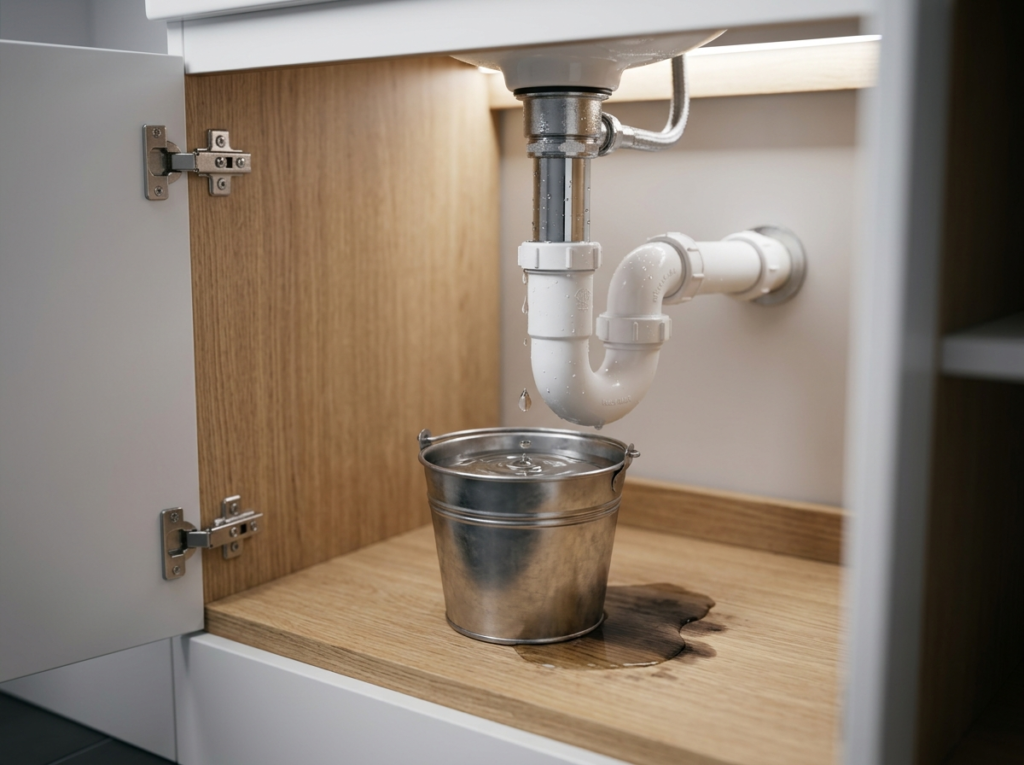
They prevent water damage. A waste fitting with a poor seal will leak slowly, often inside a cabinet or behind a panel where it goes unnoticed until the cupboard base is swollen or the ceiling below has a damp patch.
They keep drainage moving efficiently. A waste fitting that’s the wrong size, poorly angled, or partially blocked will slow drainage throughout the connected pipework, even if nothing is visibly wrong.
They’re a compliance point. Waste fittings need to meet UK Building Regulations (Part H) for drainage and waste disposal. This matters particularly for landlords, renovations, and new installations — get it wrong and it can cause problems at sale or inspection.
Types of Plumbing Waste Fittings
There’s no single “waste fitting” — it’s a category covering several distinct parts, each doing a specific job.
Basin and Sink Waste Fittings
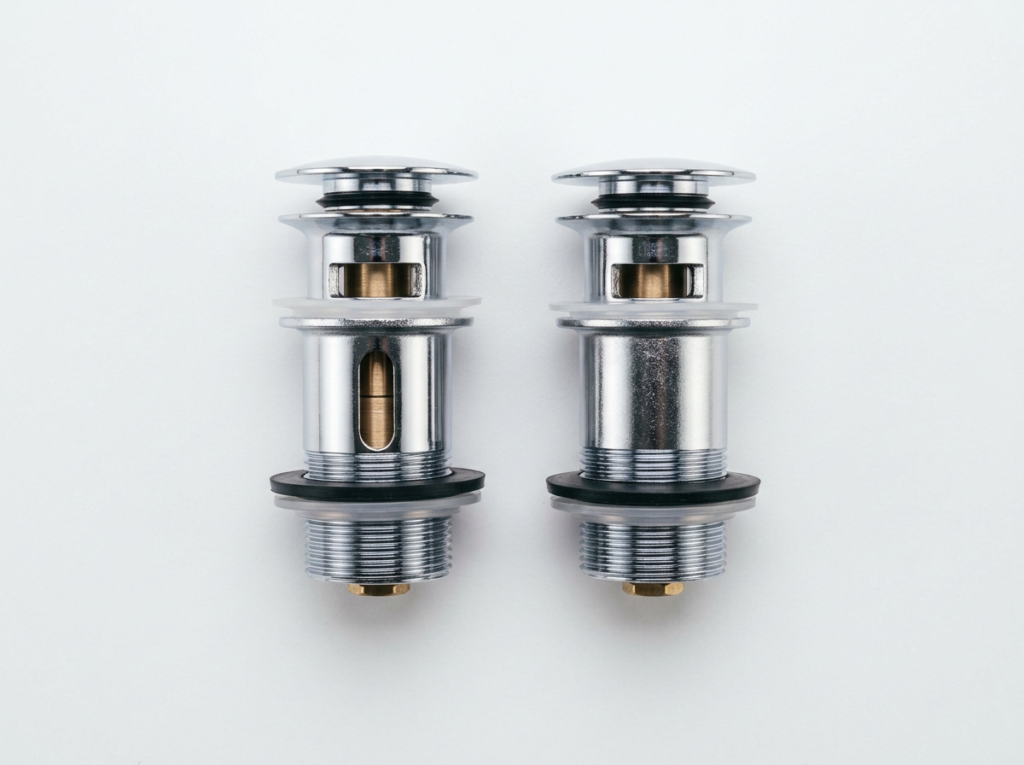
This is the fitting sitting in the bottom of the basin or sink bowl itself. The two main types are:
- Slotted wastes — used wherever the basin or bath has an overflow channel built in. The slot in the side of the waste lines up with the overflow, allowing excess water to escape if the basin fills past its limit.
- Unslotted wastes — used where there’s no overflow, most commonly in kitchen sinks.
Within these, you’ll also choose between a basic plug-and-chain waste, a pop-up waste (operated by a lever, common in modern bathroom basins), and a click-clack waste (push-button operation, popular for its clean look).
Traps
The trap is the curved or looped section of pipe directly beneath the waste fitting. Its job is to permanently hold a small amount of water that seals the system against odours and gases from the drain.
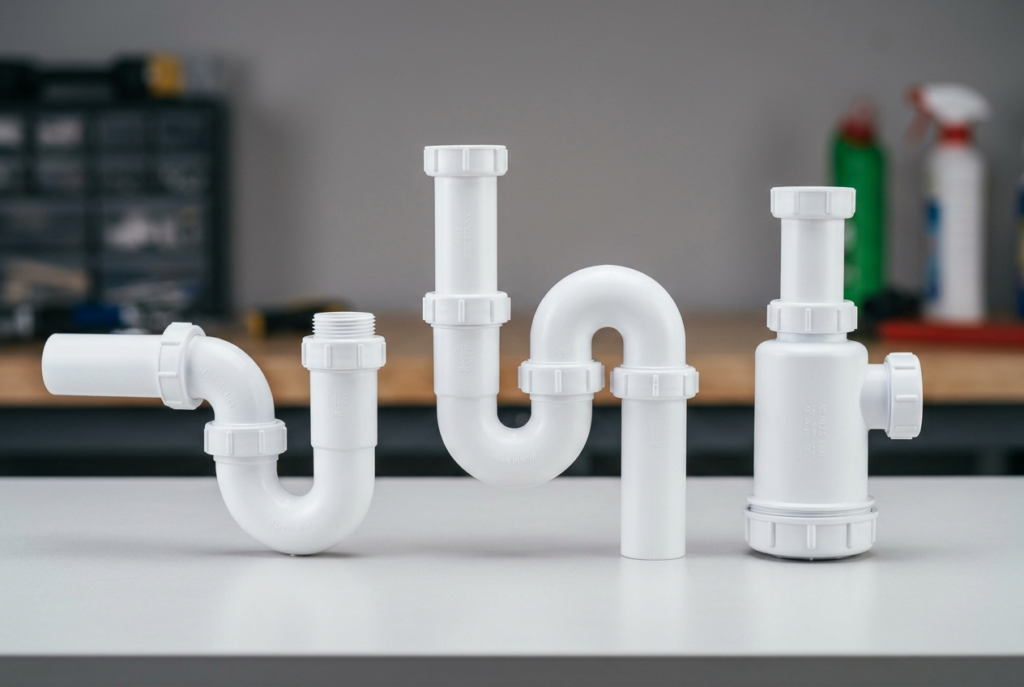
- P-traps — shaped like the letter P on its side, with one outlet running down and one running horizontally to the wall. The most common trap in UK homes.
- S-traps — shaped like an S, with the outlet running straight down into a floor-mounted drain. Less common in modern UK plumbing but still found in older properties.
- Bottle traps — a more compact, cylindrical design, popular under modern vanity units where space and appearance matter. Slightly easier to access for clearing blockages, since the bottom unscrews.
Waste Pipes and Pipe Fittings
These connect the trap through to the main soil and waste system. Common materials include:
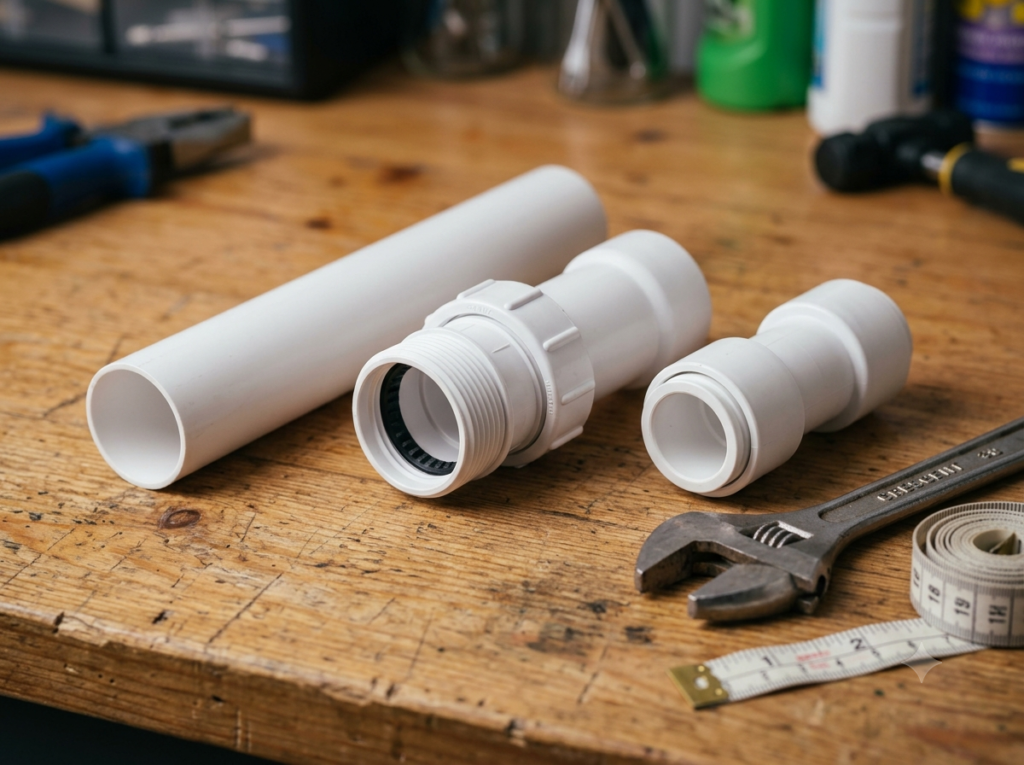
- PVC/uPVC waste pipe — the standard in most UK homes today, typically in 32mm (basin), 40mm (sink/bath), or 110mm (soil) diameters
- Push-fit connectors — used to join lengths of waste pipe without solvent welding, allowing for some flexibility and easier future access
- Solvent-weld fittings — bonded permanently with a chemical solvent for a fixed, leak-resistant joint
- Compression fittings — joined using a nut and a rubber or plastic olive that compresses around the pipe to form a watertight seal without welding or solvent
Waste Valves and Air Admittance Valves
Less visible but equally important. An air admittance valve allows air into the drainage system to equalise pressure as water drains, without needing a vent pipe running all the way to roof level. These are common in modern bathroom and kitchen installations, particularly in conversions or extensions where running a full vent stack isn’t practical.
If you’re planning a wider bathroom renovation rather than a single fitting swap, our bathroom fitting service covers the full waste and supply layout as part of the job.
How Plumbing Waste Fittings Are Installed
A correctly fitted waste connection follows a consistent sequence, whether it’s a kitchen sink or a bathroom basin.
Step 1 — Confirm the fitting matches the basin or sink. Waste fitting diameter and slot configuration need to match the fixture exactly. A slotted waste in an unslotted basin (or vice versa) won’t seal properly.
Step 2 — Seal the waste fitting into the basin. A bead of plumber’s putty or a rubber washer sits between the waste body and the underside of the basin, creating the first seal against leaks at the fixture itself.
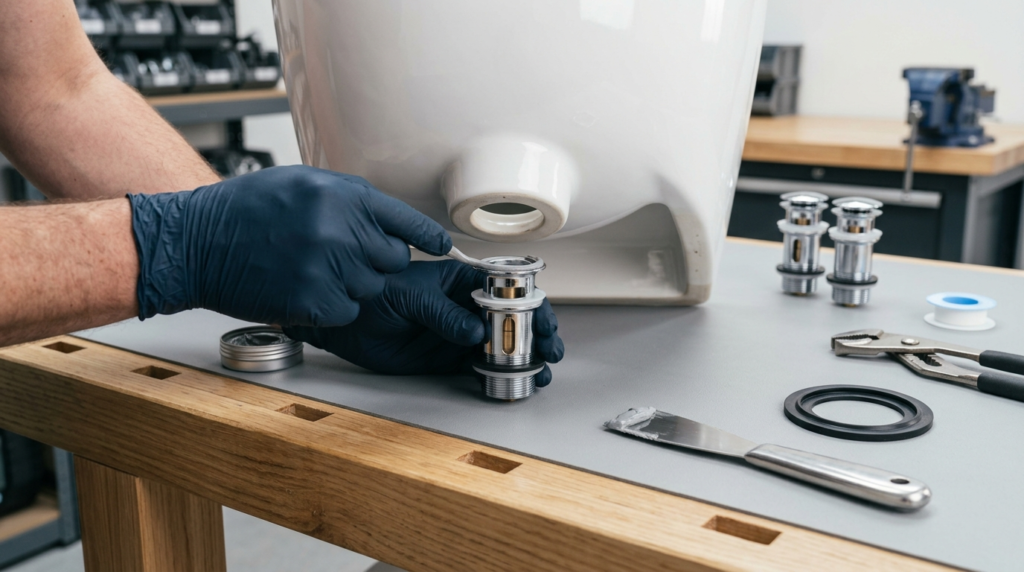
Step 3 — Connect the trap. The trap is fitted beneath the waste outlet and filled with water before use, establishing the seal against odours from the moment the job is finished.
Step 4 — Join the waste pipe run. The trap outlet connects into the property’s waste pipe network, using push-fit, solvent-weld, or compression fittings depending on the existing pipework and the access available.
Step 5 — Pressure and flow test. Water is run through the full fitting at volume to check every joint holds under real conditions, not just a quick rinse. This is the step that catches a slow leak before it becomes a damp patch six months later.
A loose joint, an over- or under-tightened compression nut, or a trap that hasn’t been seated correctly are the most common causes of a waste fitting failing shortly after installation — which is exactly why this step matters.
Common Problems With Plumbing Waste Fittings
Most waste fitting issues we’re called out for in London homes fall into a handful of recognisable categories.
Leaking at the basin or sink connection — usually a perished washer, dried-out plumber’s putty, or a waste fitting that was never fully tightened against the underside of the fixture.
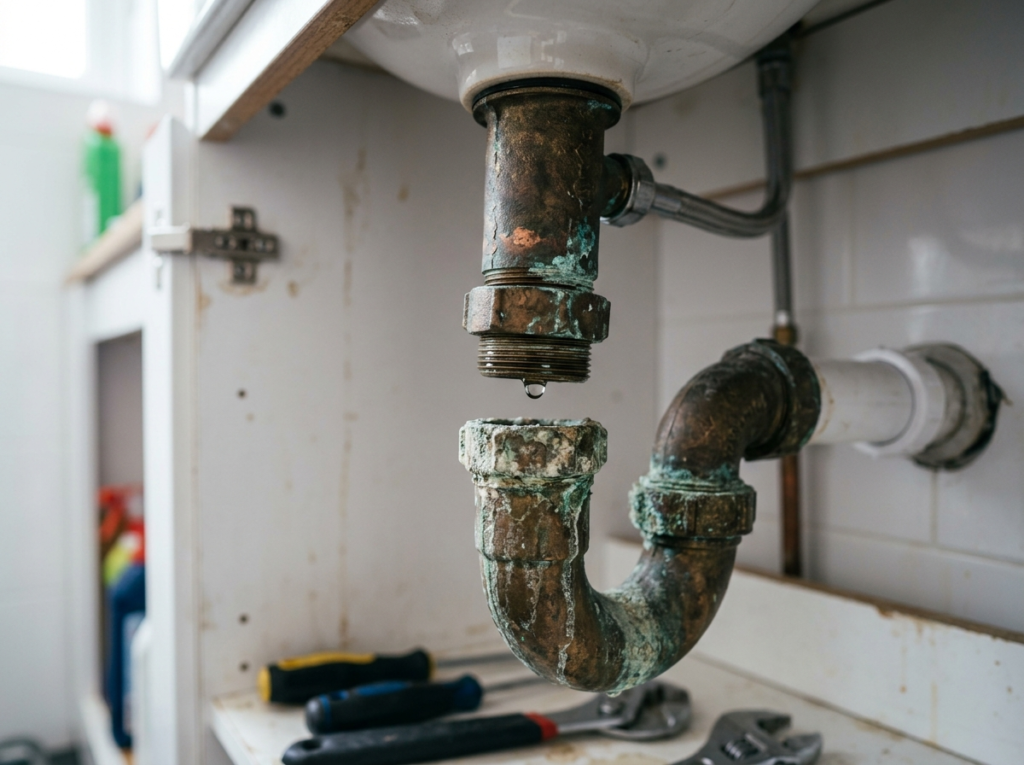
Leaking at the trap — often caused by a cracked trap body, a worn sealing washer where the trap sections join, or a compression nut that has loosened over time through vibration and use.
Slow draining — frequently a partial blockage of grease, soap scum, or hair sitting inside the trap itself, rather than a problem further down the system. See our blocked drain clearance page for more on how blockages form and how they’re cleared.
Bad smells from the waste outlet — almost always a dry trap. This happens in basins or floor drains that aren’t used often enough for the trap’s water seal to stay topped up, allowing sewer gas to rise back through.
Cracked or brittle waste pipe — older PVC pipework can become brittle with age, particularly where it’s exposed to UV light or extreme temperature changes, eventually cracking at a joint or along its length.
Corroded metal fittings — in older properties with brass or chrome waste fittings, corrosion can eat through the fitting from the inside, leading to a leak that often isn’t visible until it’s significant.
Incorrect pipe falls — waste pipe needs a consistent gentle slope towards the drain. A pipe that’s too flat won’t drain properly; one that’s too steep can cause water to run ahead of solid waste, leaving residue behind that builds into a blockage.
If a waste fitting issue turns out to be part of a larger leak — particularly one you can hear or see but can’t locate — our leak detection and repair team uses specialist equipment to find it without unnecessary disruption to your walls or floors.
Maintaining Plumbing Waste Fittings
Waste fittings are largely maintenance-free, but a handful of habits will add years to their working life.
Run water through rarely used drains. A guest bathroom or utility sink that isn’t used often will have its trap dry out, letting smells through. Running the tap for thirty seconds every few weeks keeps the seal topped up.
Avoid pouring fat or oil down the sink. This is the single biggest cause of slow-draining waste fittings and connecting pipework. Fat solidifies as it cools and builds up in layers inside the trap and pipe.
Don’t overtighten compression fittings. It’s a common DIY mistake — tightening a compression nut too far can crack the olive or distort the pipe, creating the very leak you were trying to prevent.
Check under-sink cabinets periodically. Because leaks here are often slow rather than sudden, a quick look every few months catches problems early, before they damage the cabinet base or the floor beneath it.
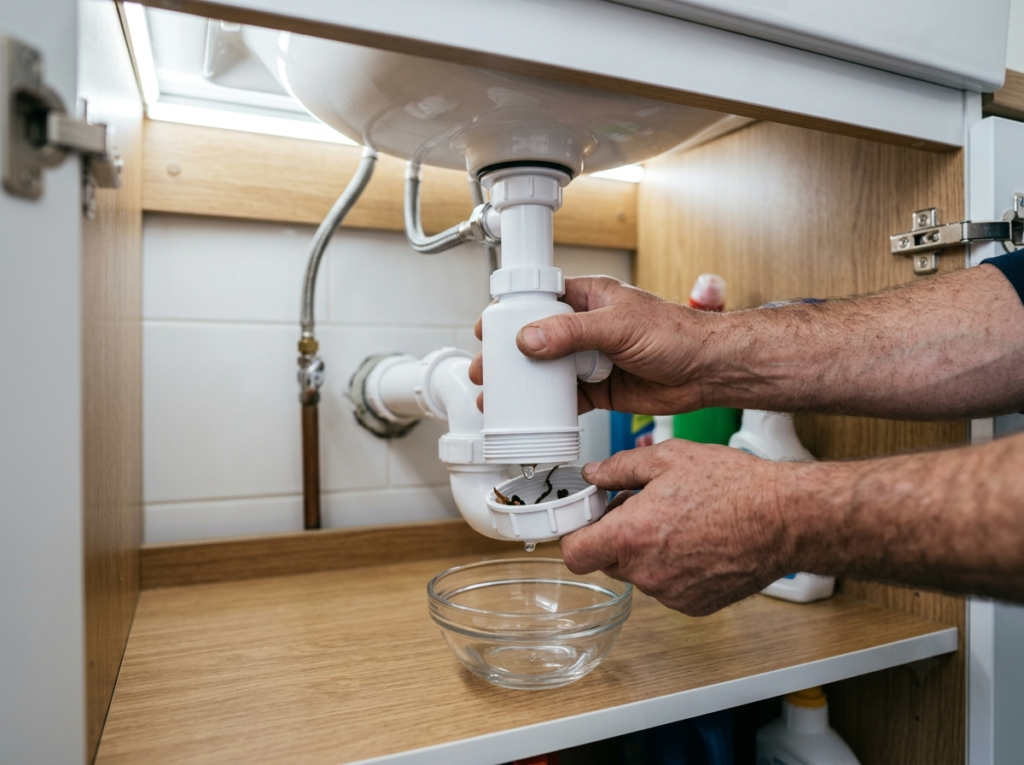
Clean traps with bottle-style access points. Bottle traps with a removable base make it straightforward to clear accumulated debris without dismantling the whole fitting — worth doing every few months in a kitchen sink.
DIY vs Calling a Professional Plumber
Some waste fitting work is genuinely manageable without a plumber. Replacing a basin waste plug or chain, or clearing a simple trap blockage by unscrewing a bottle trap base, are jobs many people handle themselves with basic tools.
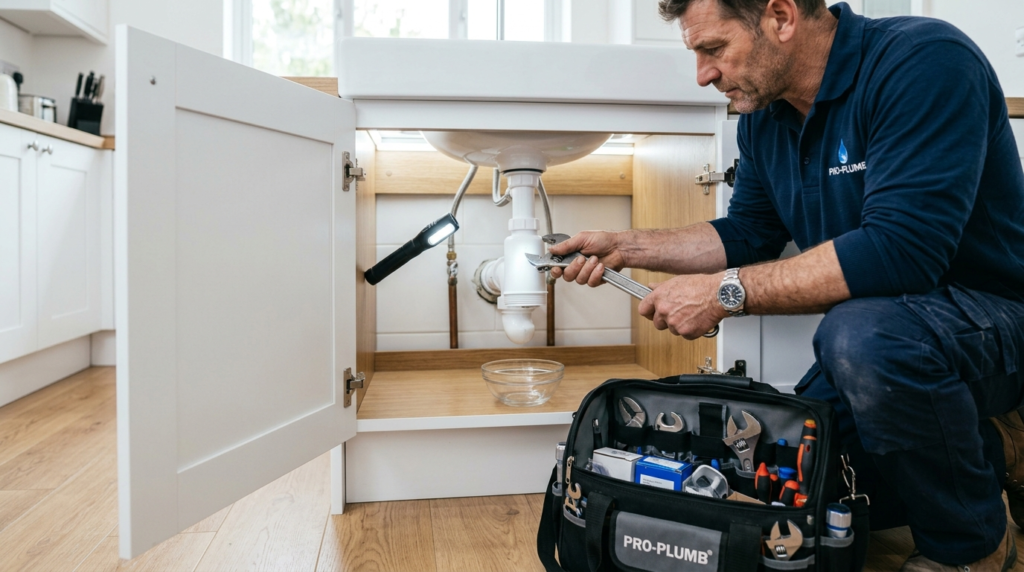
Where it’s worth calling a professional:
- The leak is intermittent or you can’t identify exactly where it’s coming from
- The waste pipe run involves cutting into existing pipework or extending the system
- You’re dealing with a soil pipe or anything connected to a toilet waste system
- The fitting needs to comply with Building Regulations, such as during a renovation or new installation
- Repeated attempts to fix a leak haven’t worked, suggesting a deeper issue with the pipe fall or a hidden joint
Getting a compression joint slightly wrong, or fitting a trap without the correct water seal depth, can lead to recurring leaks or smells that are frustrating to chase down without the right diagnostic approach. Our engineers carry the full range of waste fittings, traps, and pipe sizes on the van, so most jobs are sorted in a single visit.
Why Choose Catalyst Home Services for Waste Fitting Work
Qualified engineers who see this work daily. Waste fitting repairs and installations are a routine part of our day-to-day work across London homes. You can review our licences and certifications before booking.
Honest assessment, every time. If a fitting can be repaired rather than replaced, we’ll say so. Read what London customers say about our approach on our reviews and testimonials page.
Transparent pricing before work starts. You’ll always get a clear quote first — no inflated call-out fees or surprise additions to the invoice.
Same-day availability across London. Most waste fitting jobs are sorted in a single visit. If the issue is urgent, our 24/7 emergency line is there for situations that can’t wait.
London-wide coverage. From central boroughs to North London, we cover homes and businesses across the city. Check our service areas to confirm we reach your postcode.
Related Services You May Need
A waste fitting problem is sometimes the first sign of a wider plumbing issue. These services are commonly needed alongside waste fitting repairs:
- Blocked Drain Clearance — if the slow drainage extends beyond the trap into the wider pipe run
- Leak Detection & Repair — for leaks you can’t see directly, such as inside a wall or under flooring
- Bathroom Fitting — if you’re replacing waste fittings as part of a larger bathroom update
- Toilet Repair & Replacement — for waste issues connected to the toilet system specifically
- Pipe Replacement & Relining — where waste pipework throughout the property needs wider attention
FAQs
What is the most common type of waste fitting used in UK homes?
The combination of a slotted or unslotted basin waste with a P-trap is the standard setup in most UK bathrooms and kitchens, connecting through PVC waste pipe to the main drainage system.
Why does my sink smell even though it isn’t blocked?
This is almost always a dry trap. If the sink or drain isn’t used regularly, the water seal inside the trap evaporates, allowing sewer gas to rise back up through the waste pipe. Running water through it for a short period usually resolves the smell immediately.
Can I replace a waste fitting myself?
Straightforward jobs like swapping a basin waste plug or clearing a bottle trap are manageable for most people with basic tools. Anything involving cutting into existing pipework, working on a soil pipe, or repeated unresolved leaks is worth handing to a qualified plumber.
How do I know if my waste fitting is leaking?
Look for damp patches, swelling, or a musty smell inside the cabinet beneath a sink or basin. Because these leaks are often slow rather than sudden, checking under cabinets every few months catches the problem before it causes damage to the cupboard or floor.
Do waste fittings need to meet building regulations?
Yes. Waste and drainage fittings fall under Part H of the UK Building Regulations, which covers issues like pipe sizing, trap seal depth, and ventilation. This is particularly relevant during renovations, extensions, or new-build installations.
How long do plumbing waste fittings typically last?
Plastic waste fittings and traps generally last well over a decade with normal use. Older metal fittings can corrode from the inside sooner, particularly in hard water areas, which is why a leak from an older brass or chrome fitting often appears with little warning.
Get Your Waste Fittings Sorted Today
Whether it’s a leaking trap under the kitchen sink, a smell you can’t track down, or a full waste system that needs replacing as part of a renovation, Catalyst Home Services has it covered. Call us now on +44 7400 265421, use our 24/7 emergency line for anything urgent, or book a plumber online and we’ll confirm your appointment straight away.