
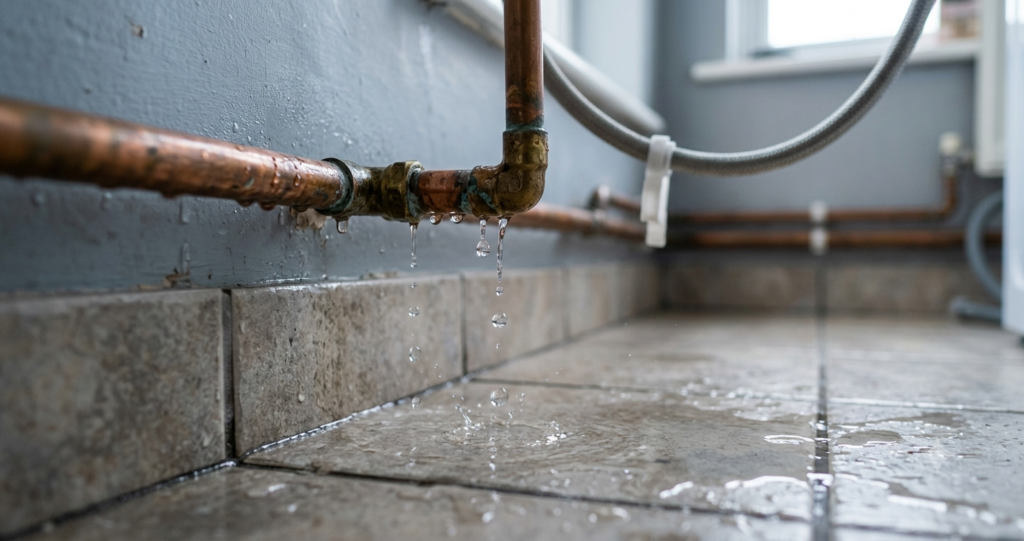
Finding water from a pipe — whether it’s a slow drip under the sink or a steady trickle down a wall — is one of the most common calls we get at Catalyst Home Services. It’s easy to dismiss at first. A few drops today can mean a soaked ceiling or a burst pipe tomorrow.
This guide explains why pipes leak, what the different warning signs mean, and how to protect your home before a small drip becomes an expensive repair.
Why Water From a Pipe Should Never Be Ignored
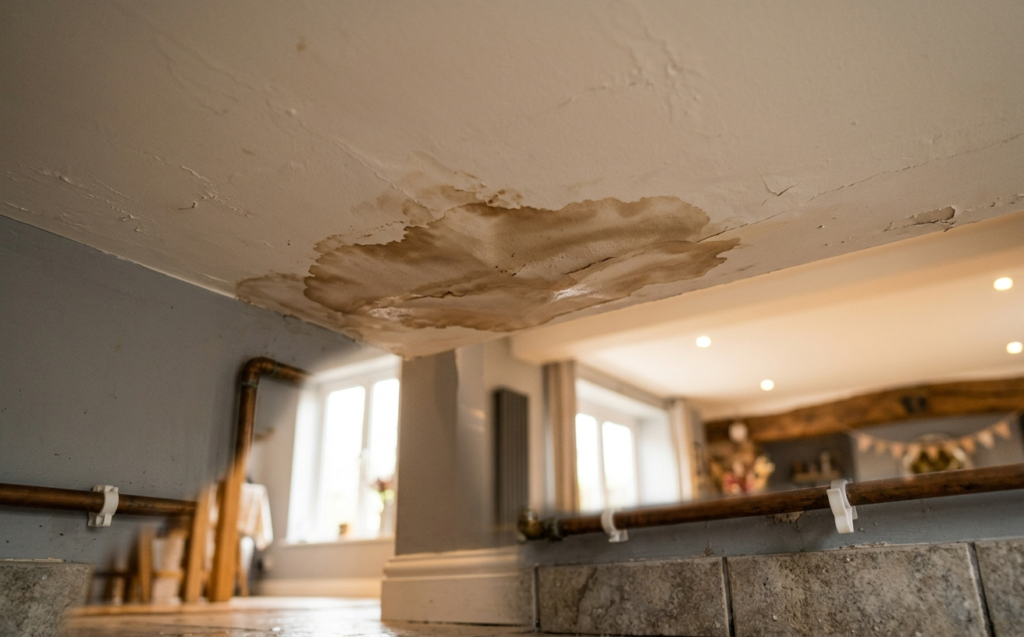
Water doesn’t stay where it lands. Even a small, steady leak can travel along joists, soak into plasterboard, and cause damp, mould, or structural damage long before you notice a stain on the ceiling.
In London homes especially, older pipework, hard water, and shared walls with neighbouring properties mean a leak in one spot can affect a much wider area. Catching the problem early — and understanding what’s actually causing it — saves both money and stress.
Common Reasons Water Comes From a Pipe
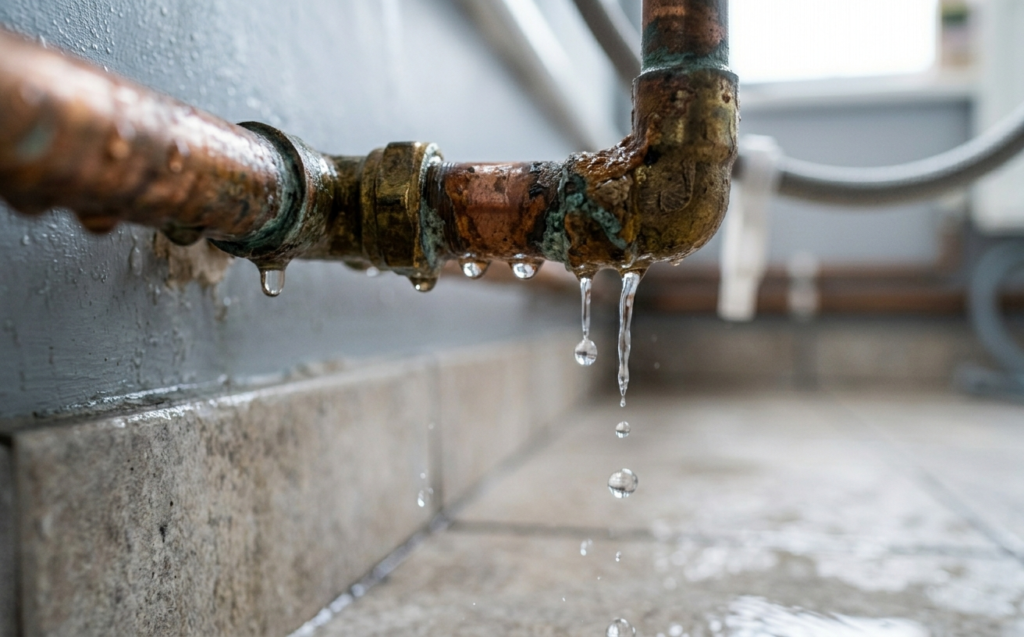
1. Loose or worn joints
Pipe joints can loosen over time from vibration, temperature changes, or simple wear. This is one of the most frequent causes of water appearing around a pipe fitting.
2. Corrosion
Older metal pipework, especially in period properties, corrodes from the inside out. By the time water is visible on the outside, the pipe has often been weakening for months.
3. High water pressure
Pressure that’s too high puts constant strain on pipes and fittings, causing gradual leaks or sudden bursts. If you’re seeing recurring drips despite repairs, pressure could be the underlying issue — our team covers this in detail on our Water Pressure Issue page.
4. Frozen and thawed pipes
Cold snaps can cause pipes to freeze, expand, and crack. The leak often only becomes visible once the ice thaws — which is why burst pipes are so common right after a cold spell.
5. Physical damage
Pipes hidden behind walls or under floors can be nicked or cracked during other building work, only revealing themselves as a leak weeks later.
Types of Pipe Leaks You Might Notice
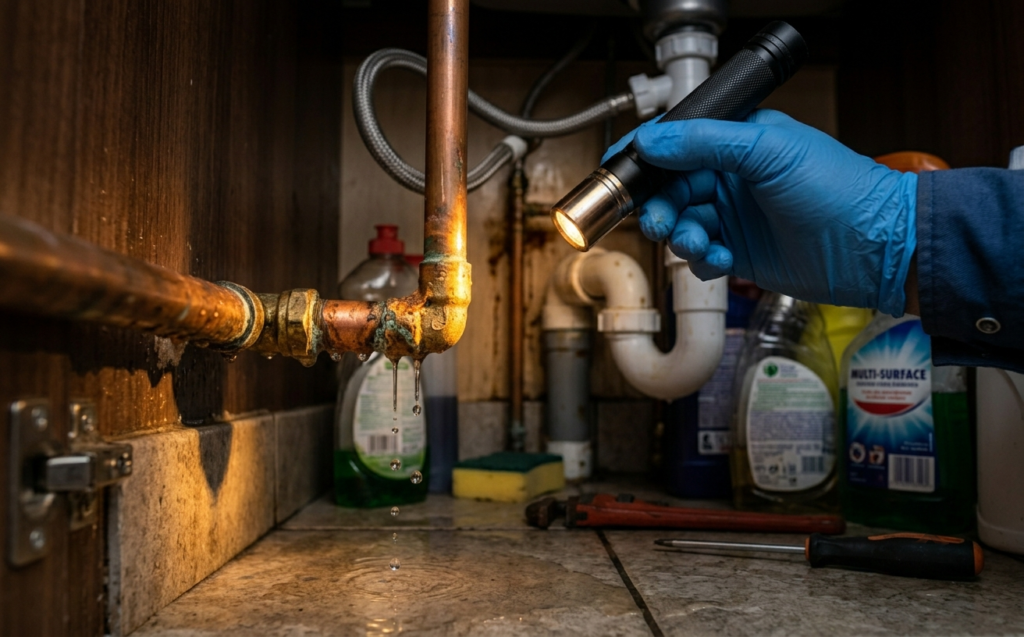
- Dripping under a sink or appliance — usually a loose joint, worn washer, or failing seal.
- Damp patch on a wall or ceiling — often a sign of a hidden pipe leaking slowly inside the structure.
- Water pooling near the boiler or heater — could point to a fitting issue or a failing valve.
- Sudden gush or spray — typically a burst pipe, and needs urgent attention.
- Water outside near an external pipe — can indicate an underground or supply line leak.
If you’re dealing with a sudden, forceful leak rather than a slow drip, head straight to our Burst Pipe Repair page for guidance on immediate next steps.
What to Do When You Spot Water From a Pipe
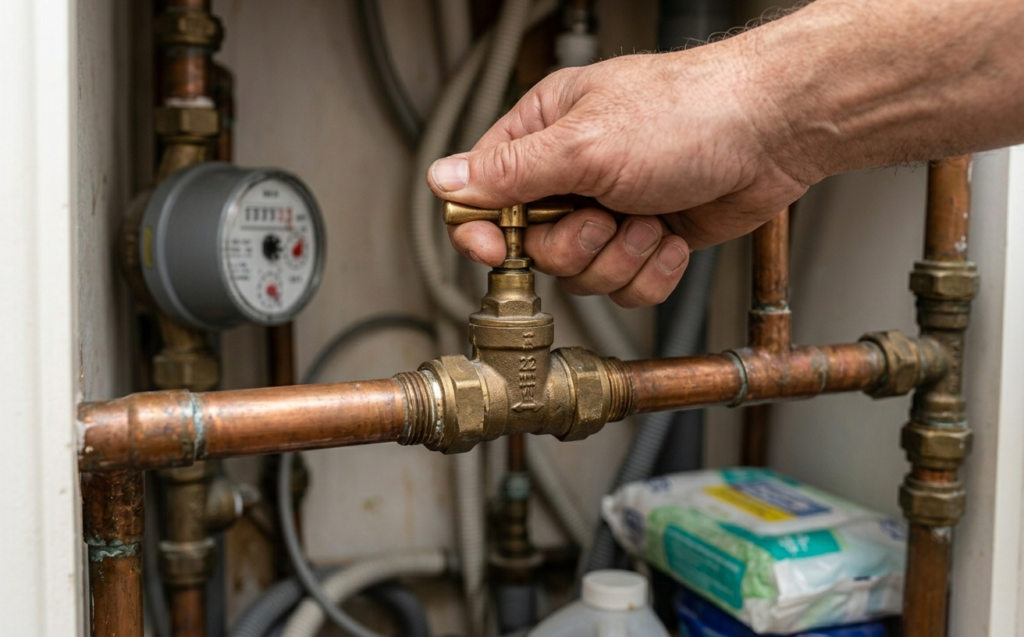
- Shut off the water supply at the stopcock if the leak is significant.
- Turn off nearby electrics if water is near sockets, switches, or appliances.
- Contain the water with towels or a bucket to limit spread.
- Avoid DIY pipe fixes on pressurised systems — a temporary patch can fail and make things worse.
- Call a qualified plumber to assess and repair the source properly.
For leaks that are ongoing or hard to trace, our Leak Detection & Repair service uses proper diagnostic methods to find the exact source without unnecessary wall or floor damage.
Installation and Repair Tips for Long-Term Reliability
- Use the right pipe material for the job. Copper, plastic, and speedfit fittings each suit different applications — using the wrong one is a common cause of early failure.
- Support pipework properly. Unsupported pipes flex over time, which loosens joints.
- Insulate exposed pipes, particularly in lofts, garages, and outside walls, to reduce the risk of freezing in winter.
- Have new pipework professionally installed, especially for kitchens, bathrooms, and boiler connections, where poor installation causes the majority of future leaks.
If your existing pipework is old, patched repeatedly, or simply due an upgrade, it’s often more cost-effective in the long run to replace it outright. Our Pipe Replacement & Relining service covers exactly this.
Maintaining Your Pipes to Prevent Future Leaks
- Check under sinks, around the boiler, and near external pipework every few months.
- Keep an eye on your water bill — an unexplained increase often means a hidden leak.
- Get your water pressure checked periodically rather than waiting for a fitting to fail.
- Consider a routine maintenance plan so small issues are caught before they escalate — our Residential AMC plans are built for exactly this kind of ongoing protection.
When to Call a Professional Plumber
A small drip you can sometimes manage yourself. But you should call a professional straight away if you notice:
- Water pooling near electrical fittings
- A sudden burst or spray
- Recurring leaks from the same spot
- Signs of damp, mould, or ceiling staining
- Falling water pressure alongside a visible leak
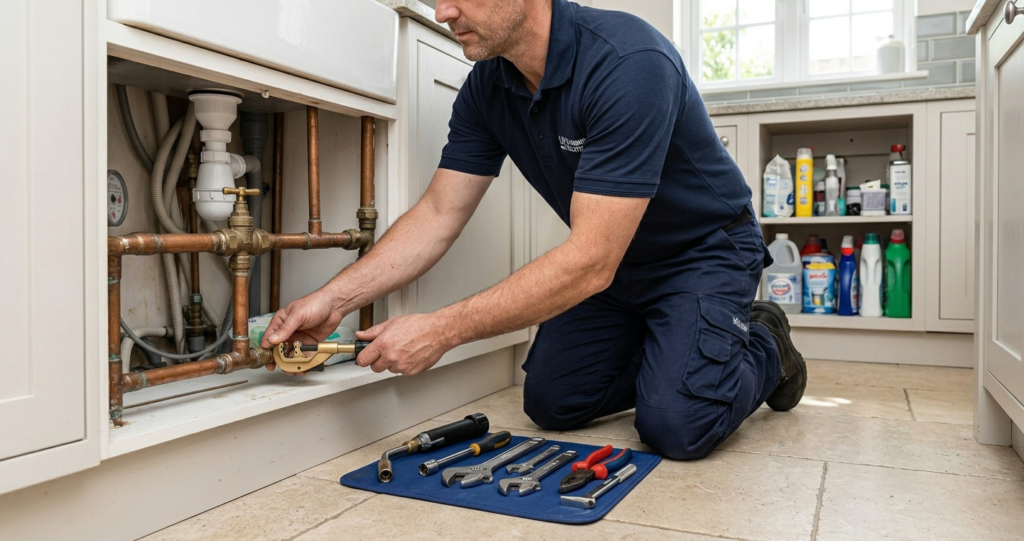
Catalyst Home Services provides fast, reliable plumbing support across London, including 24/7 Emergency Plumbing for leaks that can’t wait. You can book a plumber online or get in touch with our team directly through our contact page.
Water from a pipe is rarely just a one-off nuisance, it’s usually a sign of something that needs proper attention. If you’ve spotted a leak, drip, or damp patch anywhere in your home, get in touch with Catalyst Home Services for a fast, professional assessment.