
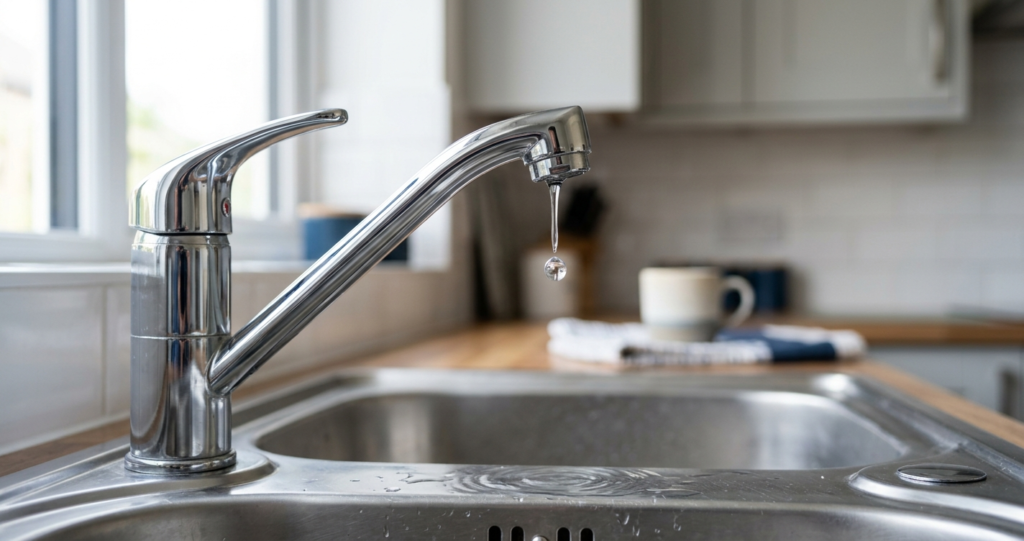
That steady drip… drip… drip… from your kitchen or bathroom tap is more than just an annoying sound at night. A dripping tap wastes water every single hour it’s left unfixed, can push up your water bill, and often points to a worn part inside the tap that will only get worse with time.
The good news is that most dripping taps are straightforward to diagnose, and many can be repaired quickly by a qualified plumber without the need to replace the whole fitting. In this guide, we’ll walk through why taps drip, the different types of taps found in UK homes, what you can safely check yourself, and when it’s time to bring in a professional.
At Catalyst Home Services, we repair dripping and leaking taps across London every week, from period conversions in Camden to new-build kitchens in Woolwich. Here’s everything you need to know.
Why Is My Tap Dripping?
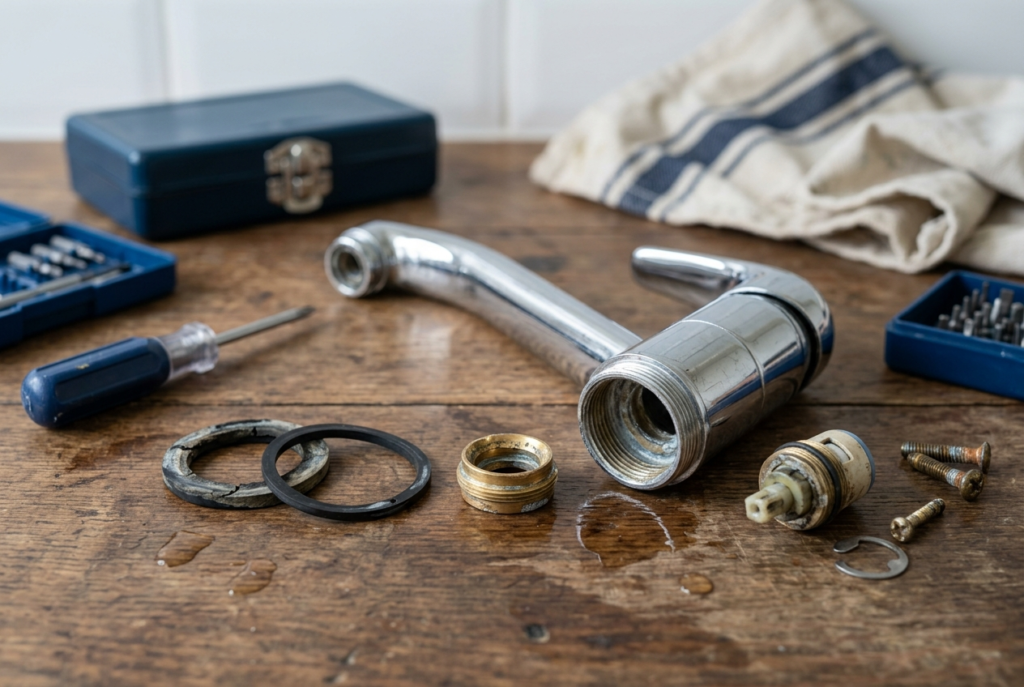
A dripping tap is almost always caused by a worn or damaged internal part rather than a fault with the tap body itself. The most common culprits include:
- Worn washers – on older compression taps, the rubber washer that seals the valve seat hardens and perishes with age, letting water seep through.
- Damaged O-rings – small rubber rings that seal moving parts inside the tap; once they split or wear thin, water escapes around the spindle or handle.
- Worn valve seats – repeated contact with the washer corrodes the valve seat over time, creating an uneven surface that no longer seals properly.
- Faulty ceramic disc cartridges – modern lever and mixer taps use ceramic discs instead of washers; a chipped or scratched disc will cause a persistent drip.
- High water pressure – excessive mains pressure can strain seals and cause dripping even in a relatively new tap.
- Loose or worn-out parts – general wear from years of use can loosen fittings enough to let water through.
If you notice dripping alongside a wider drop in flow, it may be linked to a broader issue with your system, in which case our Water Pressure Issue team can take a closer look.
Types of Taps and How Their Drips Differ
Understanding what type of tap you have makes it much easier to identify the fault and the right fix:
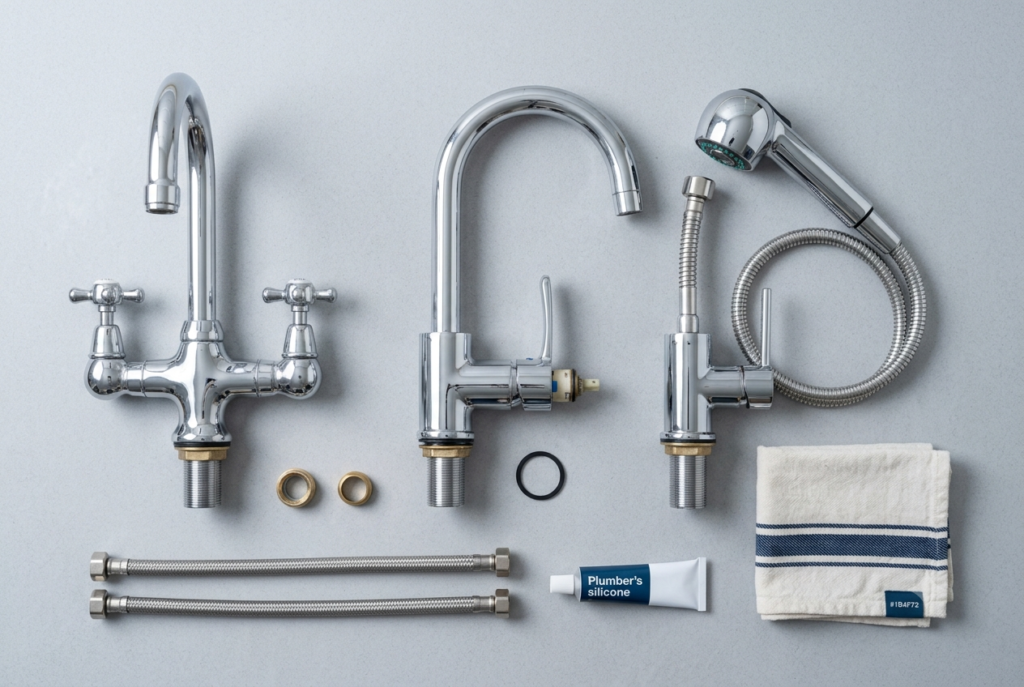
- Compression (traditional) taps – have separate hot and cold handles and rely on a rubber washer. These are the most common cause of a classic slow drip and are usually the cheapest to repair.
- Ceramic disc taps – found on most modern mixer taps, these use two ceramic discs that rotate to control flow. They rarely need washer replacement but can drip if a disc cartridge wears out or debris gets trapped inside.
- Mixer taps – blend hot and cold water through a single spout. A drip here can stem from the cartridge, the O-rings, or the diverter valve on models with a pull-out spray.
- Ball valve taps – use a rotating ball to control water flow and temperature; they’re less common in homes but can develop leaks around the ball assembly and require specific replacement seals.
Why a Dripping Tap Is Worth Fixing Promptly
It’s tempting to ignore a small drip, but leaving it unaddressed can cause more than just an irritating noise:
- Wasted water and higher bills – even a slow drip adds up to a significant amount of wasted water over weeks and months, especially if you’re on a water meter.
- Limescale and staining – constant dripping encourages limescale build-up and can stain sinks, baths, and worktops, particularly in London’s hard water areas.
- Hidden leaks – a drip at the spout can sometimes be a sign of a leak elsewhere in the tap or supply pipe that isn’t immediately visible.
- Further damage – worn valve seats and cartridges tend to deteriorate further the longer they’re left, which can turn a simple washer swap into a full tap replacement.
Simple Checks You Can Try Before Calling a Plumber
Some dripping taps can be resolved with basic maintenance. Always turn off the water supply to the tap (or the mains stopcock) before attempting any of the following:
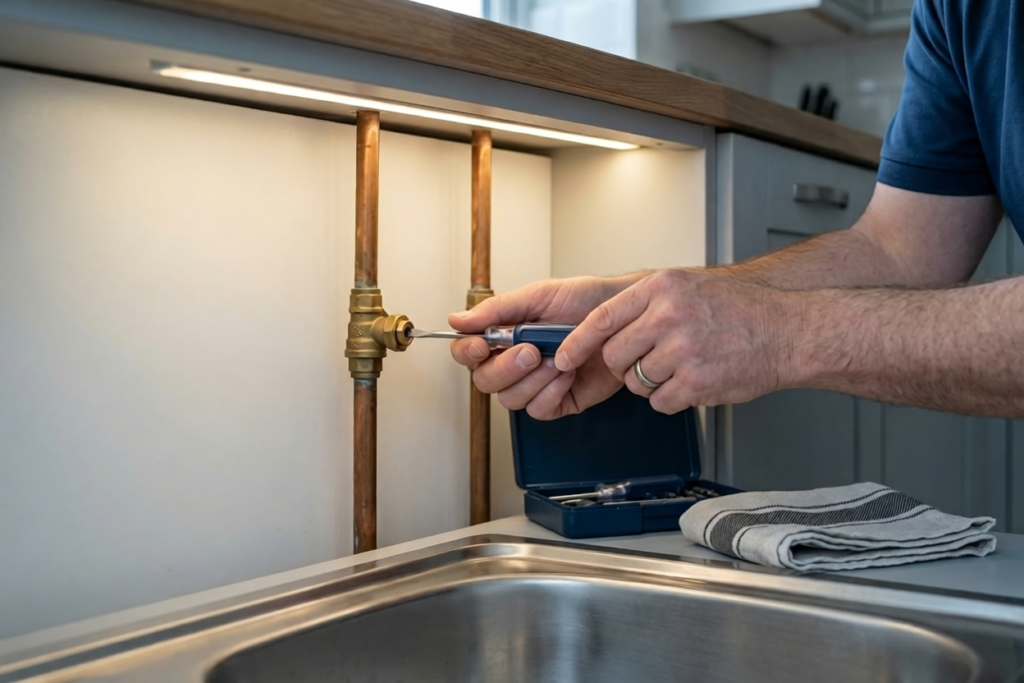
- Check the tap is fully closed – a partially turned handle can mimic a worn washer.
- Inspect the washer – on compression taps, unscrew the handle and headgear to view the washer; replace it if it looks flattened, cracked, or perished.
- Look at the O-rings – if water is escaping around the handle rather than the spout, a worn O-ring is often the cause.
- Clean the aerator – mineral build-up in the tap’s aerator can sometimes cause dripping or an uneven flow that’s mistaken for a leak.
- Note the tap brand and model – having this to hand makes it much quicker for a plumber to source the correct replacement cartridge or washer if needed.
If the drip continues after a basic washer change, or you’re not confident opening up the tap yourself, our Tap & Faucet Repair service covers everything from a quick washer swap to full cartridge and valve replacement, so you’re not left guessing.
When to Call a Professional Plumber
While some drips are a simple DIY fix, it’s worth booking a qualified plumber when:
- The tap continues to drip after replacing the washer or O-ring.
- You have a ceramic disc or mixer tap, where the cartridge requires specific tools and parts.
- There’s visible corrosion, a stiff or seized handle, or damage to the tap body itself.
- You suspect the drip is linked to a wider leak or pressure issue behind the wall or under the sink.
- The tap is old and you’d rather have it assessed for a full replacement than repeatedly repaired.
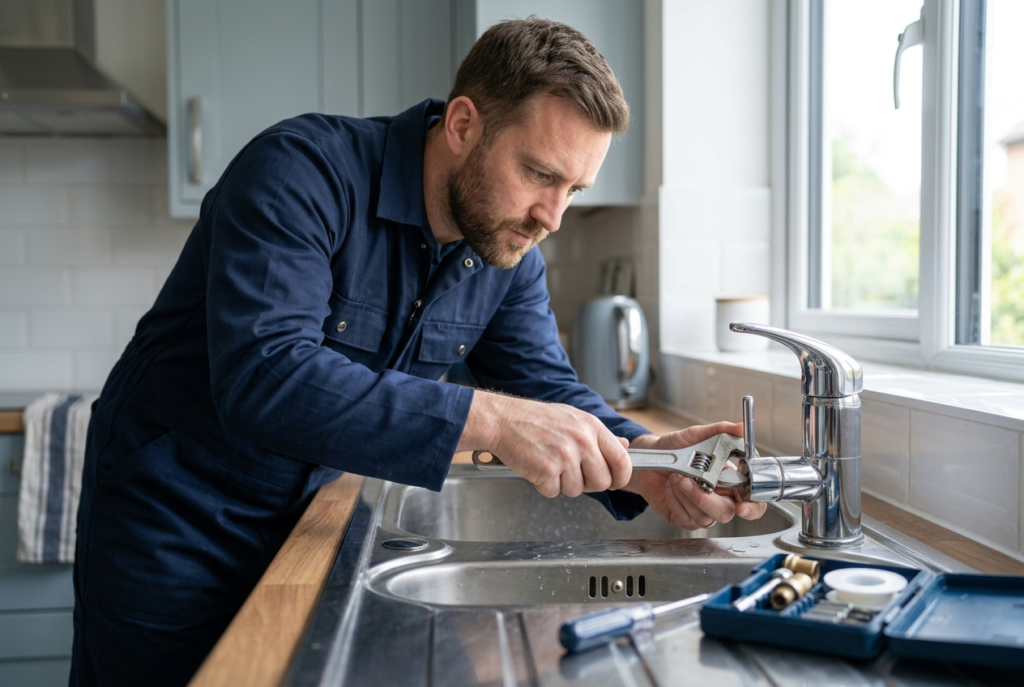
Our engineers arrive with a full range of washers, cartridges, and fittings for most major tap brands, so most dripping tap call-outs are resolved in a single visit. If the issue turns out to be a hidden leak rather than a worn part, we can carry out a full Leak Detection & Repair survey at the same appointment.
Keeping Your Taps Drip-Free: Maintenance Tips
- Turn taps off gently rather than forcing them shut, which speeds up wear on the washer and valve seat.
- Descale taps and aerators regularly, especially in hard water areas across London.
- Have taps serviced as part of a routine plumbing check, rather than waiting for a drip to appear.
- Replace washers and cartridges proactively on taps older than 8–10 years, before they fail completely.
For landlords and homeowners who’d rather stay ahead of issues like this, our Residential AMC plans include scheduled checks on taps, valves, and fittings, so small drips are caught and fixed before they become bigger problems. Commercial properties and landlords managing multiple units can also explore our Residential Plumbing services for ongoing support.

Book a Dripping Tap Repair with Catalyst Home Services
Don’t let a small drip turn into a bigger repair bill. Our experienced, fully qualified plumbers provide fast, transparent, same-day tap repairs across London, with no hidden charges and workmanship you can rely on.
Ready to stop that drip for good? Book a Plumber online, or call our 24/7 Emergency Plumber line on +44 7400 265421 if the drip has turned into something more urgent. You can also browse more plumbing advice on our Blog.