
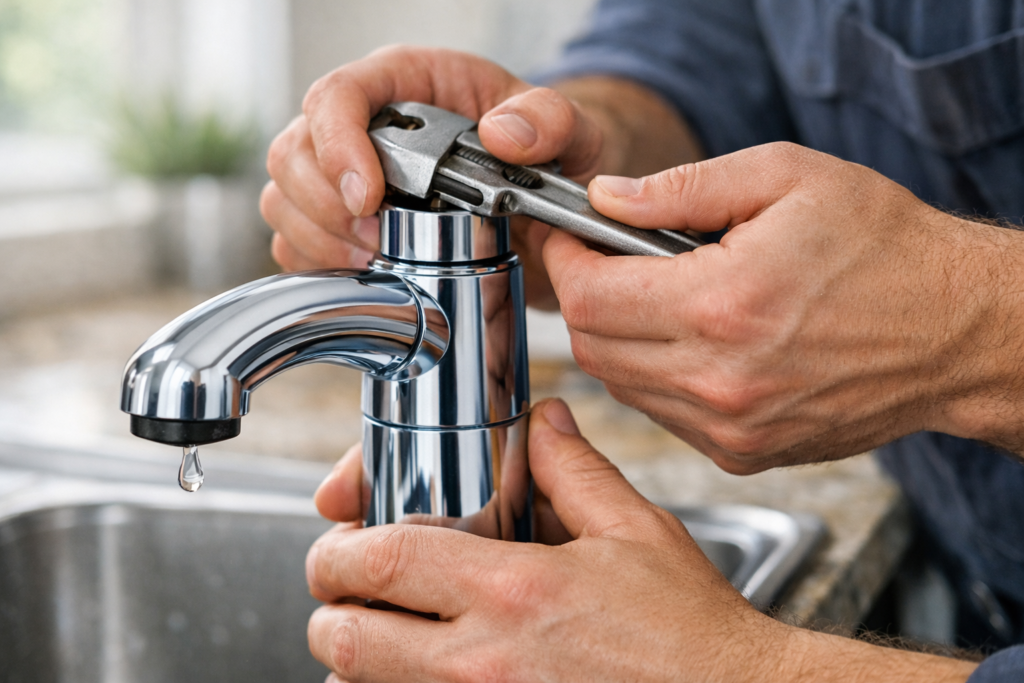
A leaking tap rarely feels urgent. It’s just a drip, after all. But that drip adds up — on your water bill, on your sink or basin, and eventually on your patience. The good news is that most leaking taps, indoors and outdoors, come down to a handful of common faults, and nearly all of them are fixable in under an hour by someone who knows what they’re looking for.
This guide covers everything you need to know about leaking tap repair: what causes it, how it’s fixed, the different tap types involved, and a closer look at garden and outdoor taps specifically, since they fail in slightly different ways to the taps inside your home.
If you’d rather skip straight to getting it fixed, call +44 7400 265421 or book a plumber online and a Catalyst Home Services engineer can be with you the same day.
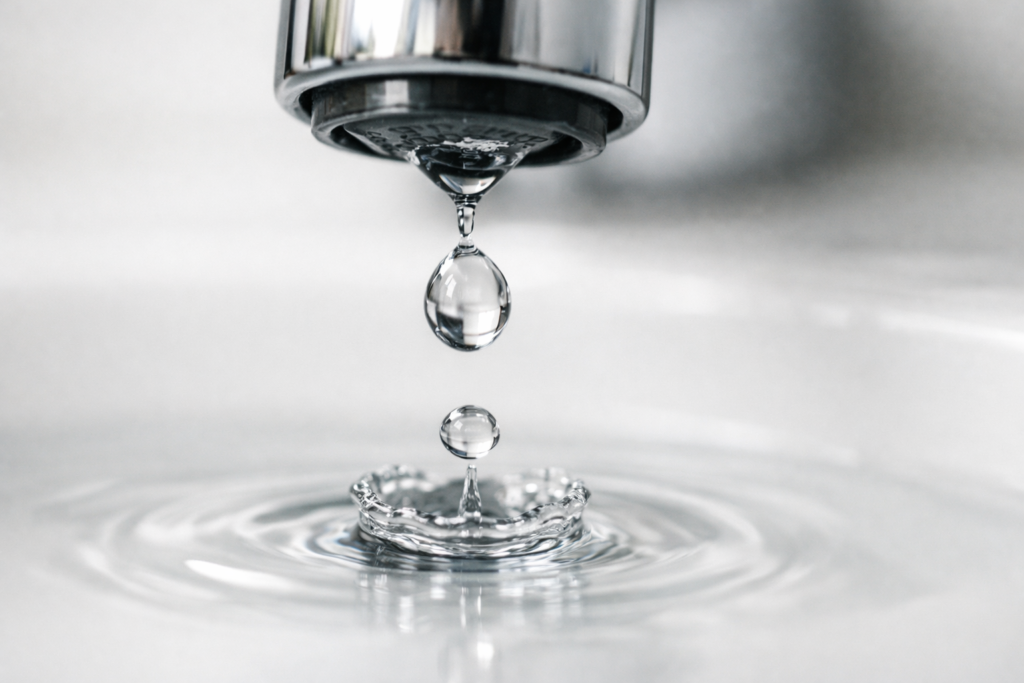
Why a Leaking Tap Is Worth Fixing Promptly
A tap dripping once every second wastes around 30 litres of water a day. Over a year, that’s more than 10,000 litres from a single tap — a real cost if you’re on a water meter, and a waste even if you’re not.
There’s also the damage to think about. Water sitting around a tap base or dripping into a sink long-term can mark porcelain, stain enamel, and encourage limescale build-up around fittings. Outdoors, a leaking garden tap can saturate the ground nearby, which is a slower but equally real problem, especially near foundations or paving.
The fix itself is usually quick and inexpensive. Letting it run for months is almost always the more costly choice.
Common Causes of a Leaking Tap
Most leaking taps trace back to one of these faults:
- Worn washer — the rubber seal inside older pillar taps compresses every time you close the tap, and eventually it wears flat and stops sealing properly.
- Failed O-ring — a small rubber ring that seals the tap spout or spindle. When it perishes, water seeps out around the handle or base.
- Damaged cartridge — modern mixer taps use a ceramic cartridge instead of a washer. When it cracks or wears, the tap drips or won’t shut off cleanly.
- Worn valve seat — the surface the washer presses against. Limescale and age can pit this surface, so even a new washer won’t seal fully.
- Loose or degraded gland packing — this can cause leaks around the tap handle rather than the spout.
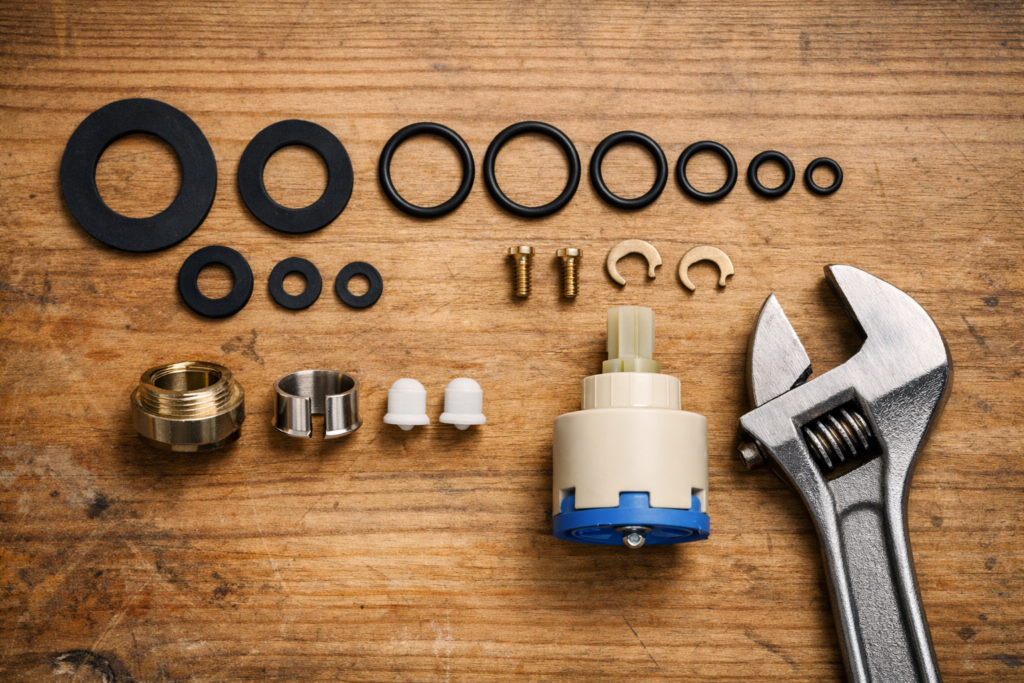
London’s hard water makes limescale a particularly common culprit. It builds up inside the tap mechanism, makes handles stiff, and accelerates wear on washers and seats. For a full breakdown of tap faults and how each one is fixed, our Tap & Faucet Repair page goes into more detail.
How Leaking Tap Repair Works
A proper repair is a straightforward process, and most jobs are completed in a single visit:
- Isolate the water supply using the isolation valve under the sink, or the property stopcock if there isn’t one fitted.
- Dismantle the tap to expose the internal parts and identify exactly what’s failed.
- Fit the correct replacement part — washer, O-ring, cartridge, or valve seat, depending on the fault.
- Reassemble and test the tap through its full range, checking for drips at every setting.
Engineers typically carry the most common washers, O-rings, and cartridges on the van, so parts rarely need to be ordered in. If your tap does need a less common or brand-specific part, you’ll be told upfront, along with a realistic timeline.
Garden Taps: Why They Deserve Special Attention
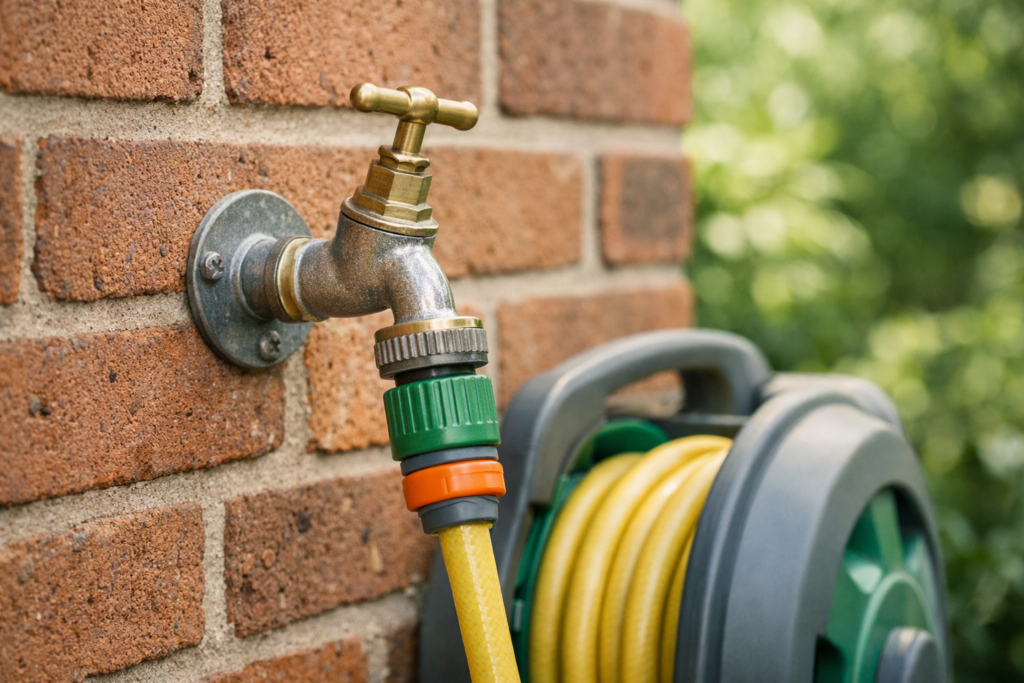
Outdoor taps face a different set of pressures to the ones inside your home, and they’re often overlooked until something goes wrong.
Why Garden Taps Matter
A working outdoor tap is more useful than it seems — watering the garden, filling a paddling pool, washing the car, connecting a pressure washer or hose reel. When it leaks or fails, most people just stop using it rather than getting it fixed, which means losing a genuinely handy part of the property. A leaking garden tap left unchecked can also waste a surprising amount of water over a season, and constant dampness at the base can encourage moss, staining, or soft ground right where the tap meets the wall.
Types of Garden Taps
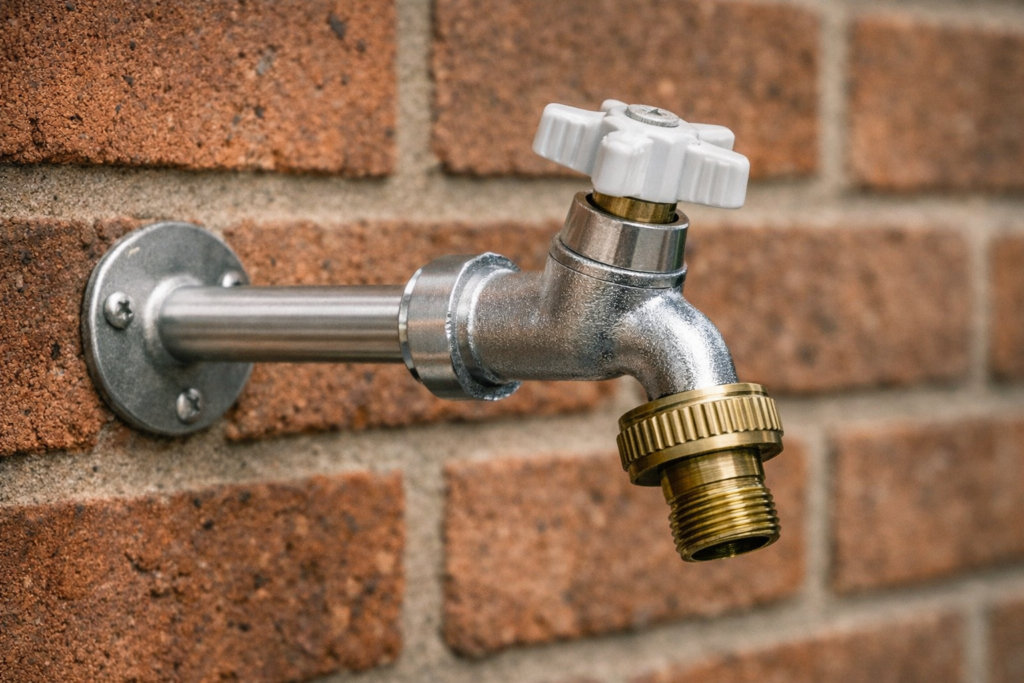
Garden Tap Installation Tips
If you’re fitting a new outdoor tap or replacing an old one, a few things make a real difference:
- Fit a frost-free tap where possible. Standard bib taps are more vulnerable to freezing and splitting in winter.
- Install an isolation valve inside the property. This lets you shut off the outdoor supply separately from the rest of the house — essential before cold weather hits.
- Position the tap with a slight downward angle so it drains fully after use rather than holding standing water.
- Use a proper wall-sealing plate where the pipe passes through brickwork, to stop water tracking back into the wall.
This isn’t a job to rush. A poorly sealed or badly positioned outdoor tap tends to come back as a repair call within a year or two.
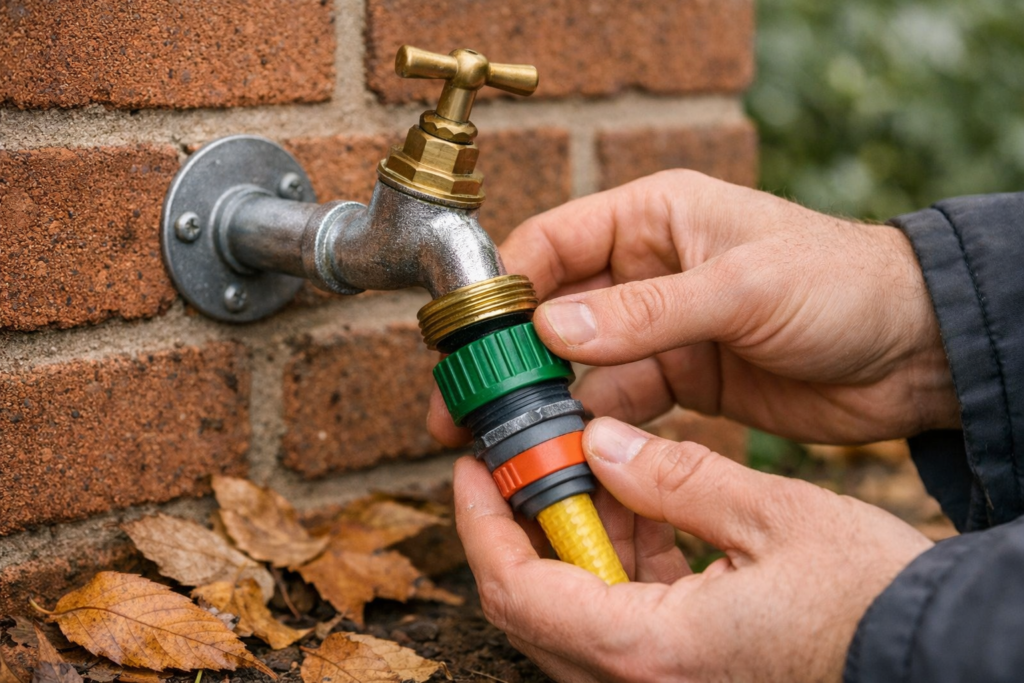
Garden Tap Maintenance
A little seasonal care goes a long way:
Common Garden Tap Problems
- Split tap body after winter — almost always frost damage from water left standing in the pipe or tap.
- Constant drip from the spout — the same washer or O-ring wear you’d find on an indoor tap, just exposed to more weather.
- Leak where the tap meets the wall — usually a failed compression joint or perished seal on the supply pipe.
- No water reaching the tap at all — can point to a closed isolation valve, a frozen pipe in cold weather, or a blockage further up the line.
Our engineers repair and replace outdoor taps across London, including fitting a proper frost-protected isolation valve if your property doesn’t already have one. It’s covered as part of our wider Tap & Faucet Repair service.
When It’s More Than the Tap
Sometimes a “leaking tap” turns out to be something else. A few signs worth knowing:
- Water appearing near the tap but not from the spout or handle may be coming from a pipe behind the wall or under the floor. Our Leak Detection & Repair service can trace exactly where it’s coming from.
- Low or inconsistent flow from one or more taps across the property can point to a broader water pressure issue rather than a fault with the tap itself.
- A tap that won’t shut off at all is worth treating as urgent — our 24/7 emergency line is there for exactly this.
Repair or Replace?
For most leaking taps, repair is the sensible choice. A worn washer or failed cartridge is inexpensive to fix and gives the tap several more years of reliable use.
Replacement makes more sense when the tap body itself has corroded, when parts are no longer available for an old or discontinued model, or when years of limescale damage mean a new washer won’t hold a seal. If you’re replacing a tap as part of a wider update, our Bathroom Fitting team can help plan the job properly.
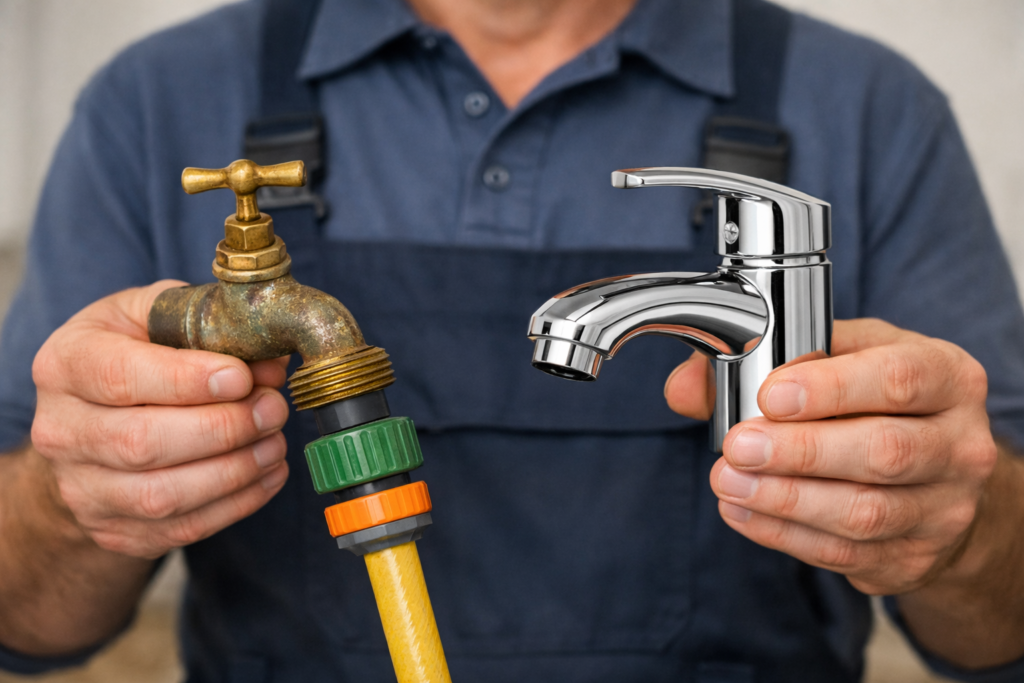
Whichever applies to your tap, you’ll get a straight answer before any work begins — there’s no benefit to us in recommending a repair or replacement you don’t actually need.
FAQs About Leaking Tap Repair
How much does leaking tap repair cost? It depends on the tap type and the part that’s failed. A simple washer replacement on a standard pillar tap sits at the lower end of the scale. Cartridge or valve replacements on mixer taps and outdoor frost-free taps cost more, since the parts themselves are pricier. You’ll always get a clear quote before work starts.
Can a plumber fix a leaking tap the same day? In most cases, yes. Engineers carry the most common parts on the van, so same-day bookings are the norm across London.
Why does my garden tap only leak in winter? This usually means water was left standing in the tap or pipe when temperatures dropped, causing a small split that only shows up once the tap thaws and is used again. Draining outdoor taps before winter each year prevents this.
Is it safe to leave a leaking tap for a while? It won’t cause immediate harm in most cases, but it wastes water continuously and can lead to staining, limescale build-up, or damp patches around the tap base over time. It’s worth sorting sooner rather than later.
Do I need a plumber for a leaking outdoor tap, or can I fix it myself? If you’re comfortable isolating the water supply and know your way around a spanner, a straightforward washer swap is a manageable DIY job. If the tap body has split, the pipework behind it is affected, or you’re not confident shutting off the supply safely, it’s worth calling a professional rather than risking a bigger leak.
Book Leaking Tap Repair in London
Whether it’s a dripping kitchen mixer, a stiff bathroom tap, or a garden tap that didn’t survive the winter, Catalyst Home Services offers same-day repairs across London with qualified engineers and transparent pricing. Call +44 7400 265421, use our 24/7 emergency line if the tap won’t shut off, or book a plumber online and we’ll confirm your appointment straight away.
Check our service areas to confirm we cover your postcode, or read what customers across London say on our reviews page.