
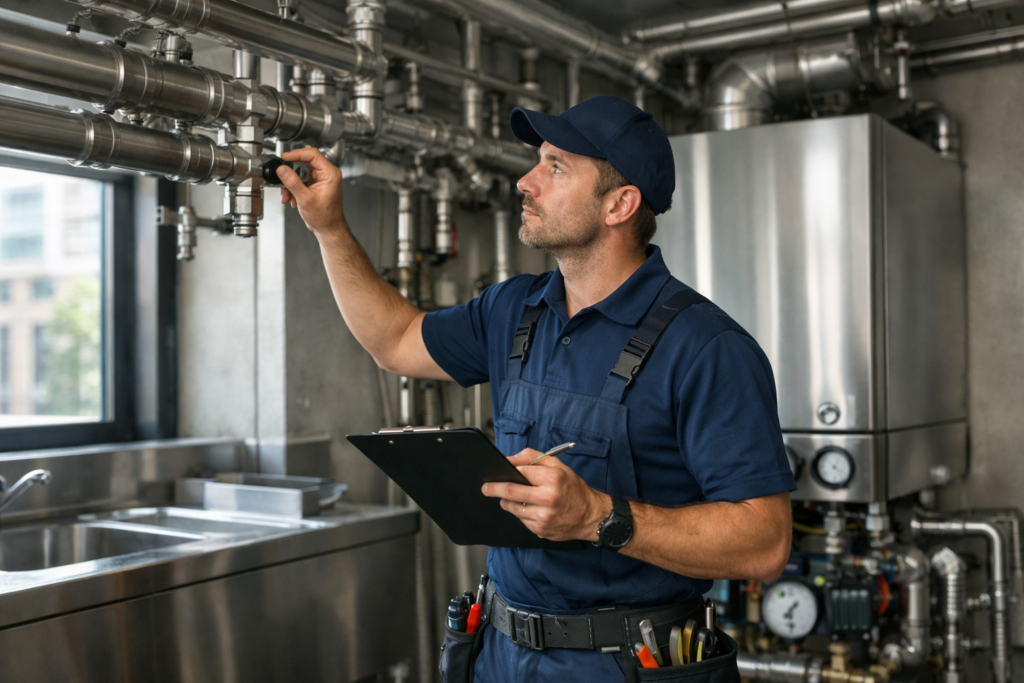
When a pipe bursts in a residential kitchen, it’s stressful. When it bursts in a London restaurant during Friday lunch service, it’s a trading emergency. Commercial plumbing in London operates under a different set of pressures entirely — higher usage, strict compliance rules, and zero tolerance for downtime. This guide covers everything a business owner, landlord, or facilities manager needs to know about keeping commercial plumbing systems safe, compliant, and running smoothly.
Why Commercial Plumbing Is Different From Residential Plumbing
A house has one kitchen and a couple of bathrooms. A London office block, restaurant, or care home might have dozens of taps, several boilers, a commercial kitchen, and pipework that’s been extended and altered for decades. Commercial systems see far more daily use, which means components wear out faster and problems escalate quicker.
There’s also a legal dimension that simply doesn’t apply at home. UK commercial properties must comply with the Water Supply (Water Fittings) Regulations 1999, Legionella risk management guidance under the HSE’s Approved Code of Practice (L8), and — where gas appliances are involved — the Gas Safety (Installation and Use) Regulations 1998. Getting any of these wrong isn’t just inconvenient; it can mean enforcement action, fines, or a genuine public health risk.
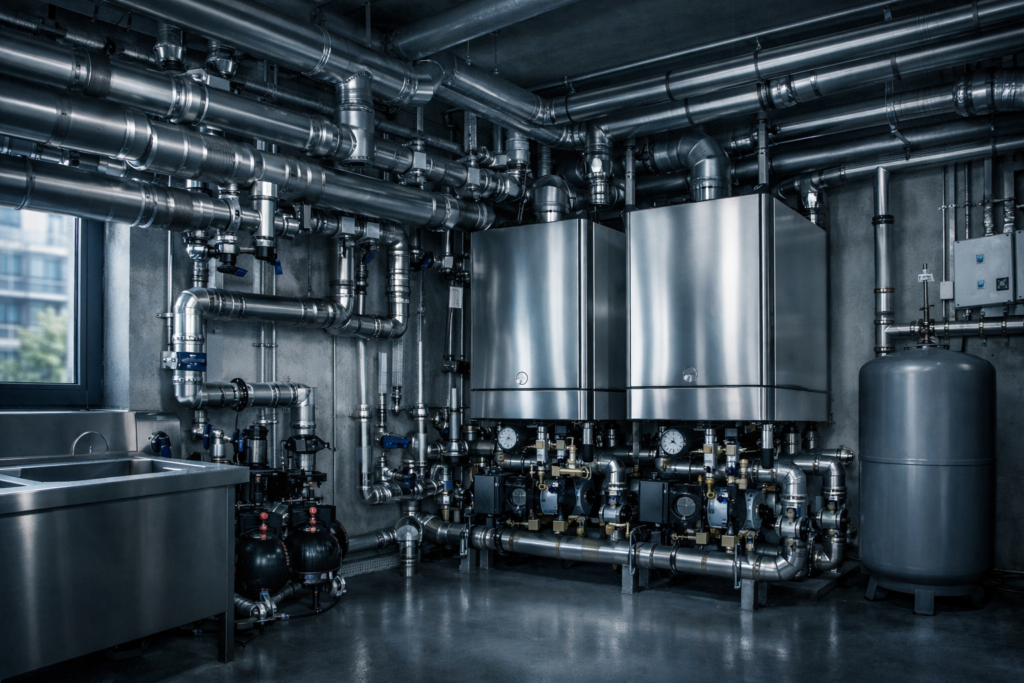
At Catalyst Home Services, our engineers work across London’s businesses every day, so we understand exactly what these regulations mean in practice — not just in theory.
Why Commercial Plumbing Matters for Your Business
It’s easy to think of plumbing as background infrastructure — until it fails. A blocked drain in a commercial kitchen can trigger a hygiene inspection. A failed boiler in a care home can put vulnerable residents at risk. A burst pipe in a retail unit can close the doors on a Saturday, your busiest trading day of the week.
Reliable commercial plumbing protects three things that matter to any business: continuity of trade, regulatory compliance, and reputation. Customers, tenants, and regulators all notice when plumbing is neglected — and the cost of reacting to a failure is almost always higher than the cost of preventing one.
Types of Commercial Plumbing Work
Commercial plumbing covers a broader range of work than most people expect. The main categories include:
You can see the full breakdown of these services on our Commercial Plumbing Services page.
Installation Considerations for Commercial Properties
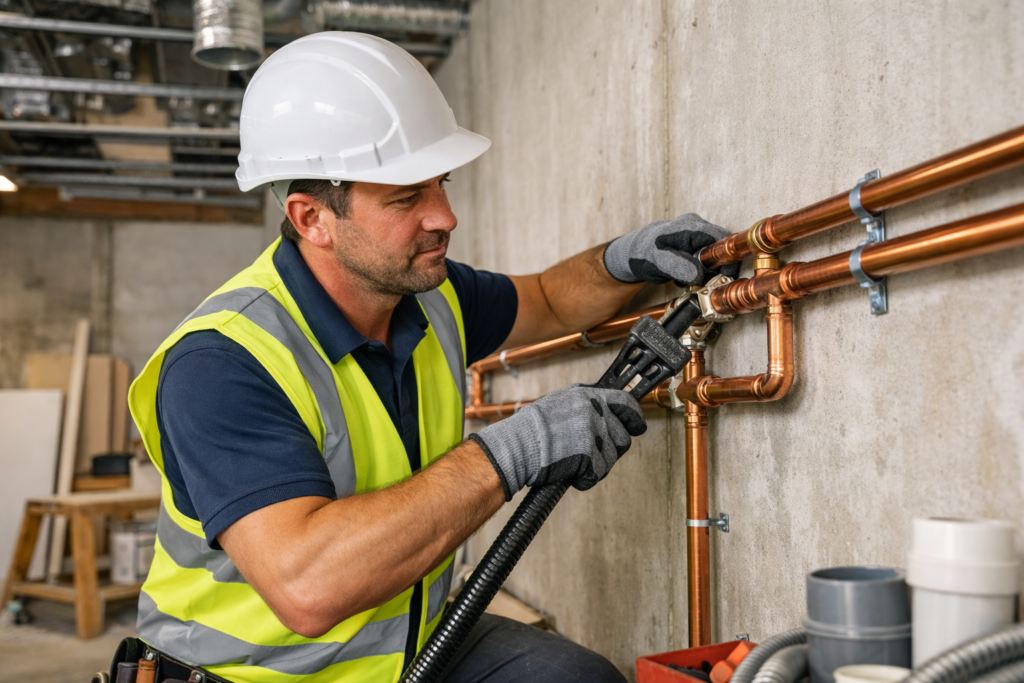
Installing or upgrading plumbing in a commercial building isn’t the same job as fitting a domestic bathroom. A few things matter far more in a commercial context:
- Minimal disruption to trading. Work is often scheduled around opening hours — early mornings, evenings, or weekends — so the business keeps running.
- Compliance from day one. New installations must meet the Water Fittings Regulations and, where gas is involved, be signed off by a Gas Safe registered engineer.
- Capacity planning. Commercial kitchens, multi-occupancy washrooms, and high-footfall buildings need pipework and heating systems sized for sustained daily demand, not occasional domestic use.
- Documentation. Every commercial installation should come with written certification and records — you’ll need these for insurance, lease obligations, and regulatory inspections.
For pipework that’s ageing rather than new, pipe relining is often a faster, less disruptive alternative to a full replacement — particularly relevant in London’s older commercial buildings.
Maintenance: The Key to Avoiding Costly Downtime
The single biggest difference between businesses that rarely have plumbing emergencies and those that call us in a panic is planned maintenance. Reactive plumbing — waiting for something to break — is almost always more expensive and more disruptive than a proactive approach.
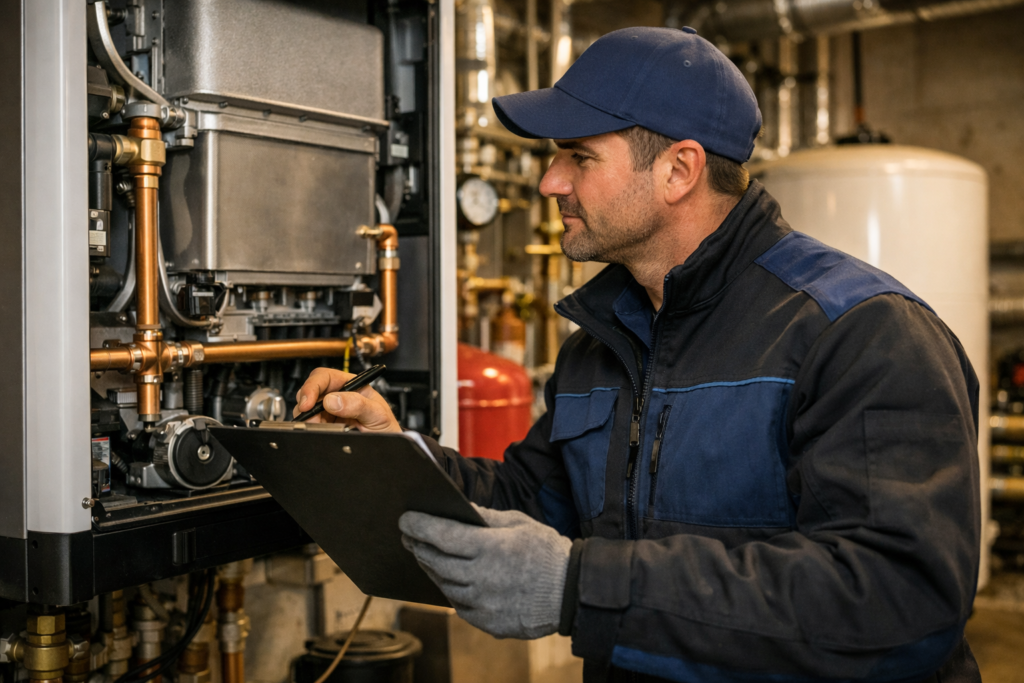
An Annual Maintenance Contract (AMC) gives you scheduled inspections, priority response for reactive work, and — critically — the compliance paperwork that regulators and insurers ask for. Planned Preventive Maintenance (PPM) takes this further with a structured, documented schedule covering every part of your plumbing and heating infrastructure.
Many of our commercial clients tell us their Commercial AMC effectively pays for itself after avoiding just one emergency callout. You can compare options on our AMC Pricing & Packages page.
A well-run maintenance programme typically includes:
- Annual boiler servicing and Gas Safe certification
- Legionella risk assessment and ongoing monitoring
- Scheduled drain inspections and cleaning
- Written compliance reports after every visit
- Priority response and discounted rates for reactive repairs
Common Commercial Plumbing Issues in London
Some problems come up again and again across London’s commercial properties. Knowing what to watch for can help you catch issues early.
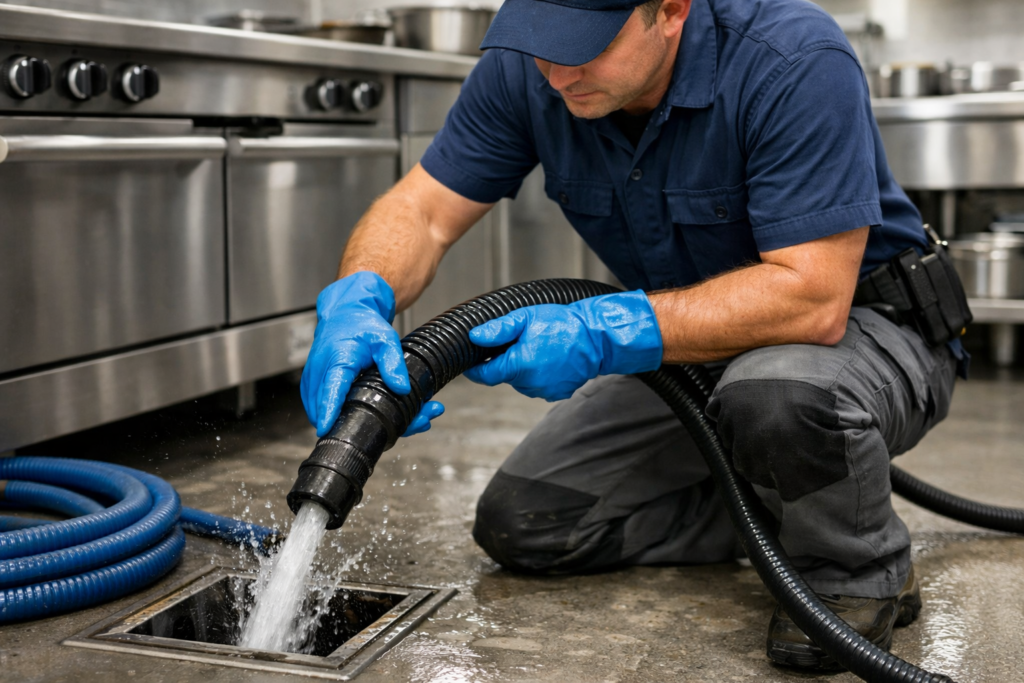
Blocked drains and grease build-up. Commercial kitchens generate far more fat, oil, and food waste than a domestic kitchen, and grease traps that aren’t maintained cause recurring blockages. Regular drain clearance prevents this becoming a hygiene issue.
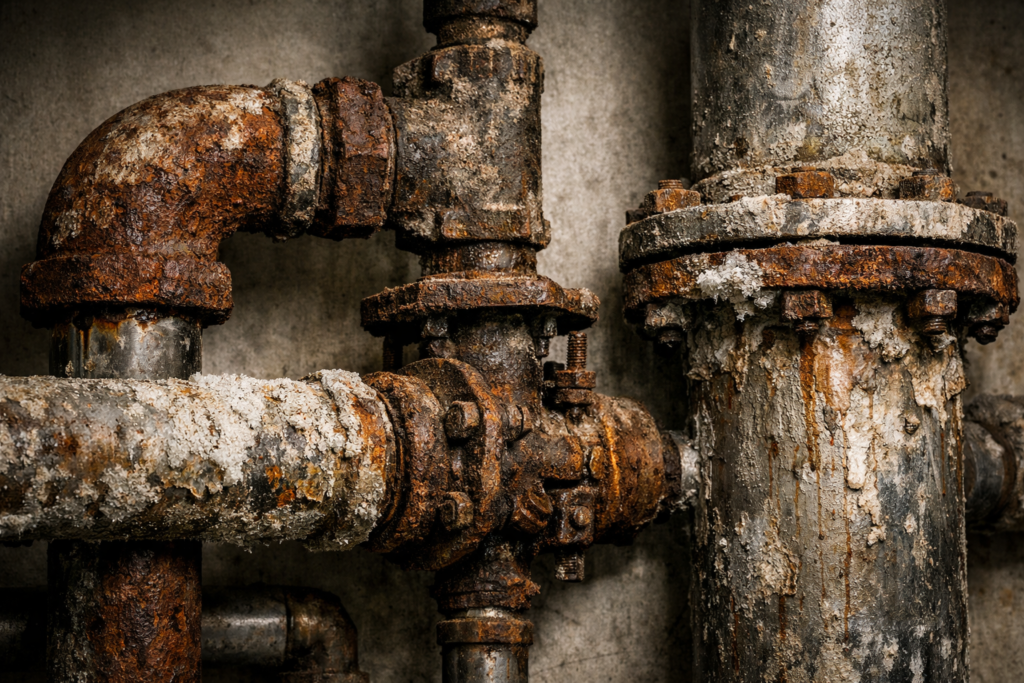
Ageing pipework. Many London commercial buildings still run on decades-old copper or iron pipework that’s prone to scaling, corrosion, and leaks. This is one of the most common causes of unexpected water damage in older properties.
Boiler breakdowns during peak demand. Commercial boilers that aren’t serviced annually are far more likely to fail exactly when you need them most — a cold snap, a fully booked hotel, or a busy restaurant service.
Poor water pressure. Multi-occupancy buildings and larger commercial premises are especially prone to pressure problems, which can affect everything from washroom facilities to commercial kitchen equipment. See our page on water pressure issues for more detail.
Legionella and water hygiene risks. Water systems that sit unused for periods — common in offices with hybrid working patterns — are at higher risk of bacterial growth, making regular monitoring essential.
How to Choose a Commercial Plumber in London
Not every plumber is set up to handle commercial work. When you’re choosing a commercial plumbing partner, look for:

- Gas Safe registration for any engineer carrying out gas work
- Genuine 24/7 emergency cover, not just an answering service
- Experience with your type of property — kitchens, care homes, offices, or retail
- Written compliance documentation provided as standard
- Transparent, itemised quotations with no hidden call-out fees
- Flexibility to work around your trading hours
Catalyst Home Services meets every one of these criteria. Our engineers are fully qualified and Gas Safe registered, we operate a genuine 24/7 emergency line across Greater London, and we provide compliance paperwork on every visit. You can read what our clients say on our Reviews & Testimonials page.

Get Reliable Commercial Plumbing Support in London
Whether you’re managing a single office, a chain of restaurants, or a portfolio of commercial properties, plumbing problems don’t wait for a convenient time. Working with a compliant, responsive commercial plumbing team protects your business, your tenants, and your bottom line.
Catalyst Home Services provides commercial plumbing across Greater London, backed by Gas Safe registered engineers, transparent pricing, and full compliance documentation. Book a plumber online, call our 24/7 line, or get in touch to discuss a planned maintenance contract for your property.
📞 Call 24/7: +44 7400 265421
📍 Check coverage: Our Service Areas