
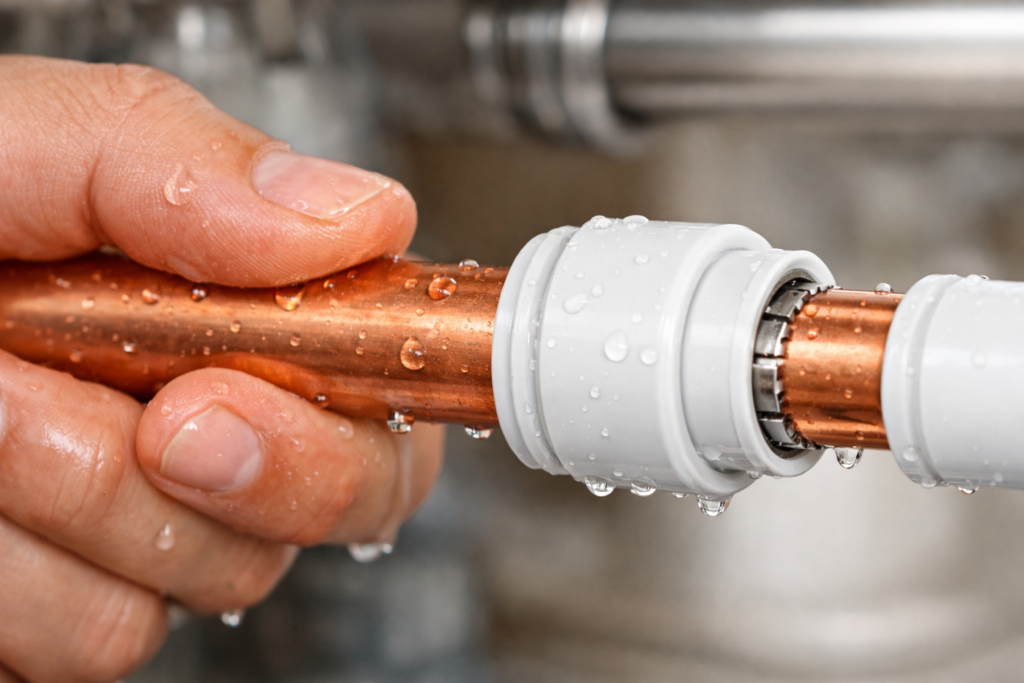
Speedfit is a brand of push-fit plumbing fittings made by John Guest, and the name has become shorthand across the UK for push-fit plumbing in general. Instead of soldering copper pipe with a blowtorch, Speedfit fittings let a plumber simply push a plastic or copper pipe into a connector until it clicks into place. An internal O-ring creates a watertight seal, and a stainless steel grab ring holds the pipe firmly in position.
It sounds simple, and in many ways it is. But like any plumbing system, Speedfit fittings only perform well when they’re specified correctly, installed with care, and maintained over time. That’s where a lot of DIY installations run into trouble.
Why Speedfit Fittings Are So Widely Used
Speedfit plumbing has become a standard part of UK domestic and commercial plumbing for a few practical reasons:
- Speed of installation – No soldering, no drying time, no naked flame. A connection that would take several minutes with copper and solder takes seconds with a push-fit fitting.
- Flexibility – Speedfit pipe can bend around obstacles, reducing the number of joints needed and making it ideal for tight spaces like under floors or behind fitted furniture.
- Lower risk on site – Because there’s no torch involved, push-fit systems reduce fire risk, which matters in occupied homes, older properties, and commercial buildings.
- Easy to service – Fittings can be demounted with a simple release collar, which makes future repairs or upgrades far less disruptive than cutting into soldered copper.
This combination of speed and flexibility is exactly why our plumbers reach for Speedfit fittings on a wide range of jobs, from full bathroom installations to smaller repair work.
Where Speedfit Plumbing Is Used in the Home
Push-fit fittings show up in more places than most homeowners realise:
Water supply pipework
Speedfit is commonly used for hot and cold supply lines feeding taps, showers, and appliances, particularly in refurbishments where pipework needs to be re-routed without disturbing walls or floors more than necessary.
Central heating pipework
Certain Speedfit ranges are rated for heating systems, allowing radiators and manifolds to be connected quickly during installations or upgrades.
Garden and outdoor taps
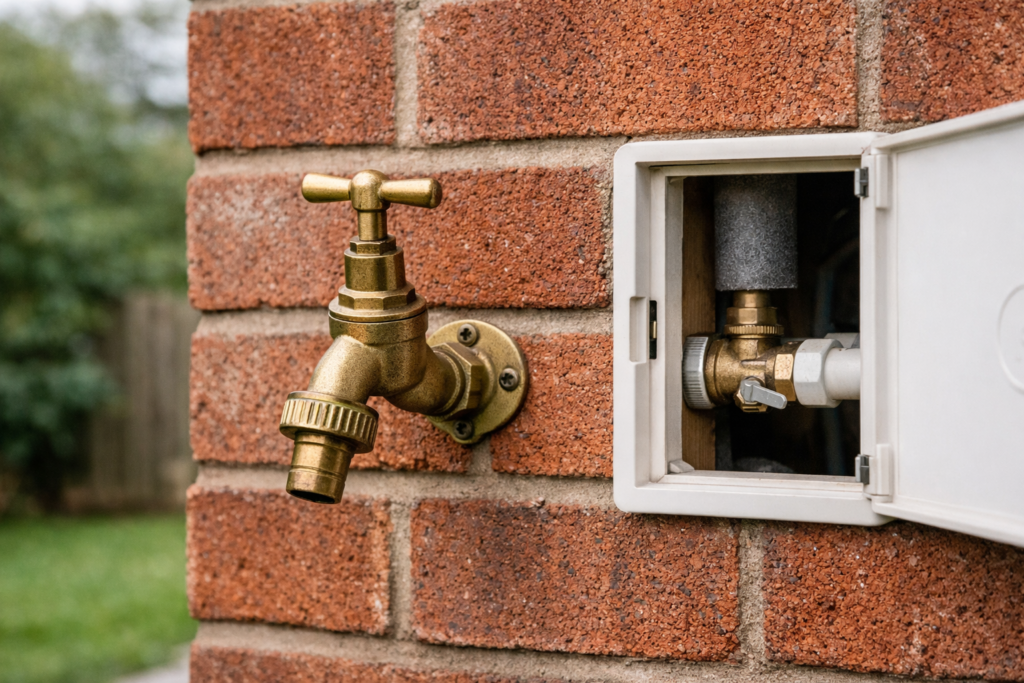
This is one of the most popular DIY and professional uses of push-fit fittings. Running a supply line out to a garden tap usually means connecting into an existing internal pipe, and Speedfit’s push-fit T-connectors make this far simpler than cutting and soldering copper, especially when the new branch has to travel through a wall or under a floor to reach the outside wall. A push-fit isolation valve fitted just before the tap also makes it easy to shut off and drain the line before winter, which matters for anyone dealing with frozen or burst pipe issues each year.
New build and extension pipework
On new build plumbing projects, push-fit systems speed up first and second fix stages considerably, which is a major reason developers and plumbers favour them.
Appliance connections
Washing machines, dishwashers, and boiler pipework often use push-fit connectors for quick, serviceable connections.
Types of Speedfit Fittings You Should Know
- Straight connectors – Join two lengths of pipe in a straight run.
- Elbows (90° and 135°) – Change pipe direction without cutting in extra joints.
- Tees – Split a supply line into two directions, commonly used when branching off for a garden tap or an additional appliance.
- Stop ends – Cap off a pipe run, useful when a system is being extended in stages.
- Push-fit isolation valves – Allow a section of pipework to be shut off independently, essential for outdoor taps and appliance connections.
- Tap connectors – Adapt push-fit pipe to standard tap tails for a clean, leak-free finish.
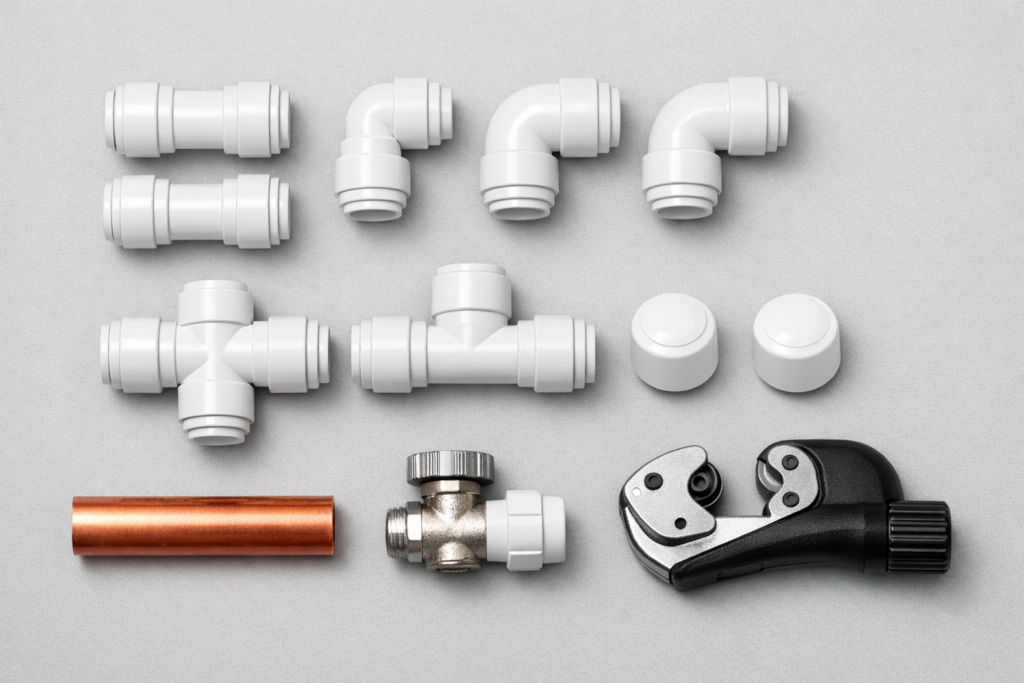
Matching the fitting to the pipe material and pressure rating matters. Speedfit fittings work with plastic barrier pipe, copper, and in some ranges, PEX, but mixing incompatible pipe and fitting types is one of the most common causes of failed joints.
Installation Tips for Speedfit Plumbing
A push-fit connection looks deceptively easy, but a few details separate a joint that lasts for years from one that leaks within months:
- Cut pipe ends square. An angled or ragged cut prevents the O-ring from forming a proper seal. A proper pipe cutter, not a hacksaw, gives the cleanest result.
- De-burr and chamfer the edge. Sharp edges on copper pipe can damage the internal O-ring as the pipe is pushed in.
- Mark the insertion depth. Most fittings have a visible insertion line; pushing the pipe in only partway is a common cause of leaks.
- Push in firmly and evenly, don’t twist. A firm, straight push seats the grab ring correctly.
- Support the pipe. Push-fit pipe still needs proper clipping at regular intervals; unsupported runs sag over time and stress the joints.
- Pressure test before closing up walls or floors. This single step avoids the vast majority of hidden-leak call-outs plumbers see after a DIY job has been boxed in.
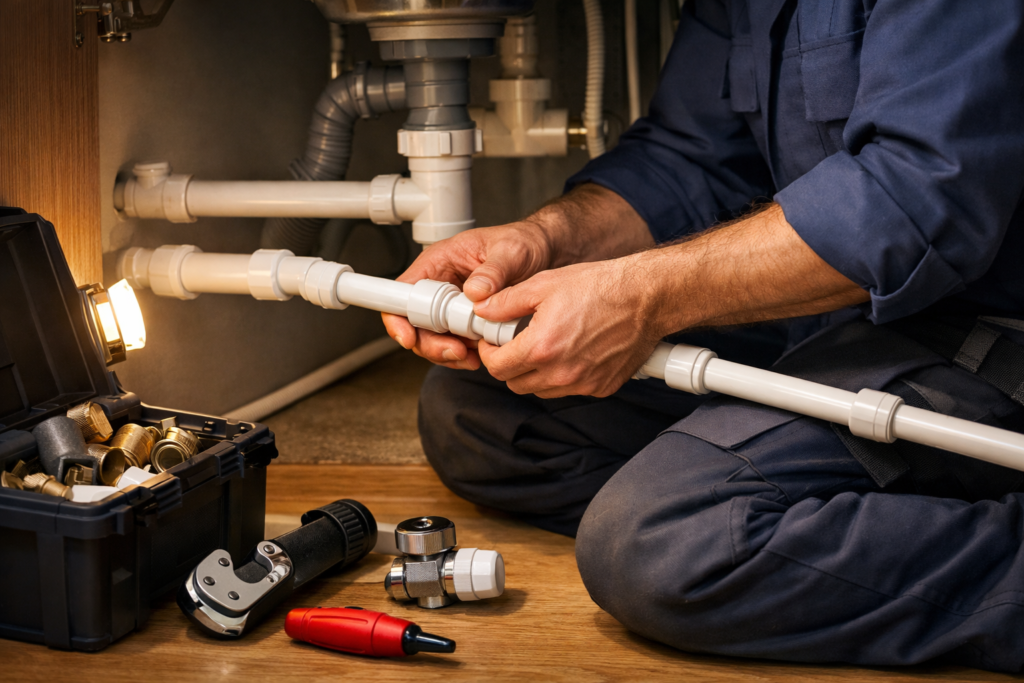
If a job involves running new branches into an existing system, or connecting into hot water or heating pipework, it’s worth having a qualified plumber check the layout first. Our team regularly gets called out for leak detection and repair where a push-fit joint was fitted correctly on the surface but never pressure tested.
Maintaining Speedfit Plumbing Long-Term
Push-fit systems are low maintenance, but they’re not maintenance-free:
- Check accessible joints periodically, especially under sinks and near outdoor tap connections, for any sign of weeping or staining.
- Protect outdoor branches from frost. An exposed push-fit tee or isolation valve on an outdoor supply line should be lagged, and the line should ideally be drained down before winter.
- Avoid disturbing fittings unnecessarily. Each time a fitting is demounted and reconnected, the O-ring takes a small amount of wear. Repeated disconnection without replacing worn seals increases leak risk.
- Keep pipework supported. Loose clips or sagging pipe runs put ongoing strain on joints that were never designed to bear structural weight.
Common Speedfit Plumbing Issues
Weeping joints. Usually caused by an unsquare pipe cut, insufficient insertion depth, or a damaged O-ring. In most cases the fix is straightforward once the joint is exposed.
Fittings that won’t hold pressure. This can point to a mismatch between pipe type and fitting, or a fitting that was reused after the grab ring had already been engaged and removed incorrectly.
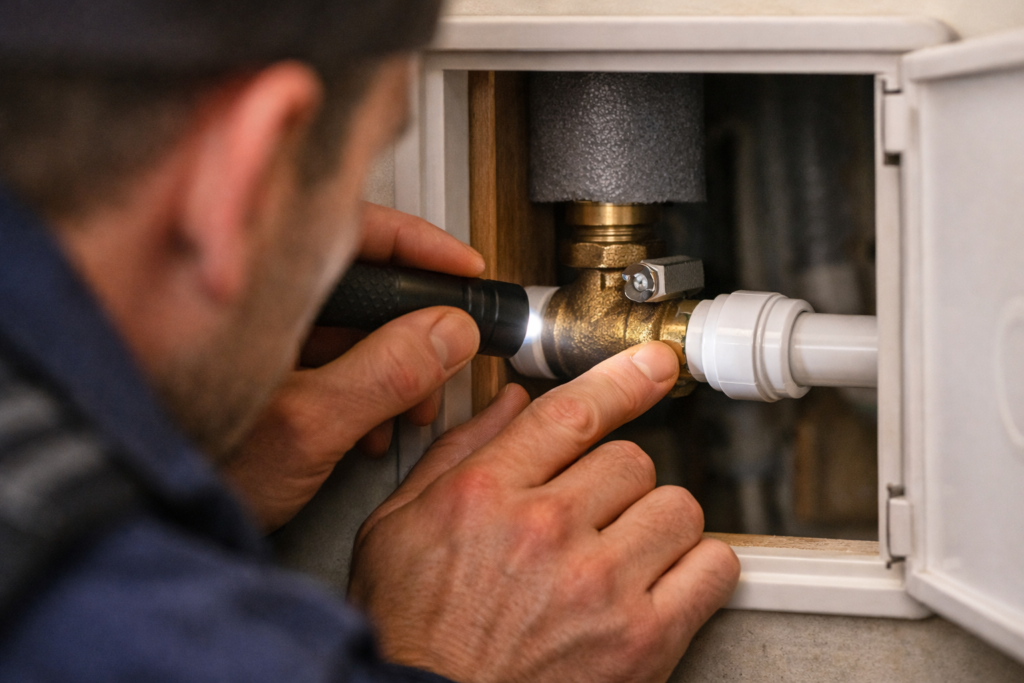
Frozen and cracked outdoor lines. A frequent issue with garden tap installations that weren’t insulated or drained down for winter, often resulting in a burst pipe once temperatures rise again.
Discoloured or reduced water flow. Occasionally seen where an incorrect fitting size restricts flow, particularly relevant on water pressure issues our engineers investigate.
Most of these problems are preventable with correct installation and a bit of seasonal care, but where a joint is hidden behind a wall, under a floor, or below ground, it’s safer to bring in a professional rather than guess.
When to Call a Professional
Speedfit plumbing is genuinely one of the more DIY-friendly systems on the market, but there are situations where professional installation is the safer and more cost-effective route:
- Connecting into an existing hot water or heating system
- Any work that involves cutting into walls, floors, or external brickwork
- New outdoor tap installations that require a new branch line and isolation valve
- Diagnosing a leak that isn’t visible at the surface
- Larger refurbishments or residential plumbing projects where multiple fittings and pipe runs are involved
At Catalyst Home Services, our plumbers work with push-fit and traditional pipework across London every week, from single tap repairs to full pipe replacement projects. If you’re planning a Speedfit installation, extending pipework for a garden tap, or dealing with a joint that’s already leaking, we’re happy to take a look and make sure it’s done properly the first time.

Need help with a Speedfit plumbing installation or repair? Book a plumber with Catalyst Home Services, or get in touch for advice on your project.