
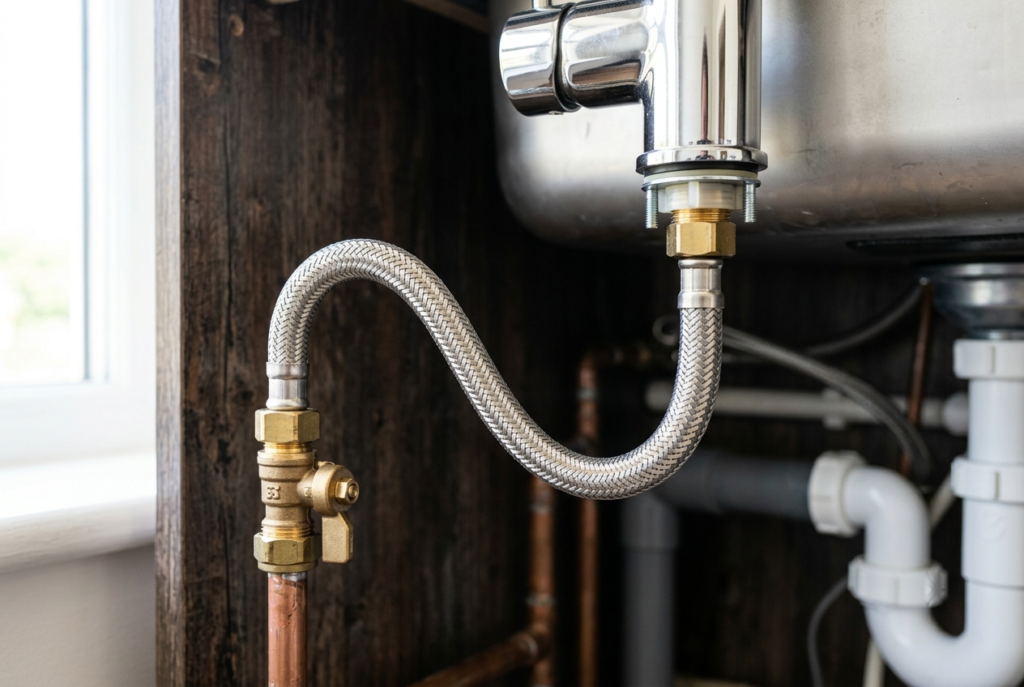
If you’ve ever looked under a sink, behind a toilet, or beside a washing machine, you’ve probably spotted a short, ribbed or braided length of tubing connecting a pipe to a tap or appliance. That’s a plumbing flexible pipe, and it’s one of the most common — and most overlooked — parts of a UK home’s plumbing system.
Flexible pipes make plumbing installation faster and repairs simpler, but they also wear out, kink and fail more often than solid copper or plastic pipework. In this guide, we’ll walk through what flexible pipes are, the different types available, how to install and maintain them safely, and the warning signs that mean it’s time to call a professional.
What Is a Flexible Pipe and Why Does It Matter?
A flexible plumbing pipe is a short, bendable length of tubing — usually made from braided stainless steel, reinforced rubber, or plastic — that connects a fixed water supply pipe to a tap, toilet, radiator, or appliance. Unlike rigid copper or PVC pipe, a flexible pipe can bend and flex slightly, which makes it much easier to fit into tight or awkward spaces.
Flexible pipes matter because they sit at the connection points of your plumbing system — exactly where leaks are most likely to start. A good-quality flexible pipe, correctly fitted, will give you years of trouble-free service. A poor-quality or badly installed one is one of the most common causes of household water leaks.
Types of Plumbing Flexible Pipe
Not all flexible pipes are the same. The right type depends on where it’s being used and what it needs to withstand.
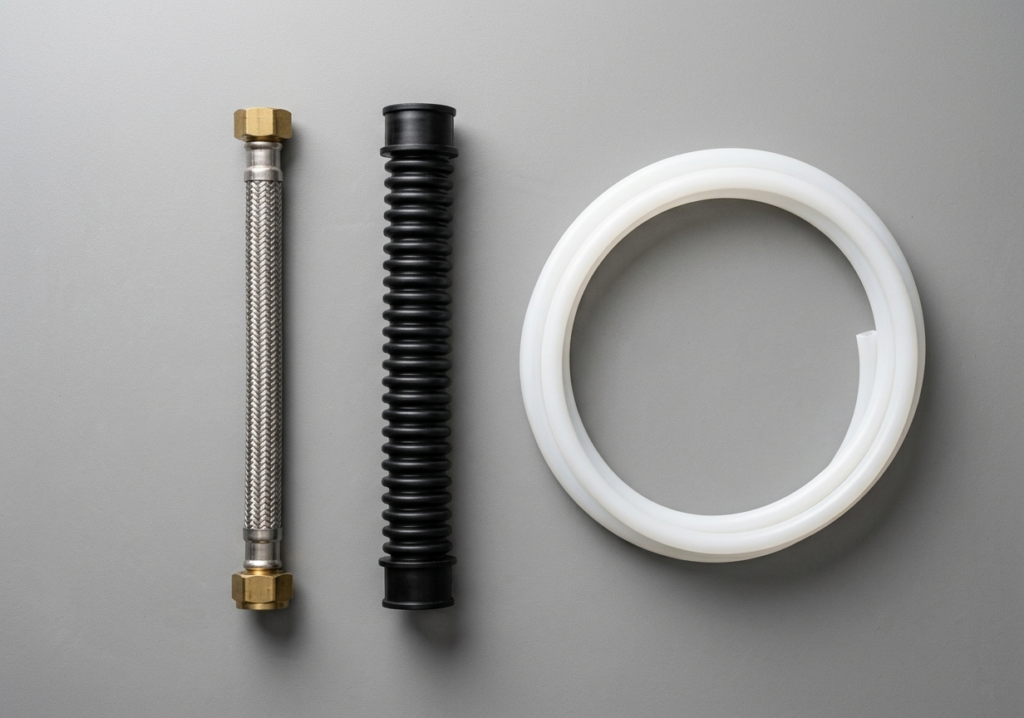
Braided Flexible Tap Connectors
These are the short stainless-steel braided hoses you’ll usually find connecting a tap or toilet cistern to the isolation valve. They’re rated for mains water pressure and are the standard choice for kitchen and bathroom tap installations.
Flexible Hose Pipes (Corrugated or Reinforced Rubber)
Corrugated flexible hoses are often used for washing machine and dishwasher connections, or for awkward pipe runs where a rigid pipe simply won’t fit. They’re durable, but the rubber and washers inside can perish over time, especially with hot water use.
PEX (Cross-Linked Polyethylene) Pipe
PEX is a flexible plastic pipe increasingly used for full plumbing runs, not just short connectors. It resists scale build-up, doesn’t corrode, and can be run in long, bent lengths behind walls and under floors, reducing the number of joints needed.
Flexible Waste and Overflow Pipes
These connect sinks, baths, and basins to the main waste system. They’re usually corrugated plastic and allow plumbers to route waste water around obstacles without needing multiple rigid elbow joints.
Where Flexible Pipes Are Used in Your Home
- Under kitchen and bathroom sinks, connecting taps to isolation valves
- Behind toilets, feeding the cistern
- Behind washing machines and dishwashers
- Connecting radiators to central heating pipework
- Shower mixer connections and outdoor garden tap runs
Installing a Flexible Pipe: What to Know Before You Start
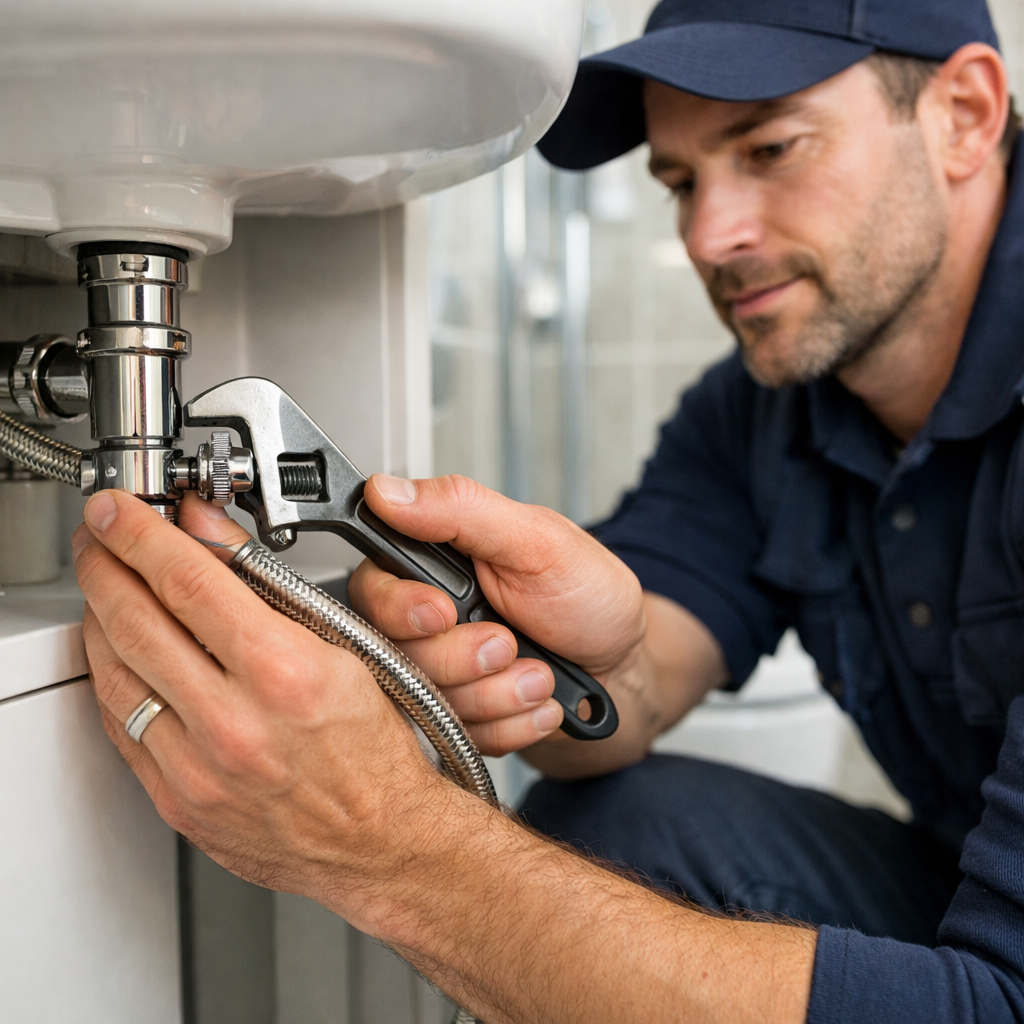
Fitting a flexible connector looks simple, but small mistakes are a leading cause of call-outs. Keep these points in mind:
- Always turn off the water at the isolation valve or stopcock before disconnecting anything.
- Never over-tighten a braided connector — this can crack the internal washer and cause a slow leak rather than a watertight seal.
- Check the pipe isn’t kinked, twisted, or stretched taut, as this restricts flow and weakens the hose over time.
- Match the connector rating to its use — a washing machine hose is not rated for the same pressure as a mains tap connector.
- Fit new washers or O-rings rather than reusing old ones from the previous pipe.
If you’re replacing pipework as part of a bigger job, such as fitting a new bathroom suite, it’s often more cost-effective to have it done as part of a full bathroom fitting service rather than tackling connectors on their own.
Maintaining Your Flexible Pipes
Flexible pipes don’t need much upkeep, but a few minutes twice a year can prevent an expensive leak:
- Visually check under sinks and behind appliances for damp patches, rust staining, or bulging in the hose.
- Gently feel along the pipe for soft or spongy sections, which suggest the internal lining is breaking down.
- Replace braided connectors every 8–10 years as routine maintenance, even if they look fine — the internal rubber core degrades with age.
- Keep isolation valves accessible and turn them off and on once or twice a year so they don’t seize.
For homes where plumbing gets forgotten until something goes wrong, an Annual Maintenance Contract covers this kind of routine check as part of a scheduled visit.
Common Flexible Pipe Problems and Warning Signs
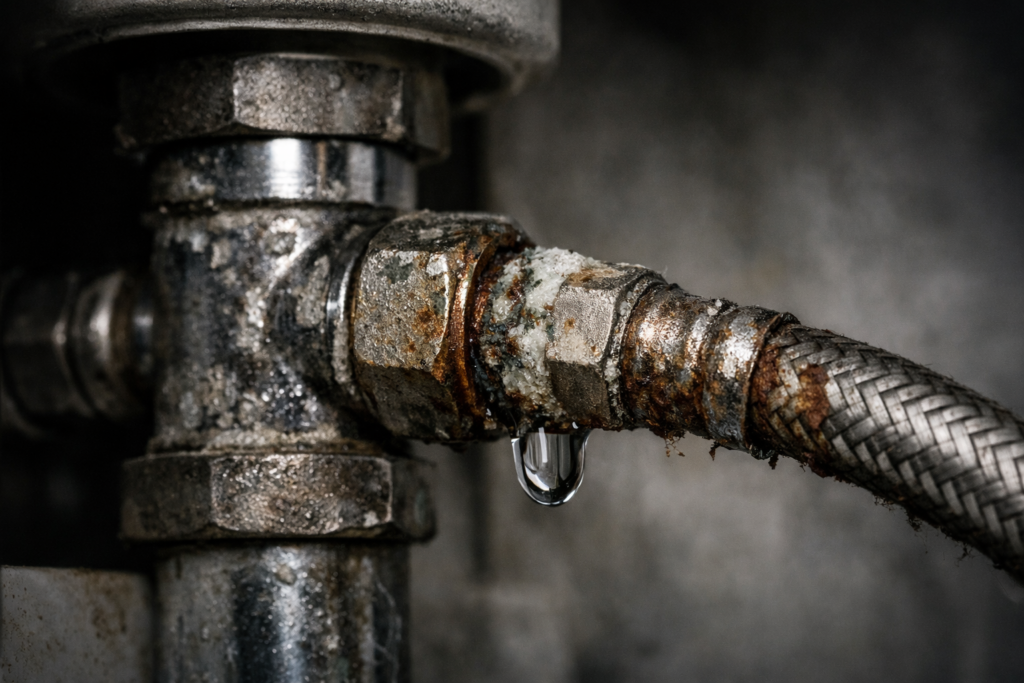
Leaking at the Connection Point
The most common fault. Usually caused by a worn washer, an over-tightened or under-tightened fitting, or a cracked olive. Small drips at a joint rarely fix themselves and tend to get worse.
Kinking or Restricted Flow
If a flexible pipe has been bent too sharply during installation, it can restrict water flow, causing weak pressure at the tap or appliance it feeds.
Bulging or Splitting
Rubber and plastic hoses can weaken with age and constant water pressure, sometimes bulging visibly before they split. A bulging hose should be replaced immediately, not monitored.
Limescale and Corrosion
In hard water areas, limescale can build up inside braided connectors, restricting flow, while the outer steel braid can corrode if it stays damp for long periods.
Noticed a drip that won’t stop, or water pressure that’s dropped suddenly? These are often symptoms of a failing flexible connector. Our leak detection and repair team can trace the source quickly, and our water pressure issues service deals with flow problems across the whole system.
When to Call a Professional Plumber
Replacing a single tap connector is a manageable DIY job for many homeowners. However, you should call a qualified plumber if:
- The leak is coming from inside a wall, floor, or ceiling void
- You’re not confident isolating the water supply safely
- The pipe feeds a boiler, unvented cylinder, or central heating system
- A previous repair has failed more than once
- There’s any risk of water reaching electrics
If a connector or pipe fails suddenly and you can’t stop the water, don’t wait — our 24/7 emergency plumbing team is on call, and for wider repairs our burst pipe repair and pipe replacement and relining services can put things right for good.
Need a Flexible Pipe Checked, Repaired, or Replaced?
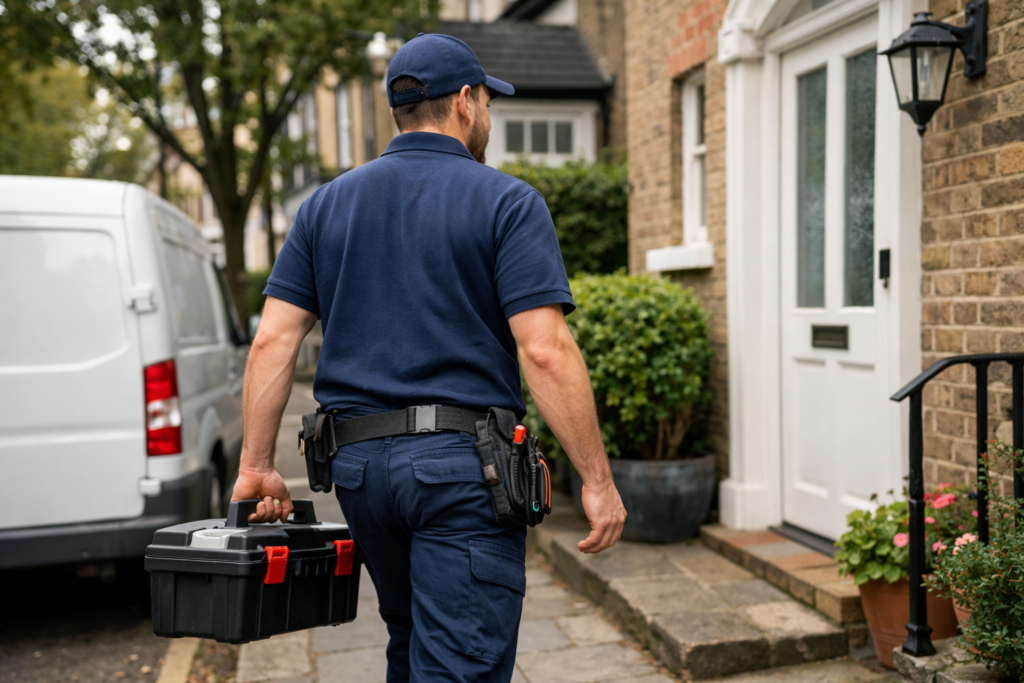
Catalyst Home Services provides professional plumbing repairs and installations across London, including tap and faucet repair, leak detection, and full pipe replacement. Whether it’s a dripping connector under the sink or a full system upgrade, our qualified plumbers get it done right the first time.
📞 Book a Plumber Today or call +44 7400 265421 for fast, transparent, professional service.
This guide on flexible pipes seems pretty straightforward. Did you find any unexpected tips in your research?