
A bathroom sink that will not hold water is more disruptive than it sounds. Shaving, washing your face, or soaking a flannel all depend on a plug that actually seals. When the plug stops working, most people assume the whole basin needs attention. In reality, the fix is usually small, fast, and inexpensive.
This guide walks through everything you need to know about bathroom sink plug replacement: why plugs fail, the different types available, how to fit one correctly, and when it is worth calling in a professional. If you would rather skip straight to the fix, Catalyst Home Services offers same-day tap and fixture repairs across London — call +44 7400 265421 or book a plumber online.
Why a Working Sink Plug Matters
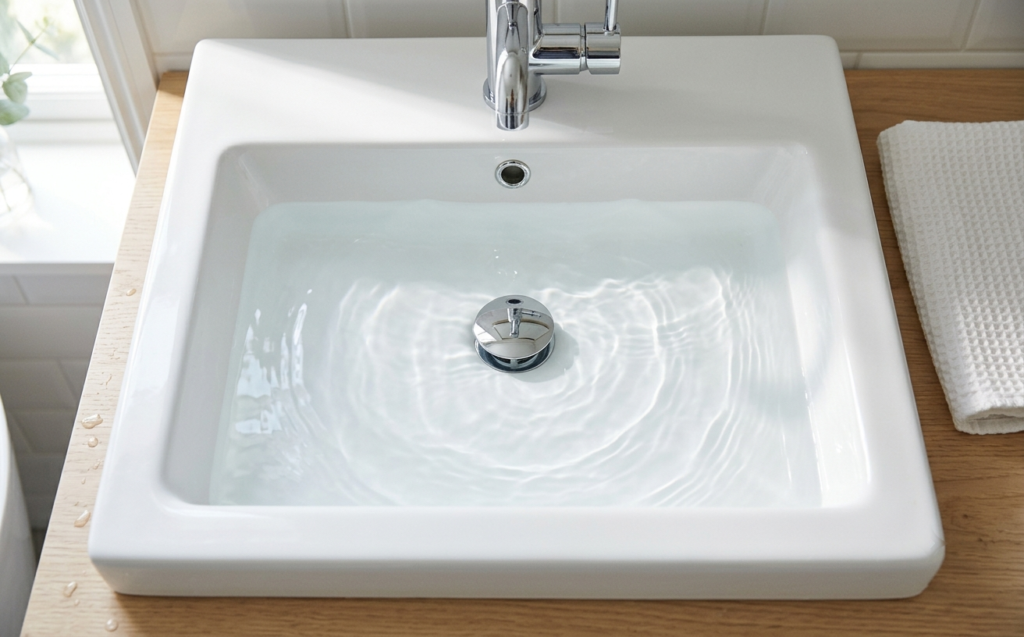
It is easy to overlook a bathroom sink plug until the day it fails. A plug that will not seal means the basin cannot hold water for everyday tasks like shaving or hand-washing delicates. A plug that will not lift means water drains away the moment you walk off, often leaving a ring of standing residue behind.
Beyond convenience, a worn or poorly fitted plug can contribute to slow drainage, unpleasant odours from a partially open waste, and even minor leaks around the overflow if the linkage mechanism has degraded. Sorting it properly the first time avoids repeat call-outs and keeps the rest of the basin’s plumbing in good condition.
Common Signs Your Sink Plug Needs Replacing
Most plug problems fall into a handful of recognisable patterns:
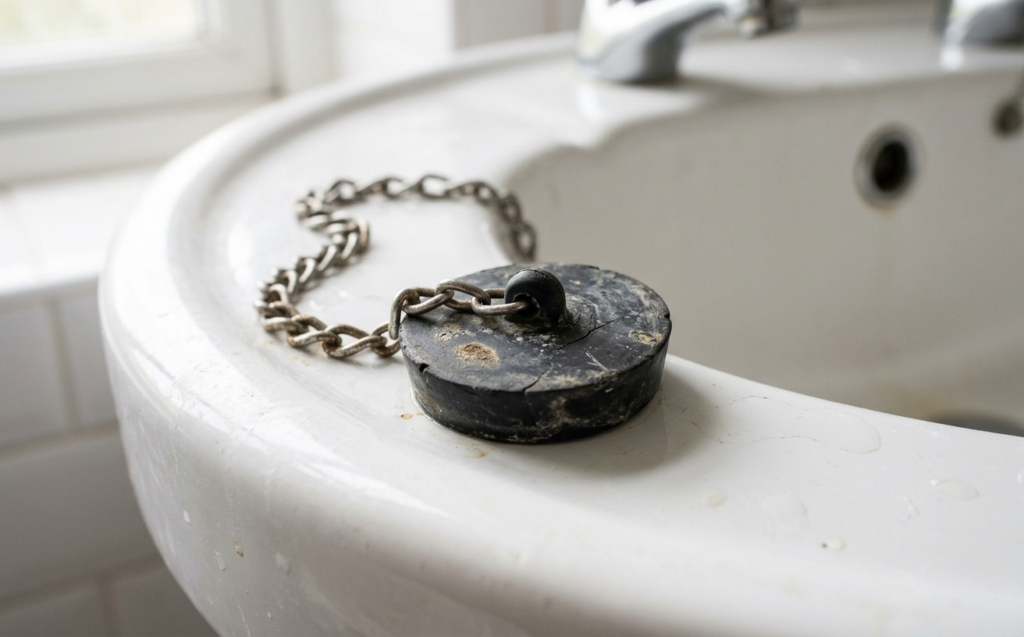
- The plug will not hold water — usually a worn or perished rubber seal that no longer creates a tight fit against the basin waste.
- The plug will not stay down — often caused by a damaged pop-up mechanism, a stretched chain, or a plug that no longer sits flush in the waste.
- The plug will not lift or release — typically a sign of grime, limescale, or hair build-up jamming the mechanism, or a snapped lever linkage on a pop-up waste.
- Water drains slowly even with the plug in — points to a poor seal rather than a blockage further down, particularly if the basin empties at the same gradual rate whether the plug is in or out.
- The plug looks cracked, discoloured, or warped — rubber and plastic plugs degrade with age and repeated exposure to hot water, soap residue, and cleaning products.
- A plug and chain set has a snapped or rusted chain — common on older basins and a simple, low-cost fix on its own.
If any of these sound familiar, the good news is that bathroom sink plug replacement is one of the more straightforward jobs in home plumbing — provided you fit the right type for your basin.
Types of Bathroom Sink Plugs
Not all sink plugs are interchangeable. Picking the correct type for your basin’s waste makes the difference between a plug that lasts for years and one that needs replacing again within months.
Rubber Plug and Chain
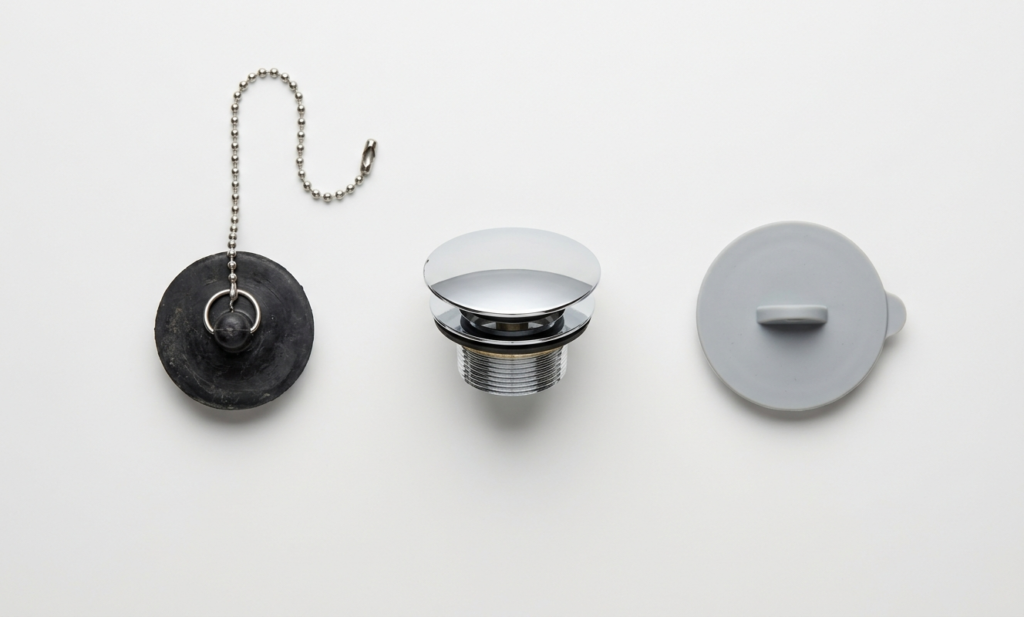
The traditional option, found in many older UK bathrooms. A rubber stopper attaches to a chain, which is secured under the overflow cover or directly to the waste. Simple to fit and inexpensive to replace, though the rubber will eventually perish and the chain can rust or snap with age.
Pop-Up Plug (Click-Clack)
Common in modern basins. A press on the plug releases a spring-loaded mechanism that lifts or lowers the stopper — no chain involved. These rely on a clean, well-aligned seating in the waste. When they stop sealing properly, the cause is often grime build-up around the seal or a worn O-ring inside the waste body, rather than the visible plug itself.
Pop-Up Plug with Lever Linkage
Found on basins with a small lever behind the tap that raises and lowers the plug via a rod connected underneath the basin. These offer a clean, chain-free look but have more moving parts — the rod, the linkage clip, and the pivot — any of which can wear out or come loose over time.
Universal or Flexible Silicone Plugs
A modern, replaceable option that fits a range of waste sizes without needing an exact match. These work well as a quick fix or for basins where the original waste fitting is an unusual size, though they are generally considered a temporary solution rather than a long-term replacement.
How to Replace a Bathroom Sink Plug
For a standard rubber plug and chain or a basic pop-up stopper, replacement is a job most people can do themselves with a few basic tools and ten minutes to spare.
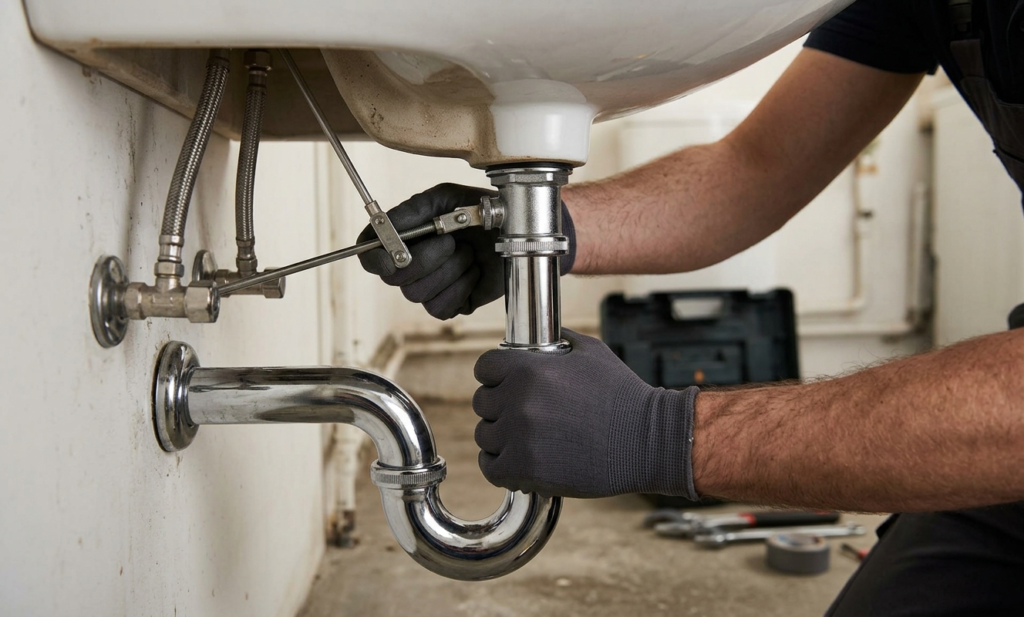
Step 1 — Identify Your Waste Type Look underneath the basin to see whether the plug connects to a visible chain, a pop-up mechanism with no chain, or a lever linkage rod. This determines which replacement part you need.
Step 2 — Remove the Old Plug For a chain plug, unhook the chain from its fixing point, usually located under the overflow cover or clipped to the waste grid. For a pop-up plug, lift it fully and twist gently to release it from the linkage, or unscrew the retaining nut beneath the basin if it is rod-operated.
Step 3 — Clean the Waste Opening Limescale, soap scum, and hair often build up around the waste seating. Clean this thoroughly so the new plug seals properly from the first use. A build-up here is one of the most common reasons a brand-new plug still will not hold water.
Step 4 — Fit the New Plug Match the new plug to your waste size — most UK basins use a standard 32mm or 40mm waste, but it is worth measuring rather than assuming. Fit the plug according to its type: hook the chain back into place, reconnect the linkage rod, or simply drop the new pop-up stopper into its seating.
Step 5 — Test the Seal Fill the basin partway and leave it for a few minutes. If the water level holds steady, the seal is good. If it drains slowly, recheck the fit and make sure no debris is trapped under the seal.
If the waste itself is cracked, corroded, or the linkage mechanism is seized beyond a simple clean, the issue has moved beyond a plug replacement and into waste or basin repair — at which point it is worth getting a professional opinion before more is dismantled than necessary.
Maintaining Your Sink Plug
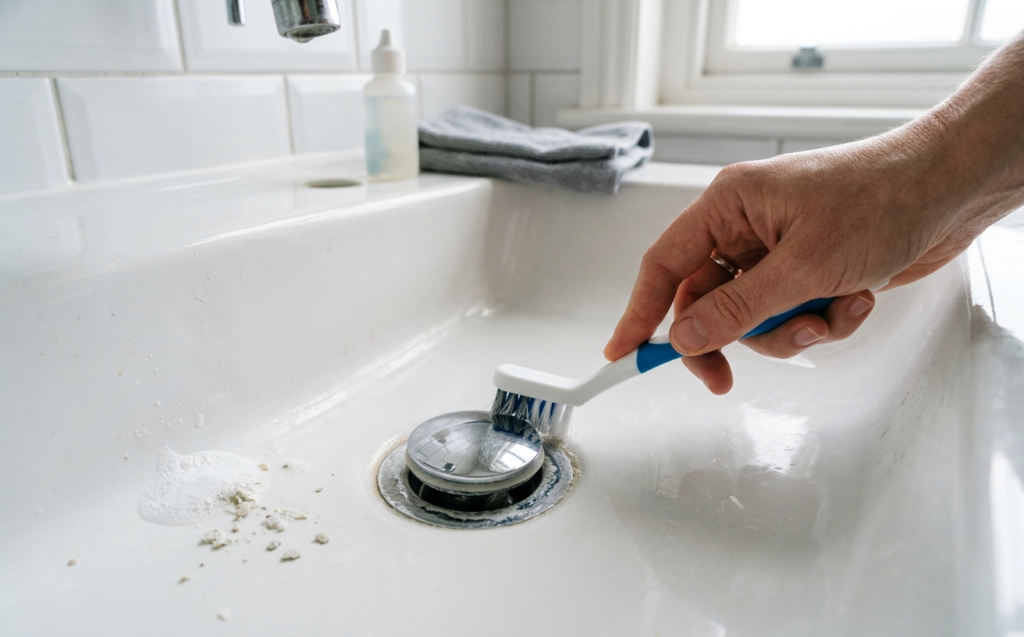
A little regular care extends the life of any plug type considerably:
- Clean around the waste weekly to prevent soap scum and limescale from building up on the sealing surface.
- Avoid forcing a stiff pop-up mechanism — a jammed lever is often hair or grime rather than a mechanical fault, and forcing it can snap the linkage.
- Descale periodically in hard water areas, which covers most of London, since limescale build-up is one of the leading causes of poor seals and stiff mechanisms.
- Check the chain or linkage for wear every few months on older basins, as a partially worn chain link or rod clip is far easier to replace before it fails completely.
Bathroom Sink Plug Replacement vs Calling a Plumber
Replacing a standard chain plug or click-clack stopper is a sensible DIY job for most homeowners, and the parts are inexpensive and widely available.
It is worth calling in a professional when:
- The waste itself is leaking from underneath the basin, not just failing to hold water at the surface.
- The pop-up linkage rod has corroded or seized inside the waste pipe and will not release.
- Removing the old plug has revealed a cracked or damaged waste fitting that needs replacing as a whole unit.
- The basin drains slowly even with a confirmed good seal, suggesting a deeper blockage rather than a plug issue — our blocked drain clearance service covers this.
- You are replacing the plug as part of a wider bathroom refresh and want the waste and overflow checked at the same time.
A failed plug is sometimes the first visible sign of a tired waste fitting that has been due for attention for a while. If that is the case, our engineers will tell you plainly rather than recommend work that is not needed.
Why Choose Catalyst Home Services
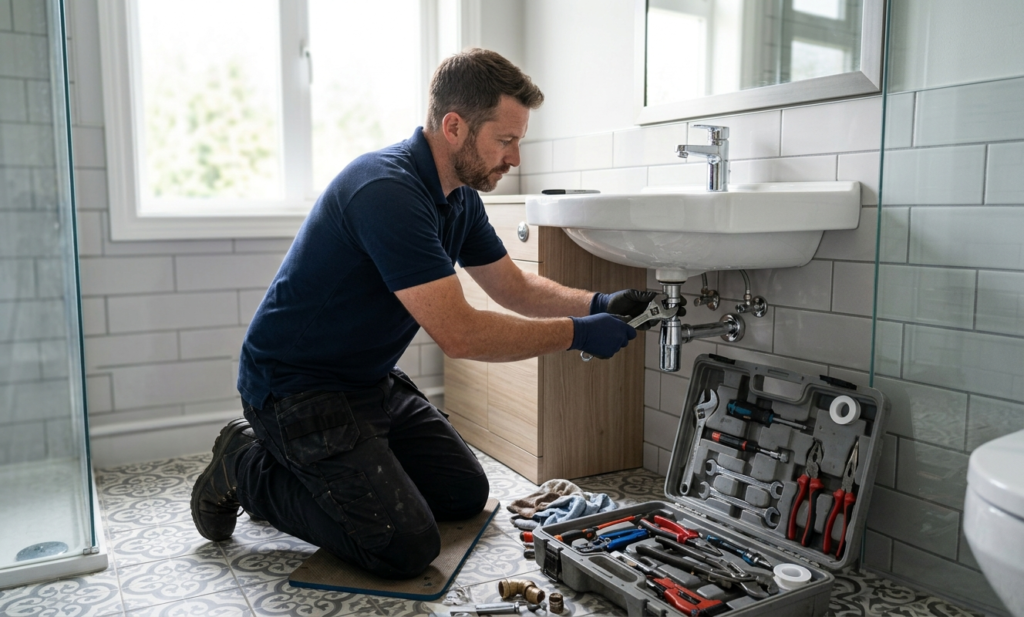
Honest assessments, every time. If your sink plug just needs a straightforward swap, that is exactly what we will do. If something further down is causing the problem, we will explain it clearly before any work begins.
Same-day London coverage. Our engineers offer same-day bookings across London for bathroom fixture repairs, and a 24/7 emergency line for anything more urgent.
Qualified, experienced engineers. Every job is carried out by a trained professional who works with basin wastes and bathroom fittings regularly. You can review our licences and certifications before booking.
Transparent pricing. You will always get a clear quote before work starts — no hidden call-out fees or surprise charges on the invoice.
Trusted across London. Read what real customers say on our reviews and testimonials page, or check our full list of service areas to confirm we cover your postcode.
Related Services You May Need
A sink plug issue sometimes points to something slightly bigger. These services are commonly booked alongside plug and basin work:
- Tap & Faucet Repair — if your tap is dripping or the mixer needs attention at the same time
- Blocked Drain Clearance — if the basin drains slowly even with a good seal
- Leak Detection & Repair — if you notice water under the basin or signs of a hidden leak
- Bathroom Fitting — if you are upgrading the basin or waste as part of a larger bathroom project
- Toilet Repair & Replacement — worth combining if other bathroom fixtures need attention during the same visit
FAQs
How much does a bathroom sink plug replacement cost?
The plug itself is inexpensive, typically a few pounds for a standard rubber or pop-up stopper. If you book a plumber to fit it, the cost depends on whether it is a simple swap or involves checking the waste and linkage as well. We provide a clear quote before starting any work.
Can I replace a sink plug myself?
Yes, in most cases. A standard chain plug or pop-up stopper can usually be replaced in under ten minutes with no special tools. The job becomes more involved if the waste itself needs attention, in which case professional help is worth considering.
Why does my new sink plug still not hold water?
This is almost always down to debris or limescale around the waste seating rather than a fault with the new plug. Clean the seating thoroughly and re-test. If the seal still fails, the waste fitting itself may need inspection.
What size sink plug do I need?
Most UK bathroom basins use a 32mm or 40mm waste. Measure the waste opening directly rather than guessing, since fitting the wrong size plug will never create a proper seal.
My pop-up plug will not lift — is this a simple fix?
Usually, yes. A stiff pop-up mechanism is most often caused by hair or grime jamming the linkage rather than a broken part. Cleaning around the mechanism resolves it in most cases. If it remains stuck after cleaning, the linkage rod or clip may have come loose or corroded.
Book a Bathroom Fixture Repair in London Today
A faulty sink plug is a small job, but it is worth getting right the first time. If you would rather leave it to a professional, or the issue turns out to be more than a simple plug swap, Catalyst Home Services offers same-day bathroom fixture repairs across London. Call us now on +44 7400 265421, use our 24/7 emergency line for urgent issues, or book a plumber online and we will confirm your appointment straight away.