
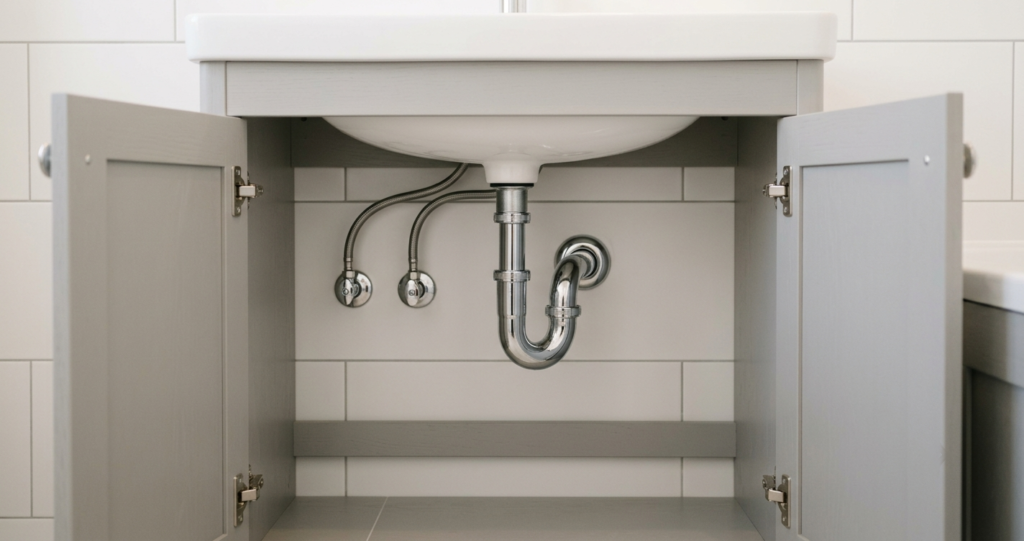
If you have ever noticed a foul smell rising from your bathroom sink or spotted a curved pipe underneath it, you have already encountered a p trap. This small but vital piece of plumbing does a big job — it keeps your bathroom hygienic, odour-free, and working properly.
In this guide, the team at Catalyst Home Services explains everything you need to know about the bathroom sink p trap — what it does, the types available, how to maintain it, and the warning signs that mean you need a professional plumber.
What Is a Bathroom Sink P Trap?
A p trap is a curved section of pipe fitted beneath your bathroom sink drain. When you look at it from the side, it is shaped like the letter “P” — which is how it gets its name.
Its primary job is to hold a small amount of water at all times. This standing water acts as a barrier — known as a water seal — that prevents sewer gases, bad smells, and bacteria from travelling back up the drain pipe and into your bathroom.
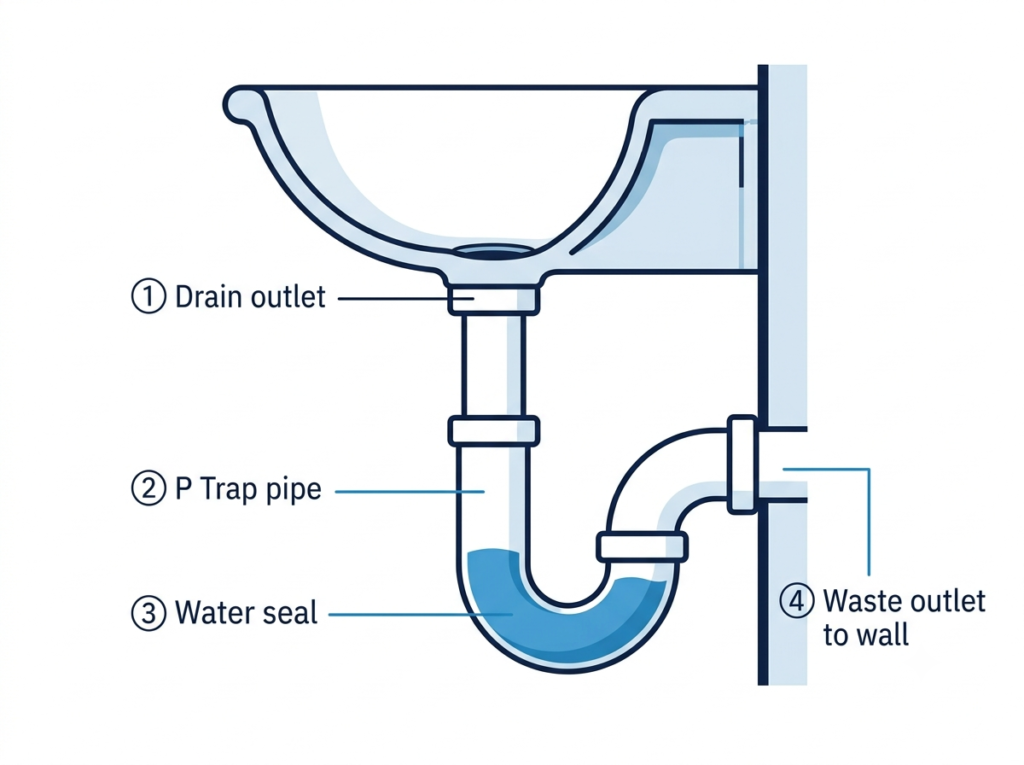
Without a p trap, your bathroom would quickly become unpleasant to use. Sewer gases such as hydrogen sulphide and methane are not just foul-smelling — they can also pose a health risk in enclosed spaces.
| Did You Know?UK building regulations require all bathroom waste outlets to be fitted with an effective trap to prevent the ingress of foul air. A working p trap is not optional — it is a legal requirement for all domestic and commercial properties. |
How Does a Bathroom Sink P Trap Work?
When water drains from your sink, it flows through the curved section of the p trap. The design of the curve ensures that a pocket of water always remains trapped at the bottom of the bend. This water level is maintained passively — no moving parts, no electricity, no maintenance under normal conditions.
The water seal is typically between 25mm and 75mm deep, which is the standard range required under UK plumbing regulations. As long as this seal remains intact, sewer gases cannot pass through.
If the trap dries out — usually because a sink has not been used for a long time — the water seal evaporates and unpleasant smells can enter the room. Running the tap for a few seconds usually restores the seal.
Types of P Trap for Bathroom Sinks
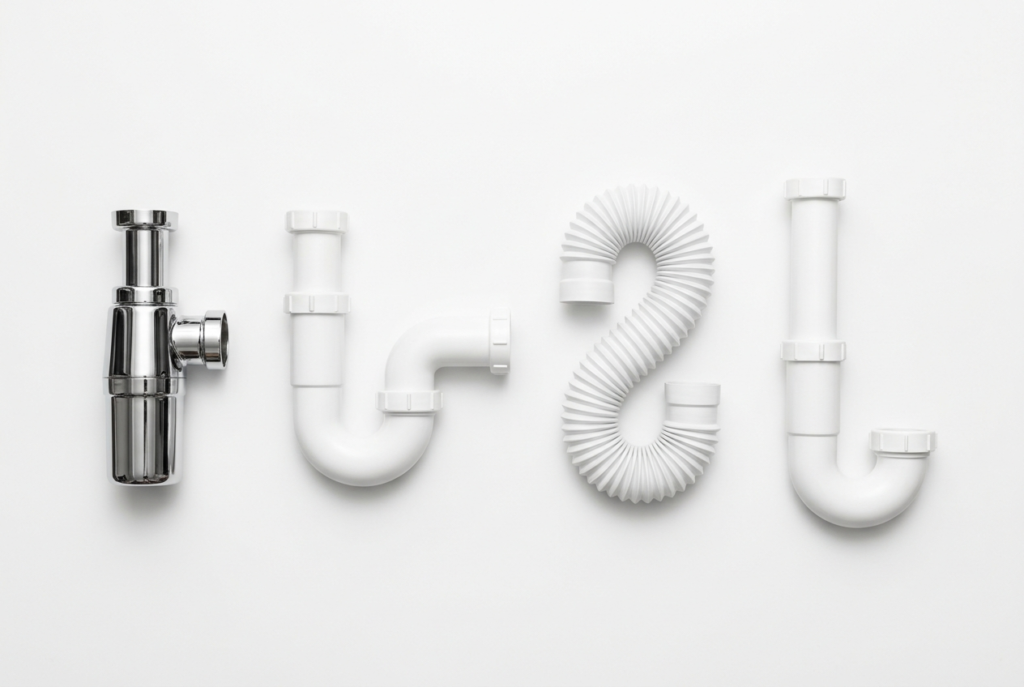
Not all p traps are the same. Depending on the age of your property, your pipework layout, and the style of your bathroom, you may have one of several common types installed.
1. Standard Bottle Trap
The bottle trap is one of the most commonly seen traps in UK bathrooms. Rather than a traditional curved pipe, it uses a vertical cylindrical body (shaped like a bottle) to hold the water seal. They are neat in appearance and are often chosen for modern bathrooms where the undersink area may be visible.
The downside of a bottle trap is that it can be more prone to blockages than a traditional p trap, as debris tends to collect in the base of the bottle.
2. Traditional P Trap (Tubular Trap)
The classic curved pipe design. It is the most widely used trap in residential plumbing and is highly reliable. Available in both plastic and chrome finishes, it is easy to dismantle for cleaning or unblocking.
3. Flexible P Trap
A flexible or adjustable p trap uses a corrugated plastic pipe that can be shaped to fit non-standard or awkward waste pipe configurations. They are useful during a bathroom renovation but are generally considered a temporary or budget solution, as the ridges inside the corrugated section can trap debris over time.
4. Deep Seal P Trap
A deep seal trap holds a water seal of 75mm rather than the standard 38mm. These are used in locations where the trap is more vulnerable to siphonage — for example, if the drain pipe runs a long horizontal distance before reaching the stack. They are a good choice in properties with older or non-standard plumbing layouts.
Common Bathroom Sink P Trap Problems
P traps are simple and robust, but they are not immune to issues. Here are the most common problems homeowners and landlords in London encounter:
Foul Smells from the Drain
If you notice a sewage or rotten egg smell coming from your bathroom sink, the p trap is almost always the cause. There are two likely explanations: the water seal has dried out (common in guest bathrooms or holiday lets that are unused for weeks at a time), or the trap has a partial blockage causing stagnant water to smell.
Running the tap for 30 seconds usually resolves a dried-out seal. For persistent odours, the trap may need cleaning or replacing. Our team can also investigate whether there is a deeper drainage issue. Learn more about our blocked drain clearance service.
Slow Drainage
A slow-draining bathroom sink is a tell-tale sign that hair, soap scum, or toothpaste residue has built up inside the p trap. This is one of the most common plumbing complaints we receive at Catalyst Home Services, and it is almost always a quick fix.
In most cases, the trap can be removed, cleaned out, and refitted in under 30 minutes. If you would rather leave it to a professional, our tap and faucet repair team can handle this as part of a wider bathroom check.
Leaks Under the Sink
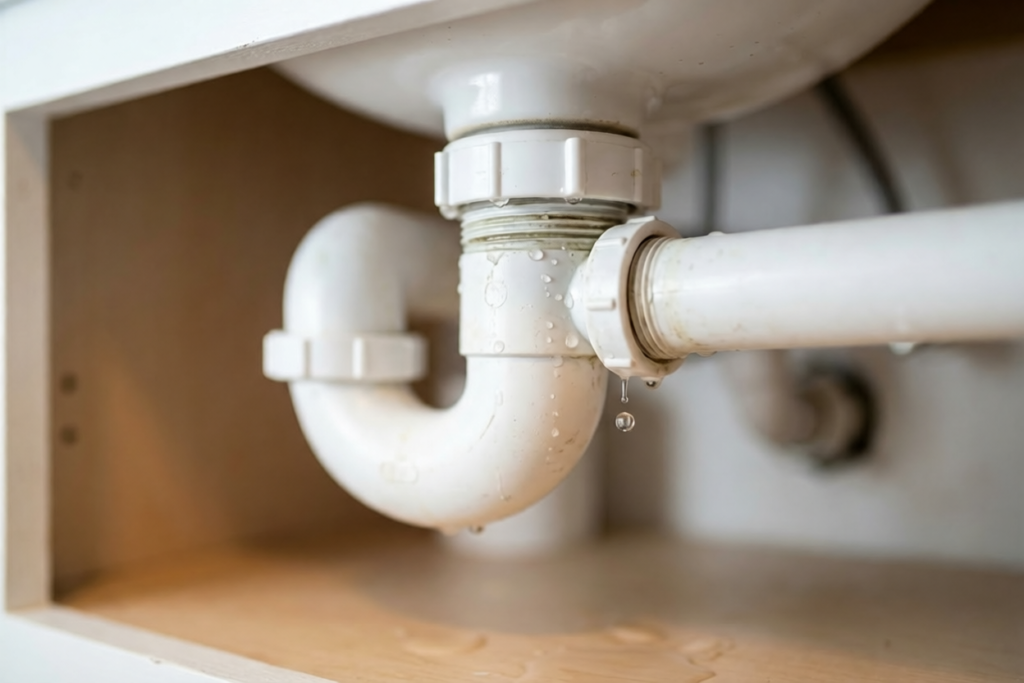
Leaks at the p trap connections are very common, especially in older properties where the plastic compression fittings have begun to degrade. You may notice damp under the sink cabinet, a puddle on the floor, or watermarks on the unit below.
Leaks should be attended to promptly to avoid water damage to your cabinetry and flooring. Our leak detection and repair service covers p trap leaks as well as more complex issues.
Gurgling Sounds
If you hear a gurgling noise when the water drains, this often indicates that the trap is siphoning — meaning the water seal is being partially or fully sucked out by the pressure in the waste pipe. This is more common in properties where the pipework was not designed to modern standards.
A deep seal trap or an air admittance valve (AAV) can resolve persistent siphonage problems. Speak to our residential plumbing team for guidance.
Cracked or Damaged Trap
Over time, plastic traps can crack or become brittle, and chrome traps can corrode. A cracked trap cannot maintain the water seal and will also leak. Replacement is the only remedy — fortunately, it is a straightforward job for any qualified plumber.
How to Clean a Bathroom Sink P Trap
If your sink is draining slowly or has a mild smell, cleaning the p trap yourself is a reasonable first step before calling a plumber. Here is how:
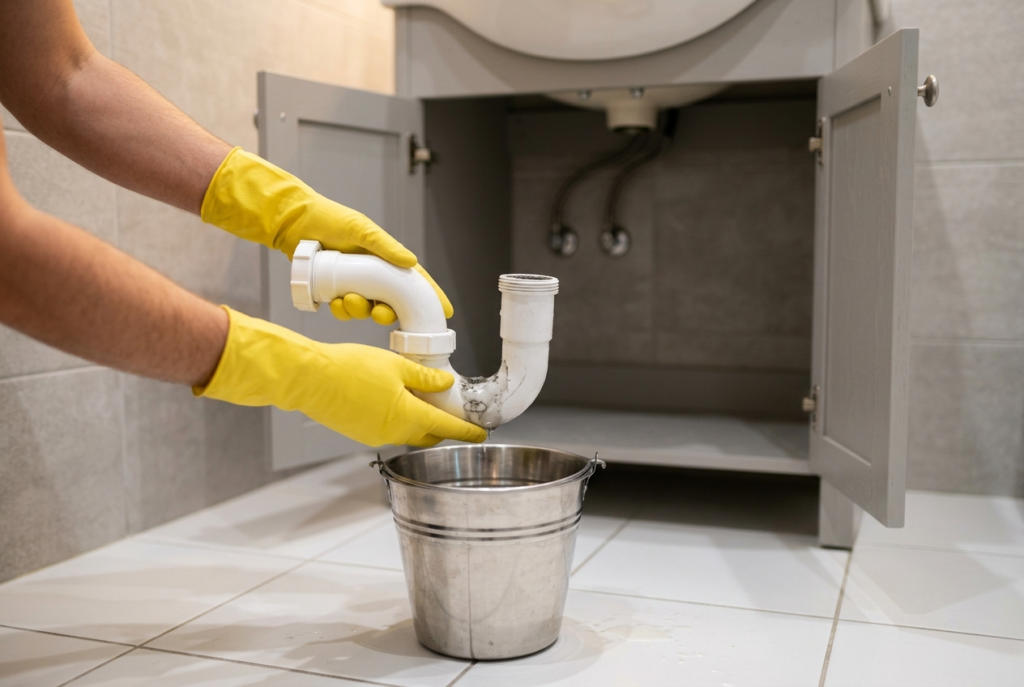
- Step 1: Place a bucket or towel under the trap to catch residual water.
- Step 2: Unscrew the slip nuts at either end of the p trap by hand (or with slip-joint pliers if stiff).
- Step 3: Remove the trap carefully. Some water will spill out — this is normal.
- Step 4: Clear out any hair, soap, or debris. Rinse the trap under running water.
- Step 5: Inspect the trap for cracks, discolouration, or damage before refitting.
- Step 6: Reattach the trap, tighten the slip nuts firmly (but not excessively), and run the tap to test for leaks.
| Important Safety NoteAlways switch off the hot water at the tap before working under the sink, and never use harsh chemical drain cleaners directly in the p trap — these can degrade plastic fittings and cause leaks over time. |
How to Replace a Bathroom Sink P Trap
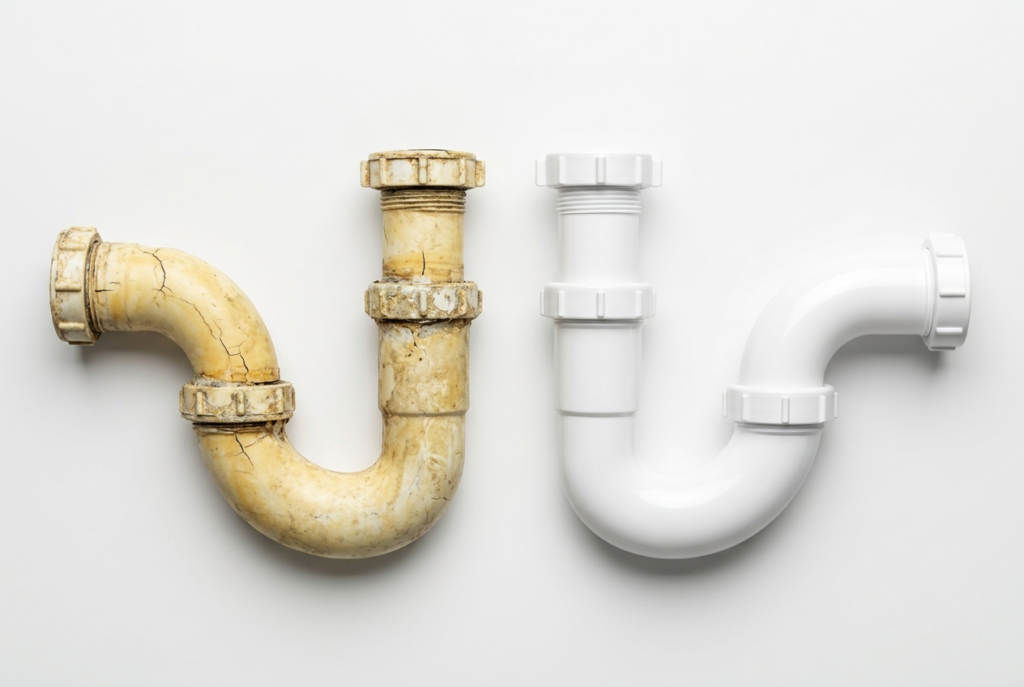
If the trap is cracked, corroded, or beyond cleaning, it needs replacing. P traps are sold at most DIY and plumbing merchants in standard sizes (typically 32mm or 40mm waste for bathroom sinks).
Before purchasing a replacement, measure your existing trap or take it with you to match the size. Standard bottle traps and tubular traps are inexpensive and available at most plumbing merchants.
The fitting process is straightforward for most DIYers, but if you are unsure, concerned about the surrounding pipework, or if the leak has persisted after replacing the trap, it is always best to consult a professional. Our bathroom fitting specialists are happy to help with full or partial bathroom plumbing work.
P Trap Maintenance: Keeping Your Drain in Good Condition
A little regular maintenance goes a long way when it comes to bathroom sink plumbing. Here is what we recommend:
- Flush weekly with hot water: Run hot water for 60 seconds each week to help clear soap and grease buildup inside the trap and waste pipe.
- Use a drain strainer: A simple mesh strainer over the plughole catches hair before it reaches the trap.
- Avoid chemical cleaners: Caustic or acid-based drain unblockers can damage plastic fittings and seals.
- Run unused taps regularly: If you have a guest bathroom or a property that is not used daily, run each tap for 30 seconds every couple of weeks to prevent the water seal from evaporating.
- Book an annual plumbing check: Our Annual Maintenance Contract (AMC) includes inspection of all waste fittings, traps, and drain connections as standard.
When to Call a Professional Plumber
While many minor p trap issues can be resolved at home, there are situations where professional help is the safer and more cost-effective choice:
- The smell persists after cleaning the trap and running fresh water through.
- You notice a persistent gurgling sound across multiple sinks or toilets.
- There is evidence of water damage under the sink or to the floor below.
- The pipework around the trap looks corroded, discoloured, or has signs of previous leaks.
- You are renovating your bathroom and need new waste pipework installed.
- The drainage problem keeps returning despite regular cleaning.
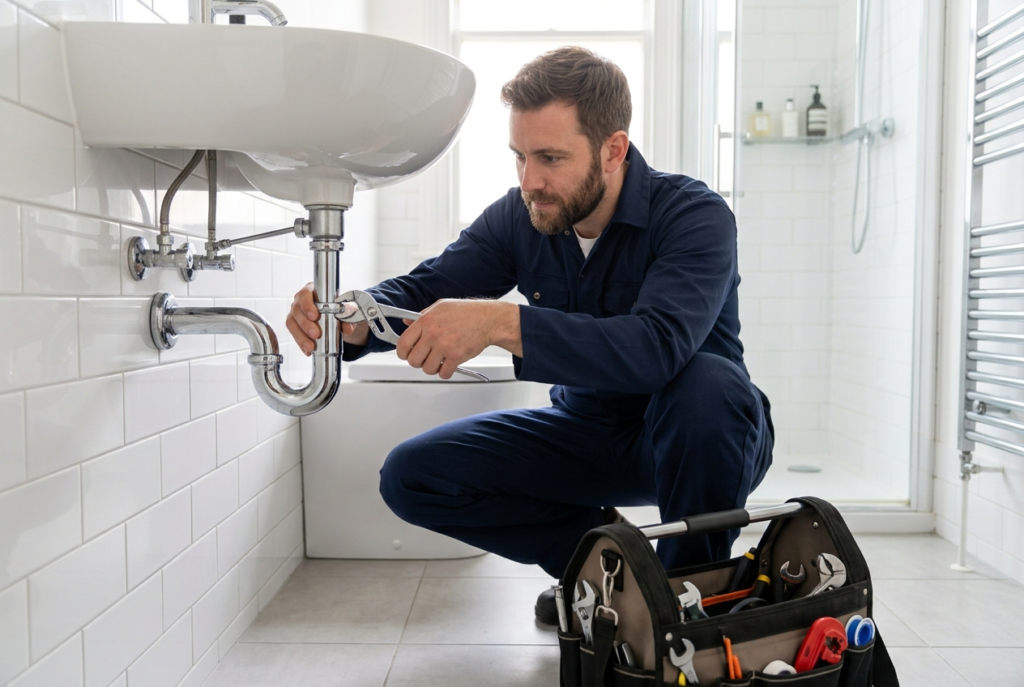
At Catalyst Home Services, we cover all areas across Greater London. Our Gas Safe and fully qualified plumbers can diagnose and resolve bathroom sink drainage issues efficiently — often on the same day. View our full London service areas.
FAQs
Why does my bathroom sink smell even though it drains fine?
If your sink drains well but still smells, the most likely cause is a dried-out water seal in the p trap. This is common in bathrooms that are not used daily. Running the tap for 30 to 60 seconds should restore the seal. If the smell persists, there may be a partial blockage or a deeper drainage issue — contact our team for advice.
How often should a p trap be replaced?
Plastic p traps typically last 5 to 10 years under normal use. Chrome or brass traps can last significantly longer but may develop limescale buildup. If you notice cracks, persistent leaks, or discolouration, it is time for a replacement.
Is it safe to use chemical drain cleaners in a bathroom sink p trap?
We strongly advise against using chemical drain cleaners in your p trap. Caustic chemicals can corrode plastic fittings and damage the seals, leading to leaks. Mechanical cleaning — removing and rinsing the trap — is always the safer approach.
My p trap keeps drying out. What can I do?
If your trap loses its water seal regularly, it may be siphoning due to negative pressure in the waste pipe. An air admittance valve (AAV) can solve this. Speak to a qualified plumber to have one correctly installed.
Can I replace a p trap myself?
Yes, in most cases a straightforward p trap replacement is a manageable DIY job. However, if the surrounding pipework is old, corroded, or non-standard, it is best to have a professional assess it to avoid causing further damage.
Does Catalyst Home Services offer emergency plumbing for drain leaks?
Yes. We provide a 24/7 emergency plumbing line for urgent issues including under-sink leaks and drainage failures. Call our emergency line or use our online booking form to get fast assistance.
Need Help With Your Bathroom Sink P Trap?
Whether you have a foul smell, a slow drain, or a leak under your sink, our qualified London plumbers are ready to help. Fast response, upfront pricing, and workmanship you can trust.