
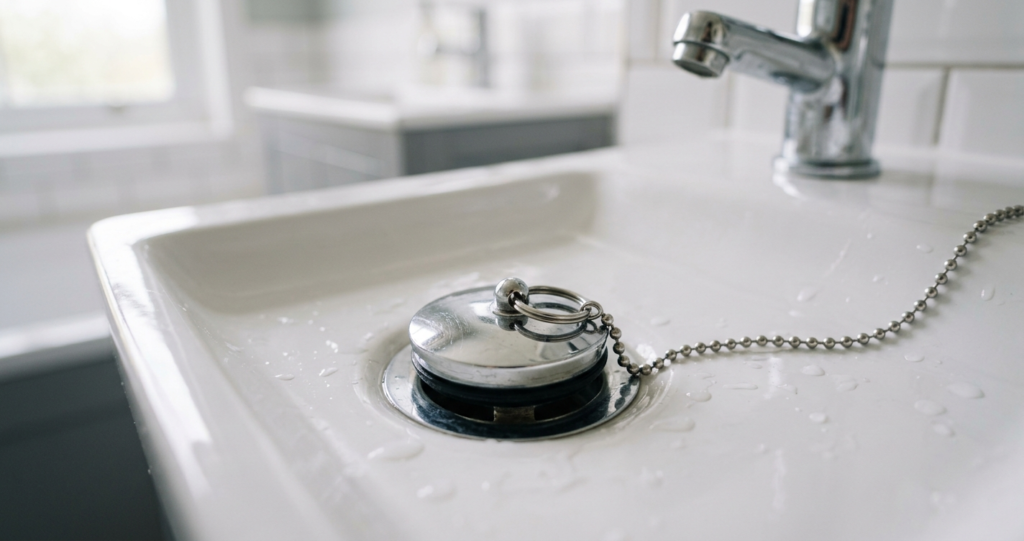
A bathroom plug is one of those small fittings nobody thinks about — until it stops working. Suddenly your bath won’t hold water, your basin drains while you’re still trying to shave, or the plug chain has snapped off in your hand for the third time this year.
The good news is that bathroom plugs are simple, inexpensive, and usually easy to sort out yourself. The tricky part is knowing which type you actually have, what size you need, and when a leaking plug is pointing to a bigger problem underneath.
This guide covers everything: the different types of bathroom plugs, how to measure and fit one correctly, how to keep it working well, and the most common issues we see across London bathrooms.
Why a Good Bathroom Plug Matters More Than You’d Think
It seems like a minor fitting, but a properly sealed plug affects far more than whether your bath fills up.
It controls how much water you waste. A plug that won’t seal properly means water trickles away continuously. You end up topping up the bath, running the tap longer, and paying for water you never actually used.
It protects your bathroom from water damage. A loose or poorly seated plug in a basin can let water seep slowly past the overflow and down behind fittings, which over time contributes to the kind of damp and damage we deal with on leak detection and repair call-outs.
It affects everyday usability. Soaking in a bath that slowly drains, or trying to shave at a basin that won’t hold water, is a small daily frustration that a £5 part can completely solve.
So while it’s a small component, getting the right plug — fitted correctly — makes a real difference.
Types of Bathroom Plugs
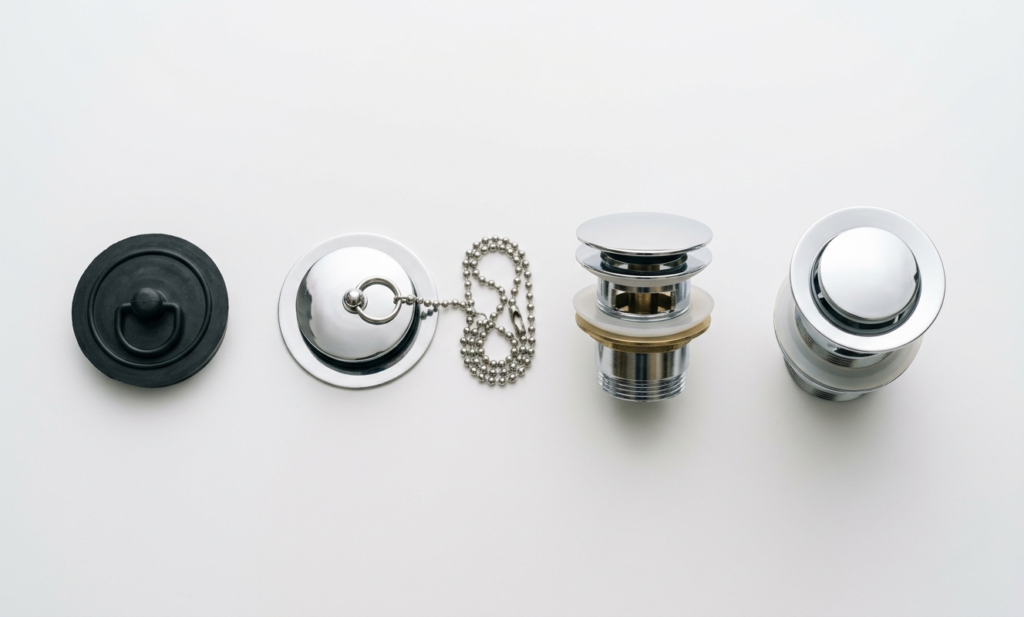
Not all bathroom plugs are the same, and knowing which type suits your bath or basin makes choosing a replacement much easier.
Rubber Suction Plugs
The classic option. A solid rubber plug with a flat or domed top that creates a seal by suction against the waste outlet. They’re cheap, widely available, and fit a huge range of standard waste sizes. The main downside is that the rubber perishes over time, especially with regular hot water exposure, and eventually stops sealing as well as it once did.
Chain Plugs
A rubber or metal plug attached to a chain, usually fixed to the overflow or tap. These were standard in older British bathrooms and many homes still have them. The plug itself works the same way as a suction plug — the chain is just there so it doesn’t go missing down the plughole. Chains are also the part most likely to fail, as the links corrode or the fixing point works loose.
Pop-Up Plugs (Pop-Up Waste)
Common in modern basins and increasingly in baths. A lever or twist mechanism behind the tap raises and lowers a plug fitted permanently into the waste. There’s no loose part to lose, which is the main appeal, but the mechanism itself can seize up, and the seal can wear out just like a standard rubber plug.
Click-Clack (Push) Plugs
A development of the pop-up style. You press down once to close it and press again to release — no lever, no chain, nothing to operate by hand except the plug itself. These are popular in newer bathroom installations because they look neat and have fewer moving parts to go wrong, though when the seal does wear, the whole unit often needs replacing rather than just a part.
Universal/Flexible Plugs
Designed to fit a range of waste sizes using a flexible rubber edge that adapts to slightly different openings. Useful if you’re not sure of your exact waste size, or if your bath or basin has an unusual outlet that a standard plug doesn’t quite match.
If you’re updating fittings across the whole bathroom rather than just replacing a plug, it’s worth looking at this alongside other fixtures — our bathroom fitting service covers full installations where waste and overflow fittings are replaced as a set, which avoids mismatched parts further down the line.
How to Choose the Right Size
Most bathroom plug problems come down to one thing: the wrong size. Here’s how to get it right.
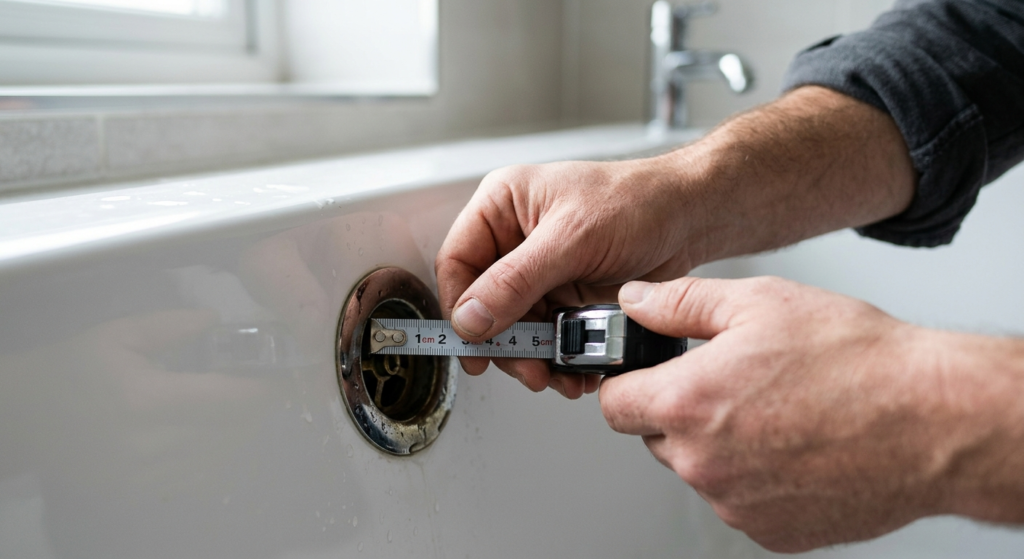
Measure the waste outlet, not the old plug. Old plugs swell, shrink, or wear unevenly. Measure the internal diameter of the waste hole itself with a tape measure or ruler. UK basin and bath wastes are most commonly 1¼ inch (32mm) or 1½ inch (40mm), though it’s always worth checking rather than assuming.
Check whether it’s a basin or bath waste. Basin plugs and bath plugs are not always interchangeable, even when the size looks close. Bath waste outlets are typically larger to allow faster draining of a much bigger volume of water.
Look at the existing chain or fitting point. If you’re replacing a chain plug, check how the chain attaches — some screw into the overflow, others clip on. Buying a like-for-like fitting style saves a second trip to the shop.
When in doubt, take the old plug with you. Even a worn-out or broken plug gives a hardware shop something to match against, which is more reliable than measurements alone if your waste is an older or non-standard fitting.
Fitting a New Bathroom Plug: Step by Step
For a simple suction or chain plug, fitting a replacement is one of the easier jobs in the bathroom.
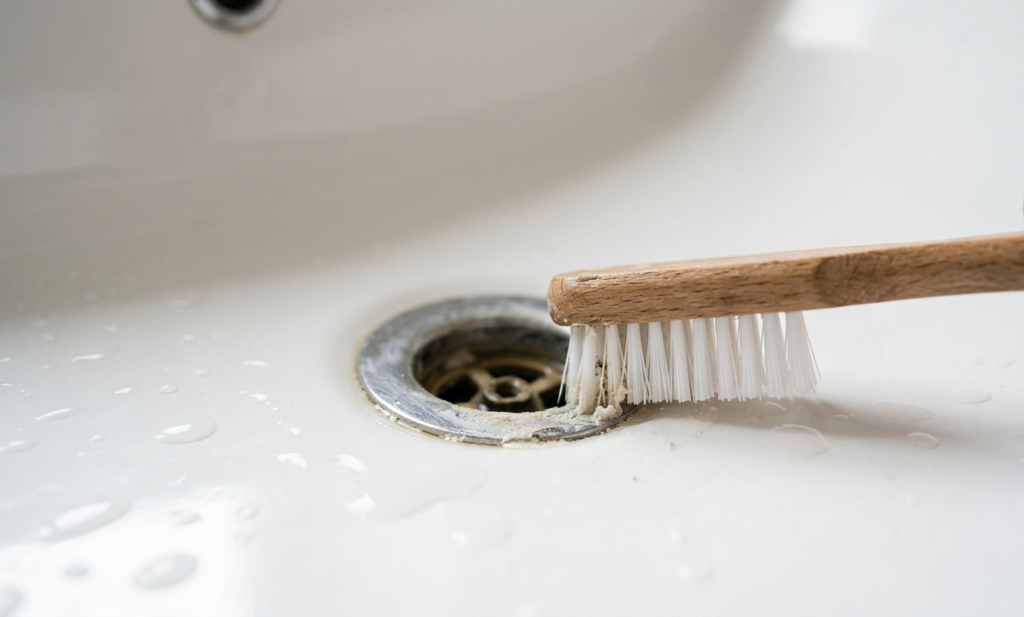
Step 1 — Clean the waste outlet. Limescale and soap residue build up around the rim of the waste and stop a new plug from seating properly. A quick scrub with an old toothbrush and some limescale remover clears this.
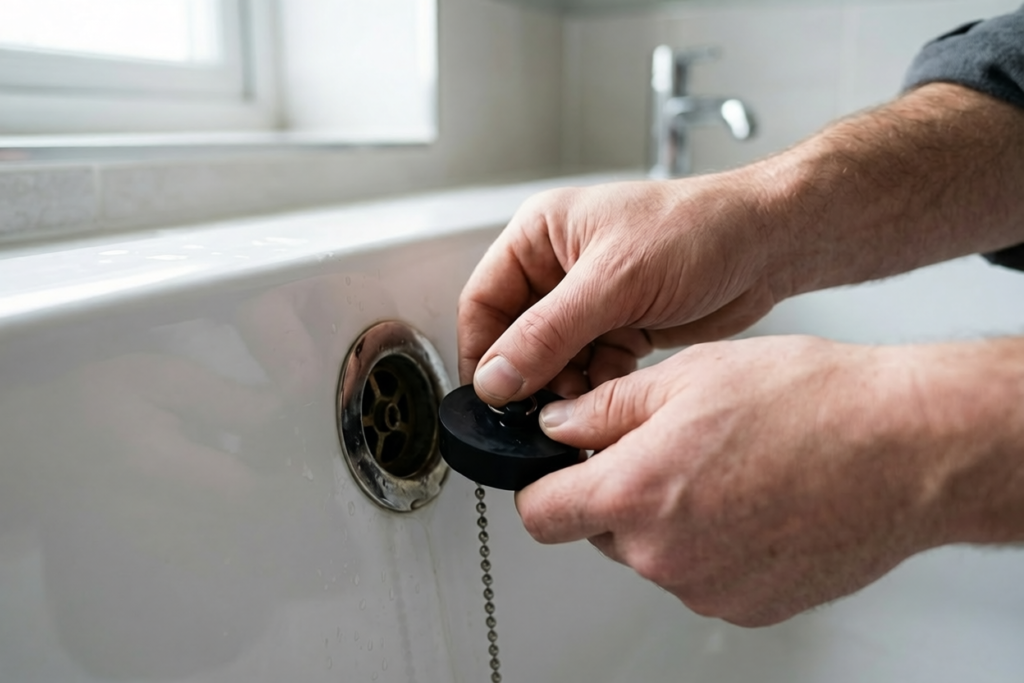
Step 2 — Dry-fit the new plug. Press it into place without water and check it sits flush and centred, without rocking.
Step 3 — Test the seal. Run a small amount of water in and check it holds. If water trickles out steadily, the plug either doesn’t match the waste size or the waste rim itself is damaged or coated in limescale.
Step 4 — Reattach the chain, if fitted. Most chain fixing points are a simple screw thread or clip into the overflow plate. Make sure it’s tightened enough not to work loose with use, but not so tight that it strips the fitting.
Pop-up and click-clack plugs are a different job, since the mechanism is usually fitted inside the waste pipework itself. If yours is sticking, not sealing, or has come apart inside the waste, that’s generally a job better suited to a plumber, since accessing and refitting the mechanism without damaging the waste pipe takes the right tools.
Maintaining Your Bathroom Plug
A little regular care extends the life of any plug type considerably.
- Rinse and dry rubber plugs after use rather than leaving them sitting in standing water, which speeds up perishing.
- Descale regularly, particularly in London’s hard water areas, where limescale builds up fast around waste rims and pop-up mechanisms.
- Check chains and fixings every few months for early signs of corrosion or a loosening fixing point.
- Operate pop-up and click-clack mechanisms gently — they’re more prone to damage from being forced than pulled or pressed normally.
- Avoid harsh chemical drain cleaners sitting directly against rubber plugs for long periods, as these accelerate the rubber breaking down.
Common Bathroom Plug Problems
Most plug issues fall into a handful of familiar patterns.
The plug won’t hold water at all. Usually a worn seal, the wrong size for the waste, or limescale build-up preventing a flush fit. Try a clean and a snug-fitting replacement first.
Water drains slowly even with the plug in. This is sometimes mistaken for a plug fault, but it often points to a partial blockage further down the waste pipe. If cleaning and replacing the plug doesn’t help, our blocked drain clearance team can clear the underlying obstruction.
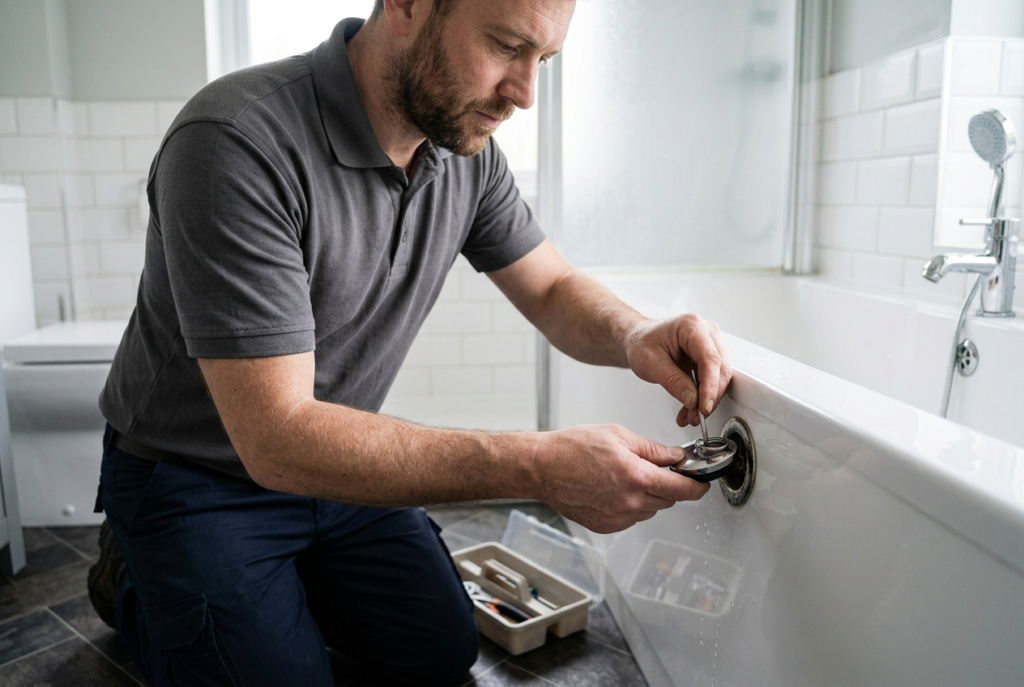
The pop-up mechanism is stuck up or down. Usually caused by limescale or hair tangled around the linkage inside the waste. This can sometimes be cleared by hand, but a seized mechanism that won’t budge is best left to a plumber to avoid snapping the linkage rod.
The chain keeps detaching. Generally a worn link or a fixing point that has loosened over time. A full chain-and-plug replacement is inexpensive and solves this permanently.
Water seeps out slowly around the base of the plug. If this happens even with a known-good plug fitted, the waste rim itself may be cracked, corroded, or no longer sealing against the basin or bath body. This is a sign the waste fitting — not just the plug — needs attention.
There’s a persistent smell from the plug area. Often a build-up of soap, hair, and grime around the waste rather than the plug itself. If a clean doesn’t shift it, this can indicate standing water or a slow blockage in the pipe beyond, which is worth having checked alongside any other tap or fitting issues in the same bathroom.
When to Call a Plumber
Replacing a worn rubber plug or chain is a job most people can manage in a few minutes. Call in a professional when:
- The waste fitting itself is cracked, loose, or corroded
- A pop-up or click-clack mechanism is seized and won’t free up
- Slow draining persists after cleaning and replacing the plug
- You notice water marks or damp appearing near or below the bath or basin
- You’re updating the whole bathroom and want all fittings — taps, waste, and plug — matched and fitted properly in one visit
If a plug problem turns out to be the first sign of something bigger, it’s far better to catch it early. Our engineers regularly find that a “small” plug or waste issue is connected to a wider fault, and dealing with it properly the first time avoids repeat call-outs.
Why Choose Catalyst Home Services
We’ve spent years fixing the small jobs as carefully as the big ones across London bathrooms.
Honest advice first. If a clean and a new plug will sort your problem, that’s what we’ll tell you — we don’t recommend work you don’t need.
Qualified, experienced engineers. Every plumber we send out is trained and certified. You can review our licences and certifications before booking.
Transparent pricing. You’ll get a clear quote before any work starts, with no hidden call-out charges.
Same-day availability. Whether it’s a quick plug and waste fix or a full bathroom refit, we offer same-day bookings across London.
Read what customers across London say about our work on our reviews and testimonials page.
FAQs
What size is a standard UK bathroom plug?
Most UK basin wastes take a 1¼ inch (32mm) plug, while baths typically use a 1½ inch (40mm) plug. Always measure your specific waste outlet, since older properties can vary.
Why does my bathroom plug not seal properly anymore?
The most common causes are a worn or perished rubber seal, limescale build-up around the waste rim, or a mismatch between the plug size and the waste outlet. A clean and a new plug resolves most cases.
Can I replace a pop-up plug myself?
Simple pop-up stoppers can sometimes be lifted out and cleaned by hand. If the linkage mechanism inside the waste is stuck, damaged, or needs replacing, it’s safer to have a plumber handle it to avoid damaging the waste pipe.
Is a slow-draining bath always a plug problem?
Not always. If a clean, well-fitted plug still drains slowly, the cause is usually a partial blockage in the waste pipe rather than the plug itself.
How often should I replace a bathroom plug?
There’s no fixed schedule, but once a rubber plug feels hard, cracked, or no longer holds a snug seal, it’s worth replacing. It’s a low-cost fix that prevents ongoing water waste.
Get It Sorted Today
A bathroom plug is a small fitting, but it’s worth getting right — for your water bill, your bathroom, and your daily routine. If a clean and a replacement plug haven’t solved the problem, or if you’d rather have it checked properly, Catalyst Home Services is here to help.
Call us on +44 7400 265421, use our 24/7 emergency line for urgent leaks, or book a plumber online and we’ll confirm your appointment straight away.