
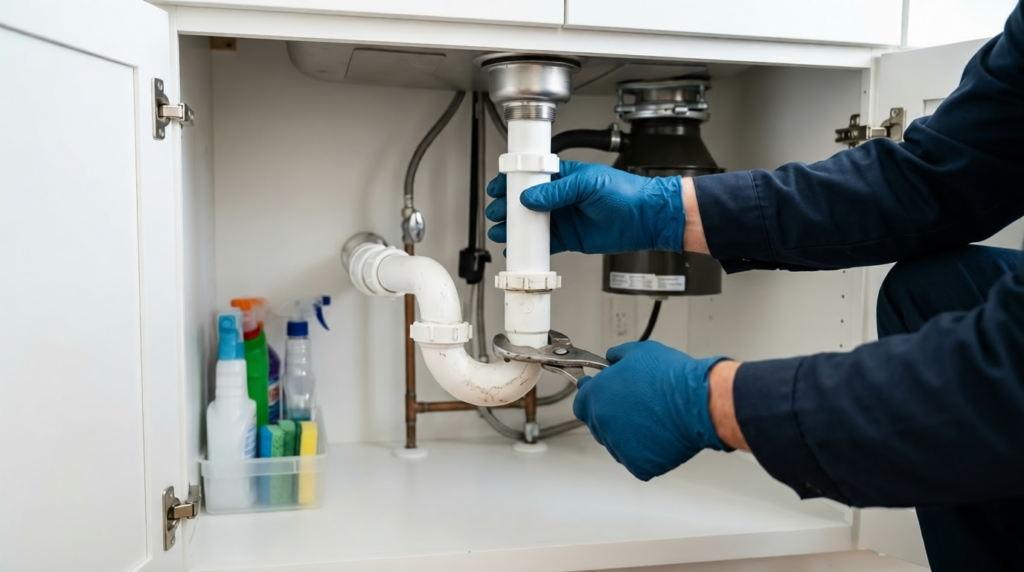
Most people never think about what’s happening underneath their kitchen or bathroom sink — until something goes wrong. A bad smell drifts up from the plughole. The water drains slower than it used to. Or worse, you open the cupboard under the sink and find a puddle.
In almost every case, the part doing the work (or failing to do it) is the sink plumbing trap — the curved section of pipe sitting just below your sink. It’s a simple piece of plumbing, but it’s also one of the most important, and one of the most misunderstood.
This guide explains exactly how sink plumbing works, what the trap actually does, the different types you’ll find in UK homes, and how to spot and fix the problems that come up most often. We’ll also cover when a quick DIY check is enough, and when it’s time to call a qualified plumber.
Catalyst Home Services provides plumbing repairs and installations across London, and blocked or leaking sink traps are one of the most common call-outs our engineers deal with. If you’d rather skip straight to getting it fixed, call +44 7400 265421 or book a plumber online.
What Is Sink Plumbing, Exactly?
“Sink plumbing” refers to the full system of pipework connected to your sink — the tap supply pipes bringing water in, and the waste pipework taking dirty water away. The waste side is where most problems happen, and it’s made up of three main parts:
- The plughole and strainer — where water first leaves the sink
- The trap — the curved pipe section directly underneath
- The waste pipe — which carries water onward to the main drain or soil stack
Understanding how these pieces connect helps you describe a fault accurately when something goes wrong — and it means you’ll know whether it’s a five-minute fix or a job for a professional.
What Does a Sink Plumbing Trap Actually Do?
The trap is the U-shaped or P-shaped bend of pipe found under every sink, basin, and bath in your home. It looks like an odd design choice until you understand its purpose: the trap holds a small amount of standing water inside its curve at all times.
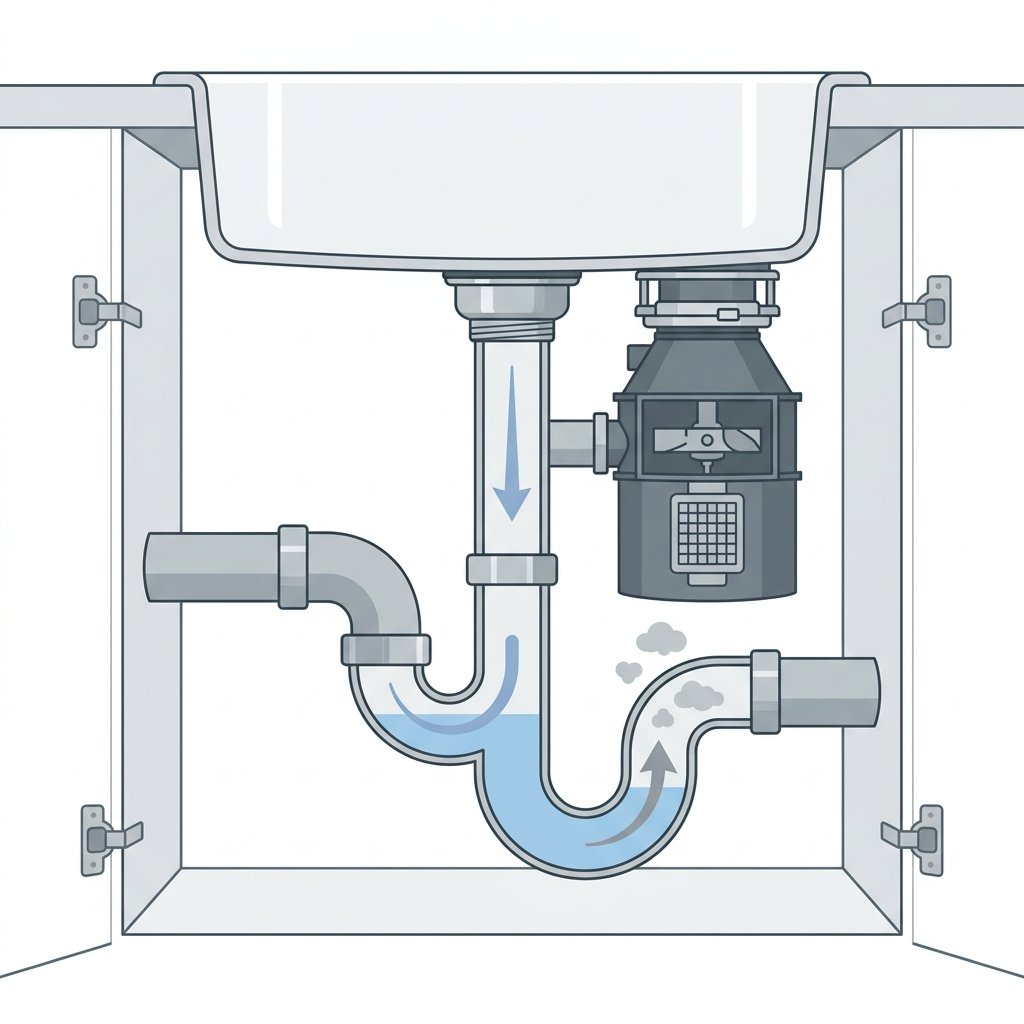
That trapped water creates a seal. It blocks sewer gases — which are unpleasant and can be harmful in enough concentration — from travelling back up through the pipework and into your kitchen or bathroom. Without a trap, your home would be permanently connected to the smell of the drain system.
This is why almost every plumbing fixture in your home has one, and why building regulations require them. It’s a simple mechanism, but it’s doing a genuinely important job every single day, usually without you noticing.
Types of Sink Plumbing Traps
Not all traps look the same, and the type fitted under your sink affects how it’s maintained and what tends to go wrong with it.
P-Traps
The most common type in modern UK homes. Shaped like the letter P on its side, it connects to a waste pipe running through the wall rather than straight down. P-traps are the standard choice for kitchen sinks and bathroom basins because they connect easily to a wall-mounted soil stack.
S-Traps
Shaped like the letter S, these connect to waste pipework running down through the floor instead of through the wall. S-traps were more common in older properties and are seen less in new installations, partly because they’re more prone to losing their water seal through siphoning — pulling the water out of the bend when water drains too fast.
Bottle Traps
A compact, cylindrical design that’s popular under modern kitchen and bathroom sinks, mainly because they look neater and take up less cupboard space. The trade-off is that bottle traps clog more easily, since debris settles in the bottom of the canister rather than flowing through a curved channel.
Running Traps
Used less often in domestic settings, these are typically found where multiple fixtures share a single trap on a horizontal run, more common in commercial or older multi-fixture installations.
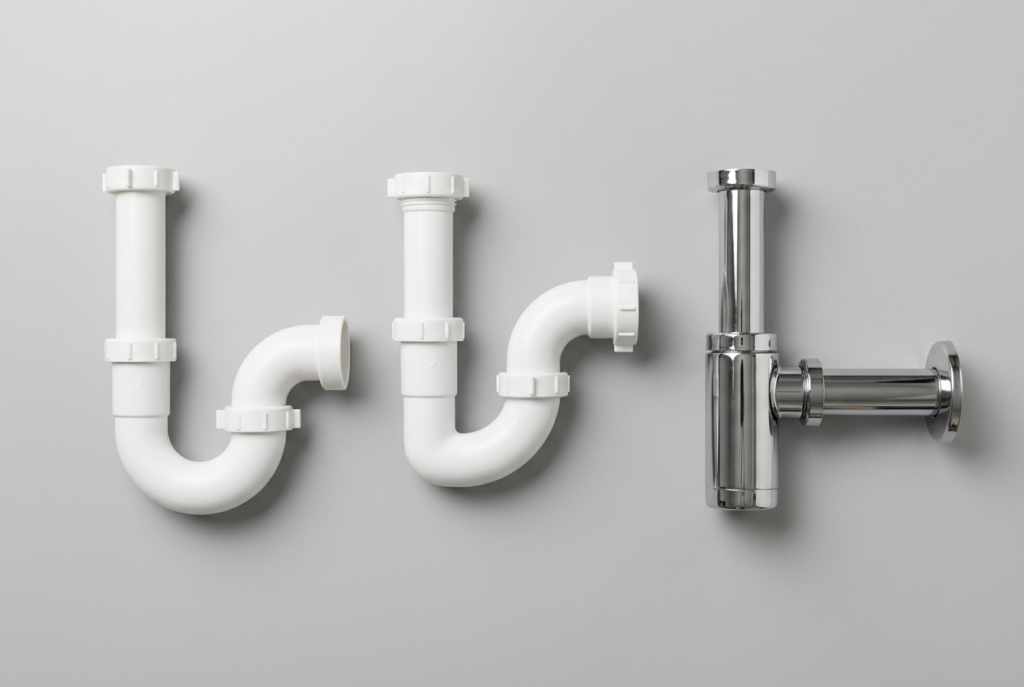
If you’re not sure which type is fitted under your sink, our tap and faucet repair and general plumbing engineers can identify it and advise on the best option if a replacement is needed.
Why the Sink Trap Matters More Than People Realise
It’s easy to assume the trap is just “a bend in the pipe,” but it’s doing three jobs at once:
- Blocking sewer gas. As covered above, the water seal stops odours and gases entering your home.
- Catching debris before it reaches the main system. Food particles, hair, grease, and small objects tend to settle in the trap rather than travel further down the line — which is genuinely useful, because it’s far easier to clear a blockage in an accessible trap than deep inside a wall or floor pipe.
- Providing access for clearing blockages. Most traps are designed to be removable or have an access point, specifically so a clog can be cleared without cutting into pipework.
When a trap fails — through a crack, a poor seal, or losing its water barrier — you’ll usually notice through smell or leakage well before any major damage occurs. That’s actually good news: it gives you an early warning system most other plumbing faults don’t.
Common Sink Plumbing Trap Problems
Most call-outs we get for sink plumbing fall into a handful of recognisable categories.
Blocked or Slow-Draining Sink
By far the most frequent issue. Grease, food waste, soap scum, and hair build up gradually inside the trap until water starts draining slowly or stops altogether. Kitchen sinks are particularly prone to this because cooking fat solidifies as it cools, narrowing the pipe over time.
Bad Smells From the Plughole
If sewer gas smell is coming up through your sink, the most likely cause is that the trap has lost its water seal. This happens through:
- Evaporation — if a sink isn’t used for an extended period (a guest bathroom, a holiday let), the water in the trap can simply evaporate away.
- Siphoning — fast-draining water, particularly from a nearby fixture on the same line, can pull the water out of the trap.
- A genuine fix here is often as simple as running the tap for a few seconds to refill the trap. If the smell returns quickly, there’s likely a venting issue or a crack that needs a plumber’s attention.
Leaking From Under the Sink
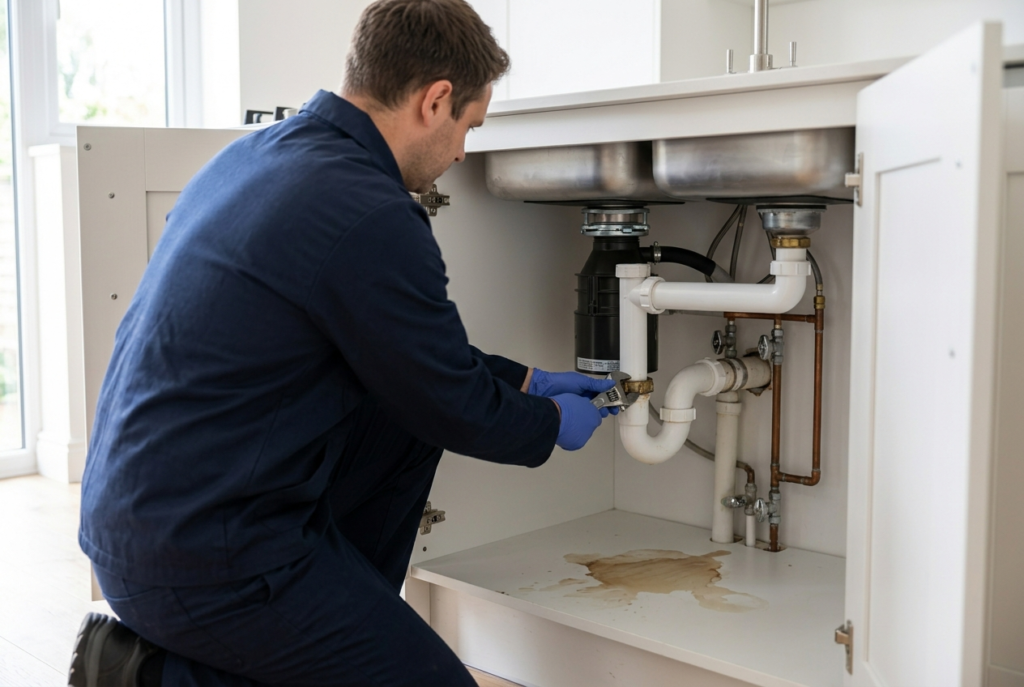
A leak at or around the trap is usually one of the following:
- A loose connection nut that has worked free over time
- A worn or perished rubber washer at a joint
- A cracked trap body, often from age, impact, or (in older plastic traps) UV exposure if it’s been near sunlight for years
- A loose link to the waste pipe or stack connection further along the run
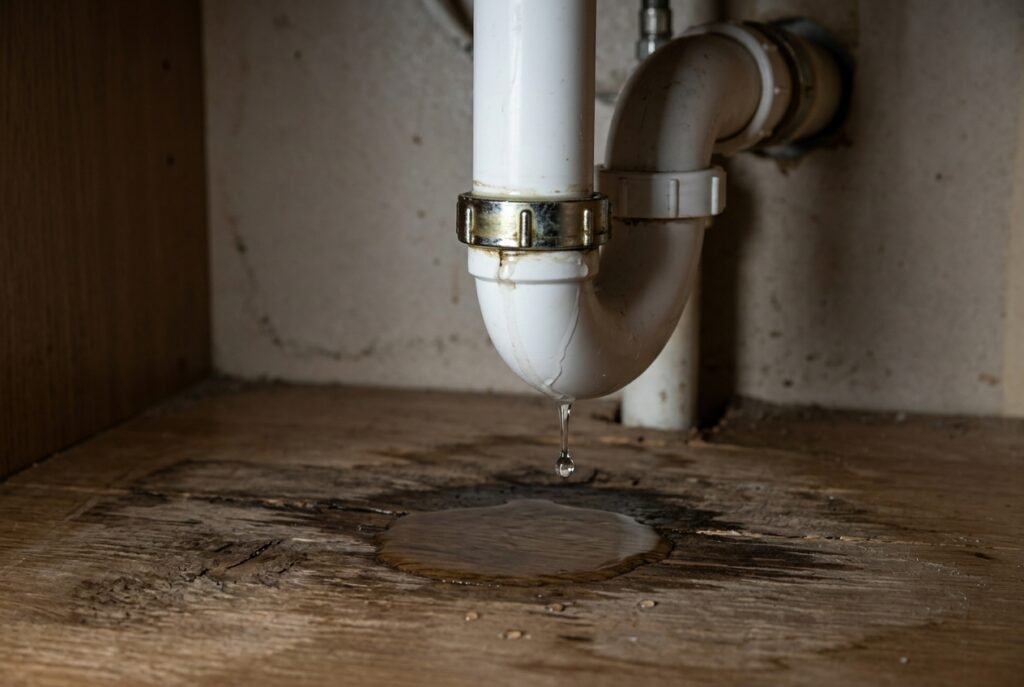
Even a small drip under a sink can cause real damage over weeks and months — swollen cabinet bases, mould, and damaged flooring are all common results of a leak that goes unnoticed because it’s hidden inside a cupboard.
Gurgling Sounds When Draining
A gurgling noise as water drains usually points to a partial blockage or a venting problem, where air is struggling to escape the pipe system and is instead bubbling back up through the water in the trap. It’s worth treating this as an early warning rather than ignoring it, since it often precedes a full blockage.
Trap Falling Out of Alignment
Particularly common with bottle traps and plastic P-traps, where the connecting nuts can loosen through normal vibration and use, eventually allowing the whole assembly to shift or detach slightly — leading to leaks even without any cracked components.
Sink Plumbing Trap Installation: What to Know
Whether you’re fitting a new sink, replacing a damaged trap, or having one installed by a professional, a few principles make the difference between a trap that lasts and one that causes problems within months.
Correct trap selection matters. The trap type needs to match your waste pipe layout — a P-trap for a wall-mounted waste, an S-trap for a floor-mounted one. Using the wrong type, or attempting to convert between them with extra bends, increases the risk of poor drainage and siphoning issues.
The water seal depth matters. UK building regulations specify a minimum seal depth (commonly 75mm for most domestic fixtures) to provide a reliable barrier against gas and reduce the risk of siphoning emptying the trap.
Joints need to be properly seated, not overtightened. Plastic compression joints are common on sink traps, and they rely on a rubber or plastic washer seating evenly against the pipe — overtightening can actually damage the washer and cause the exact leak you’re trying to prevent.
Pipe falls and venting matter for multi-fixture installations. In kitchens with a sink and dishwasher on the same waste run, or bathrooms with a basin and bath sharing pipework, the fall (slope) of the pipe and the venting arrangement affect whether traps hold their seal reliably.
If you’re installing a new kitchen or bathroom sink as part of a wider renovation, this is exactly the kind of detail our bathroom fitting and new build plumbing teams handle as standard, making sure the waste system is set up correctly from the start rather than needing correction later.
Sink Plumbing Maintenance: Keeping It Working Properly
Most sink plumbing problems are preventable with a small amount of regular care.
- Avoid pouring fat, oil, and grease down the kitchen sink. It’s the single biggest cause of kitchen sink blockages. Let it cool and bin it instead.
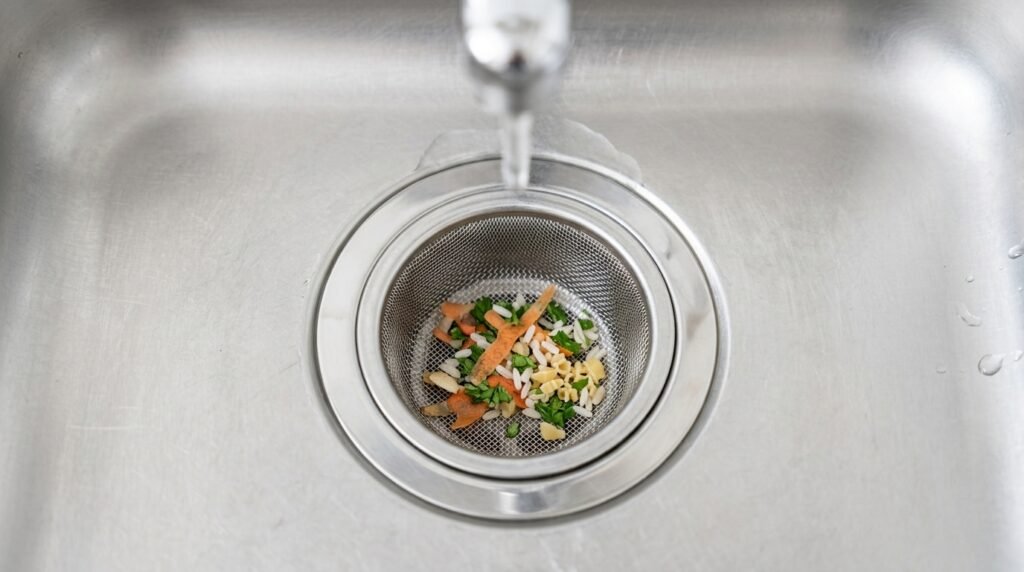
- Use a sink strainer. Catching food scraps and debris before they enter the trap massively reduces blockage risk, particularly in kitchens.
- Run hot water through the sink regularly. This helps clear minor grease build-up before it becomes a full blockage.
- Check under-sink cupboards periodically. A quick look for damp patches, a musty smell, or loose pipework can catch a developing leak long before it causes real damage.
- Don’t ignore slow draining. A sink that’s draining more slowly than it used to is an early sign, not a minor inconvenience. Dealing with it early is far easier than dealing with a full blockage later.
- Refill rarely used traps occasionally. If you have a guest bathroom or utility sink that isn’t used often, running the tap for a minute every few weeks keeps the trap’s water seal topped up.
For deeper or recurring blockages beyond the trap itself, our blocked drain clearance service uses proper equipment to clear the full run, not just the accessible section under the sink.
DIY Fix or Call a Plumber?
A few sink plumbing issues are genuinely safe and simple to handle yourself:
- Running the tap briefly to refill a trap that’s lost its seal through evaporation
- Clearing a sink strainer of visible debris
- Gently hand-tightening a connection nut that has visibly loosened (without overtightening)
Others are worth getting a professional to look at:
- Any leak that persists after checking connections
- A blockage that doesn’t clear with basic methods
- A cracked or damaged trap body
- Gurgling or smells that return repeatedly, which often point to a venting issue elsewhere in the system
- Any job involving cutting, re-fitting, or relocating waste pipework
Sink plumbing looks simple from the outside, but a poorly fitted trap or a missed underlying cause can mean repeat call-outs and ongoing damage. Getting it right the first time is almost always cheaper than fixing it twice.
Why Choose Catalyst Home Services for Sink Plumbing
Experienced engineers who see this daily. Sink trap faults — blockages, leaks, smells, gurgling — are among the most common jobs our team handles across London, so diagnosis is usually quick and accurate.
Honest assessment, no unnecessary work. If your trap can be cleared or resealed rather than replaced, that’s what we’ll do. You can read genuine feedback from past customers on our reviews and testimonials page.
Transparent pricing before any work begins. You’ll get a clear quote upfront, with no hidden call-out charges added afterwards.
Same-day availability across London. Most sink plumbing call-outs are resolved in a single visit, and we offer a 24/7 emergency line for leaks that can’t wait.
Fully qualified and certified. You can review our licences and certifications before booking, so you know exactly who’s working on your home.
Related Services
Sink plumbing issues sometimes point to something bigger further along the system. These services are commonly needed alongside trap and drain work:
- Blocked Drain Clearance — for blockages beyond the trap itself
- Leak Detection & Repair — if water is appearing somewhere you can’t trace back to the trap directly
- Tap & Faucet Repair — if the tap itself also needs attention while you’re at it
- Water Pressure Issues — if drainage problems are paired with supply-side pressure faults
- Bathroom Fitting — if you’re replacing a sink and want the plumbing done properly from the start
FAQs
What is a sink plumbing trap for?
It holds a small amount of standing water that creates a seal, blocking sewer gases from entering your home through the plughole. It also helps catch debris before it reaches the main drainage system.
Why does my sink smell even when it’s not blocked?
This usually means the trap has lost its water seal, often through evaporation in a rarely used sink or siphoning caused by fast drainage elsewhere on the same pipe run. Running the tap for a few seconds often resolves it; if the smell returns quickly, there may be a venting issue worth having checked.
How often should a sink trap be cleaned?
There’s no fixed schedule, but if your kitchen sink is used daily, checking and clearing the trap every few months helps prevent the gradual grease and debris build-up that leads to blockages.
Can I replace a sink trap myself?
Replacing a like-for-like trap (same type, same connections) is a manageable DIY job for some people with basic tools. However, if the layout has changed, the seal depth is wrong, or you’re unsure about UK building regulation requirements, it’s worth having a qualified plumber handle it to avoid repeat problems.
Why does my sink gurgle when it drains?
Gurgling usually points to a partial blockage or a venting problem where air can’t escape the pipe properly and instead bubbles up through the trap. It’s worth addressing before it develops into a full blockage.
Book a Sink Plumbing Repair Today
Whether it’s a blocked trap, a persistent smell, or a leak you’ve spotted under the sink, Catalyst Home Services provides reliable, same-day plumbing repairs across London. Call us now on +44 7400 265421, use our 24/7 emergency line for urgent leaks, or book a plumber online and we’ll confirm your appointment straight away.