
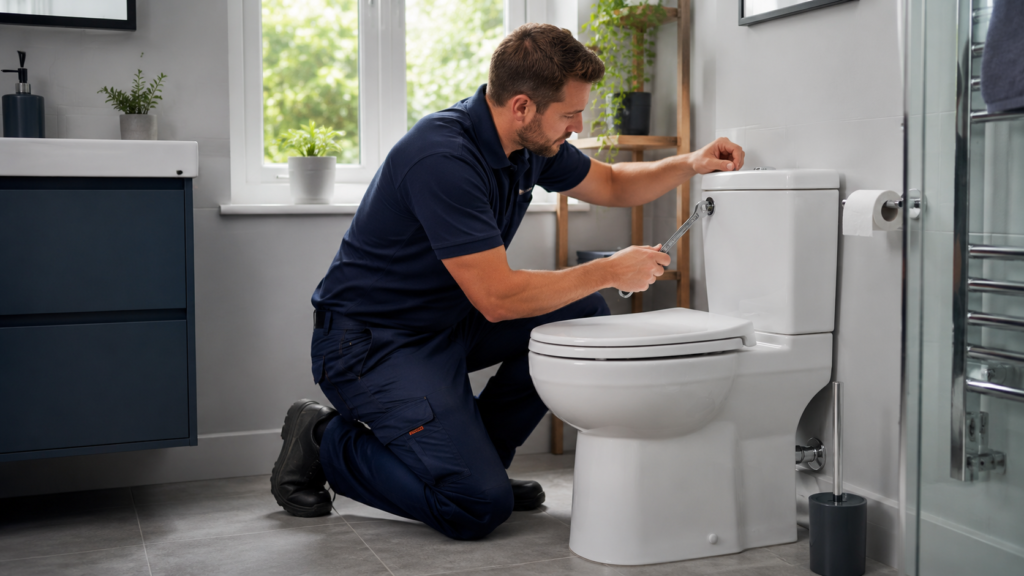
A toilet is one of the most-used fittings in any home, so when something goes wrong, it rarely stays a small problem for long. A running cistern, a slow flush, or a leak at the base of the pan can waste water, damage flooring, and — left long enough — turn into a much bigger repair bill.
The good news is that most toilet plumbing problems follow a handful of recognisable patterns. Knowing what they are, and knowing when the job genuinely needs a qualified fitting plumber rather than a DIY fix, can save you time, money, and a fair bit of frustration.
This guide walks through how toilet plumbing actually works, the most common faults London homeowners deal with, what a professional repair or installation involves, and how to keep a toilet running reliably for years.
How Toilet Plumbing Works
A toilet looks simple from the outside, but it relies on a few connected systems working together properly.
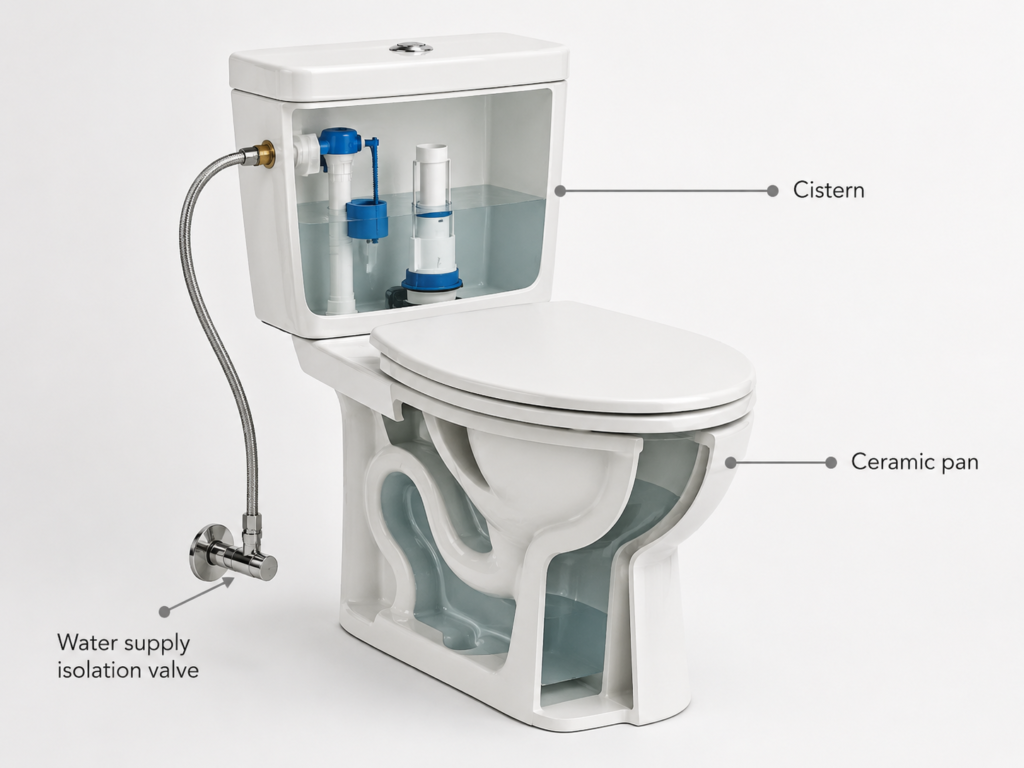
The cistern is the water tank that sits above or behind the pan. It fills after every flush using a fill valve, and releases that water through a flush valve when you press the handle or button.
The pan is the ceramic bowl itself, connected to the waste pipe below or behind it through a sealed joint. This seal stops waste water and sewer gases from escaping into your bathroom.
The water supply feeds the cistern through a small pipe, usually controlled by an isolation valve that lets a plumber (or you, in an emergency) shut off the water without affecting the rest of the house.
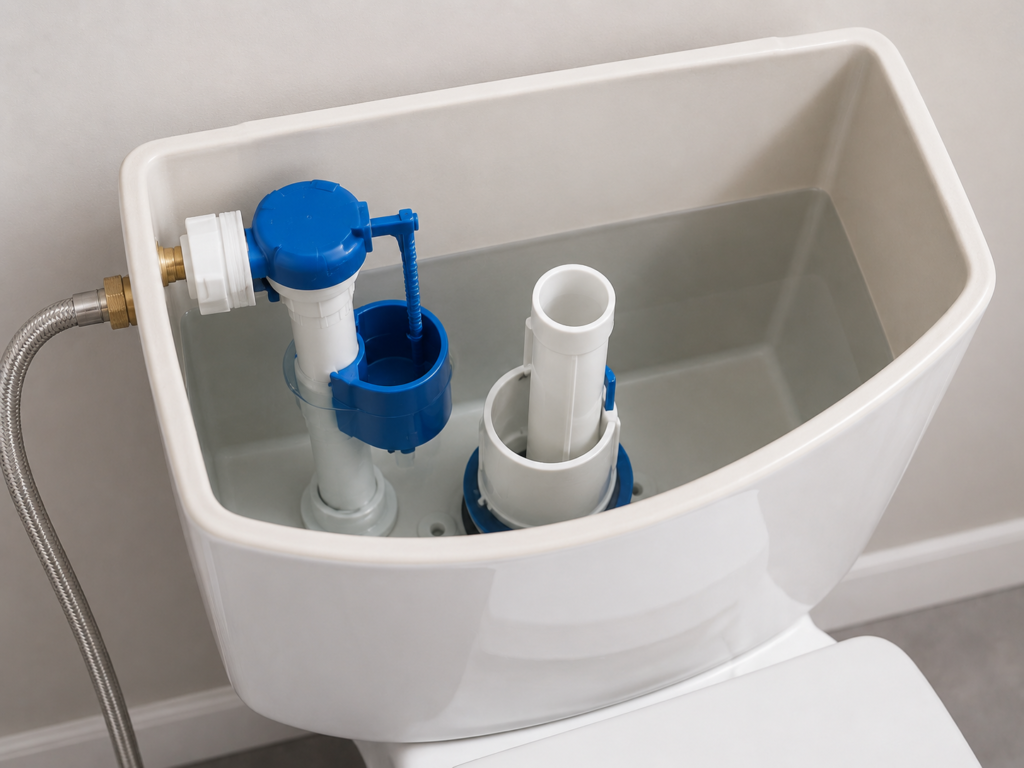
When any one of these parts fails — a worn valve, a cracked seal, a blocked outlet — the toilet starts showing symptoms. Most calls we get fall into one of the categories below.
Common Toilet Plumbing Problems
A Toilet That Keeps Running
If your toilet hisses or trickles long after you’ve flushed, the cistern isn’t sealing properly. This is almost always down to a worn flap valve or a fill valve that hasn’t shut off the water supply correctly.
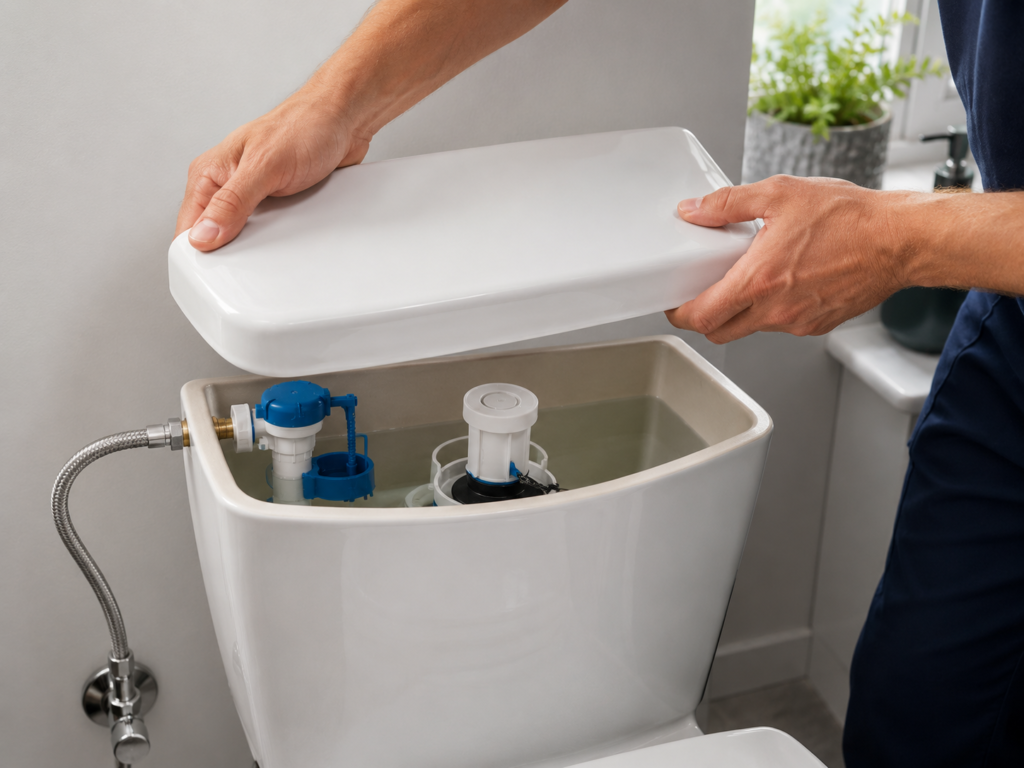
It sounds minor, but a running toilet can waste 200 to 400 litres of water a day. On a metered water supply, that adds up fast — and the repair itself is usually quick and inexpensive once a fitting plumber has the right part on hand.
Weak or Failed Flush
A toilet that needs several attempts to clear, or barely flushes at all, points to a fault in the flush mechanism — either the syphon unit in older toilets or the drop valve in newer push-button systems. Both wear out over time and are straightforward to replace once correctly diagnosed.
Leaking at the Base of the Pan
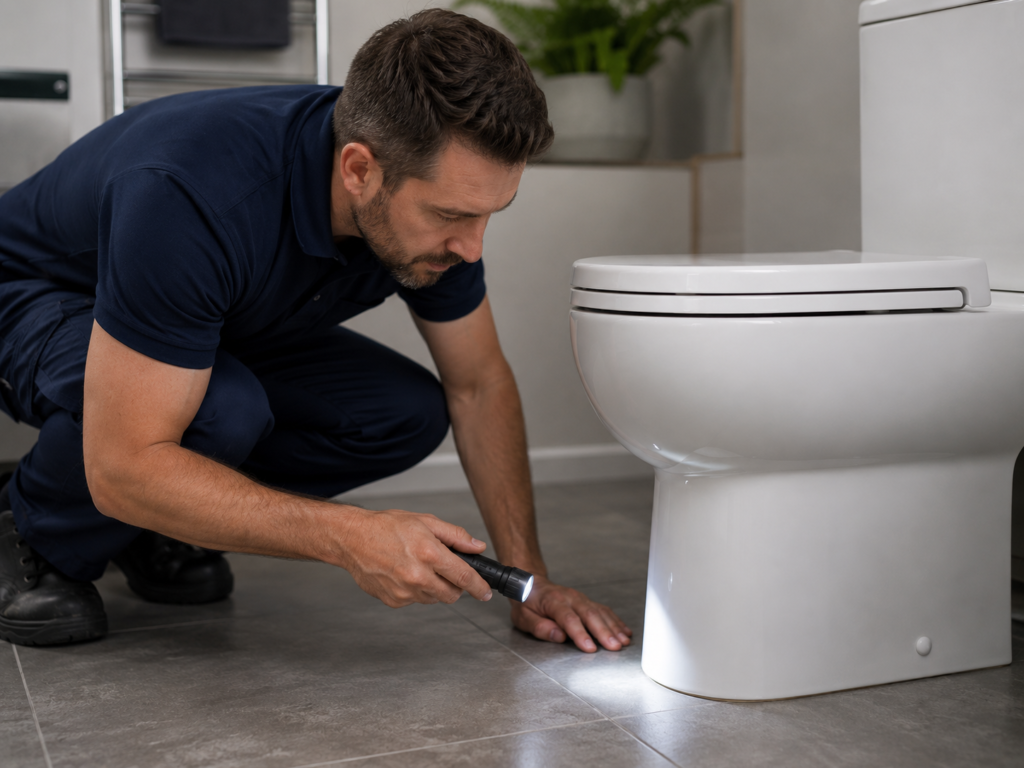
Water pooling around the foot of the toilet after flushing is a sign that the seal between the pan and the waste pipe has failed. This isn’t just inconvenient — it’s a hygiene issue, since the water escaping is waste water, not clean water. It’s worth treating as urgent rather than living with it.
Cracked or Loose Pan
A toilet that rocks when you sit down, or has a visible crack in the ceramic, has likely reached the end of its safe working life. Continuing to use a cracked pan risks a sudden, much messier failure later on.
Blocked or Slow-Draining Toilet
If flushing leaves waste sitting in the bowl or drains away slowly, the blockage may be in the toilet trap itself or further down the waste pipe. This is closely related to wider drainage problems, and it’s worth checking whether the issue is isolated to the toilet or part of a larger blocked drain.
Why This Is a Job for a Qualified Fitting Plumber
Internal cistern repairs — replacing a valve or a flap — are low-risk and many homeowners manage them confidently. But toilet plumbing that touches the soil pipe or the mains water connection is a different matter.
In the UK, any fitting connected to the mains water supply must comply with the Water Supply (Water Fittings) Regulations 1999. This isn’t a guideline — it’s a legal standard designed to stop backflow and contamination of the drinking water supply. Connections to the soil stack also need to meet Building Regulations Part H, ensuring correct trap depths and a sealed connection to the drainage system.
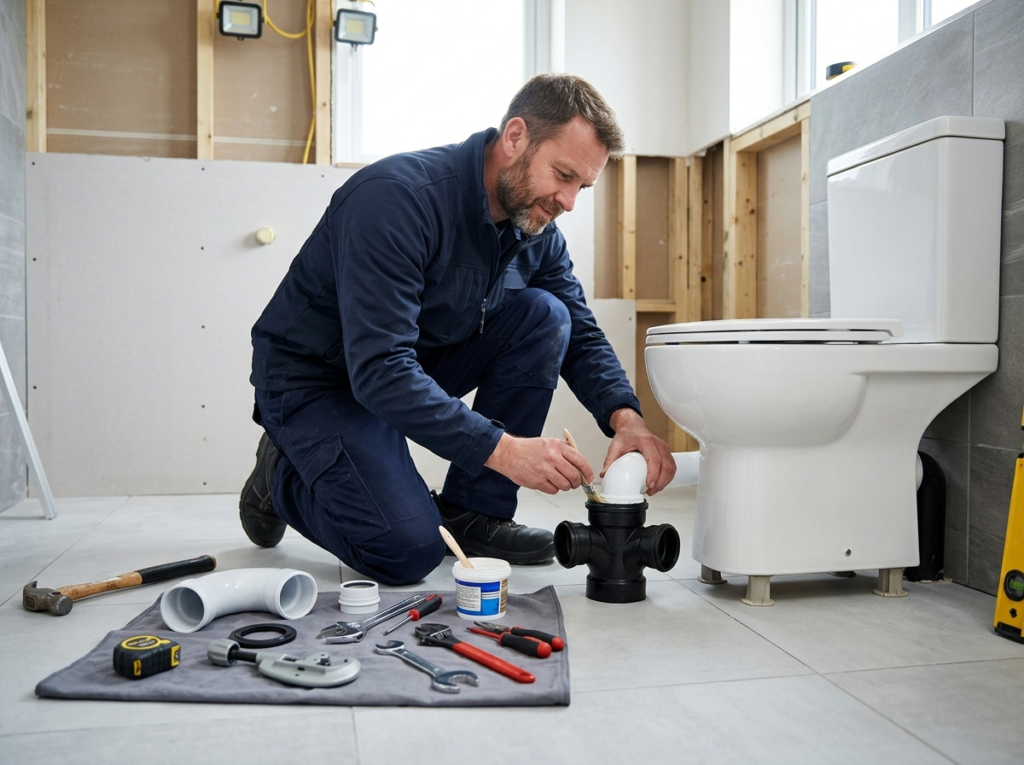
A poorly fitted seal on a toilet pan can let sewer gases into the property. A badly connected water supply can risk contamination further down the line. These aren’t dramatic outcomes, but they’re exactly the kind of thing a qualified fitting plumber is trained to avoid, and exactly the kind of thing that’s hard to spot until it’s already a problem.
Catalyst Home Services engineers work to these standards on every toilet plumbing job, whether it’s a same-day repair or a full new installation. You can review our licences and certifications before booking.
Toilet Repair vs Toilet Replacement
Not every fault means a new toilet. Here’s how a fitting plumber typically decides which route makes sense.
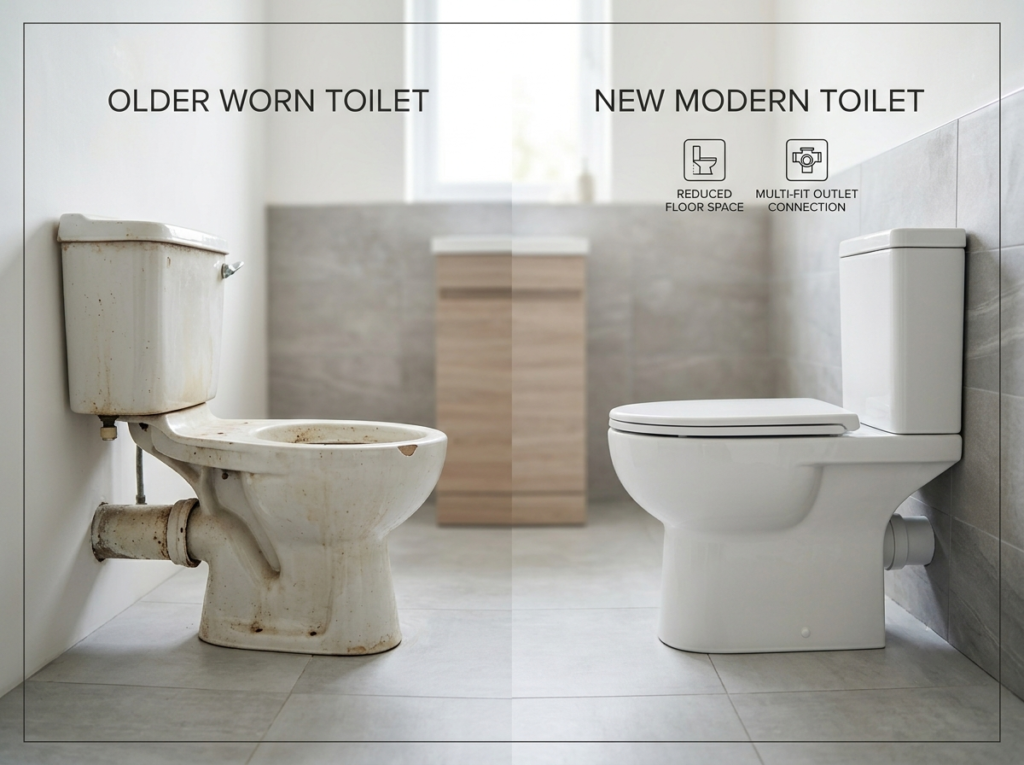
Repair is usually right when:
- The pan and cistern body are in good physical condition
- The fault is a single internal component — a valve, seal, or mechanism
- The toilet is a standard, current model with parts readily available
Replacement makes more sense when:
- The toilet is old and replacement parts are difficult to source
- The ceramic pan itself is cracked or chipped
- The same fault keeps recurring despite previous repairs
- You’re upgrading to a more water-efficient model or changing the bathroom layout
A good fitting plumber will tell you honestly which category your toilet falls into, rather than defaulting to whichever job pays more. Our full breakdown of repair and replacement options is covered on our Toilet Repair & Replacement page.
What to Expect From a Professional Toilet Plumbing Visit
A well-run toilet plumbing job follows a consistent process, regardless of whether it’s a quick repair or a full installation.
1. Booking — You describe the fault so the engineer can bring the right parts. For close-coupled, back-to-wall, and wall-hung toilets with concealed cisterns, this matters, since each type uses different components.
2. Assessment — On arrival, the water supply is isolated and the engineer identifies the actual cause, not just the visible symptom. A running toilet, for example, can come from either the fill valve or the flush valve — they look similar but need different fixes.
3. A clear quote before work starts — No vague hourly rates, no surprise call-out fees added to the final bill.
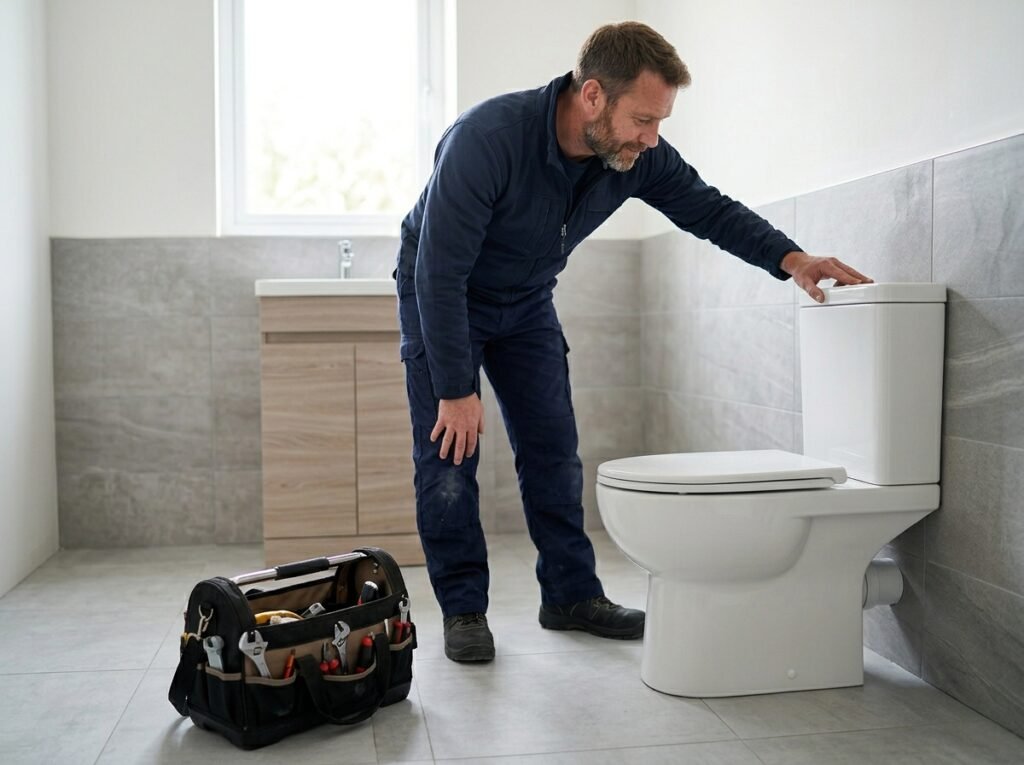
4. The repair or installation itself — Most standard repairs are completed within an hour. A full toilet replacement, including removing the old unit and connecting the new one, typically takes two to three hours.
5. Testing — The flush is run through multiple cycles, water connections are checked for leaks, and the floor area is inspected before the engineer leaves.
Toilet Plumbing for New Bathrooms and Renovations
If you’re renovating a bathroom or fitting one out for the first time, toilet plumbing is usually just one part of a larger job. Positioning the waste connection correctly, running the water supply, and fitting the toilet so it sits flush with the wall or floor all need to be planned alongside the rest of the room.
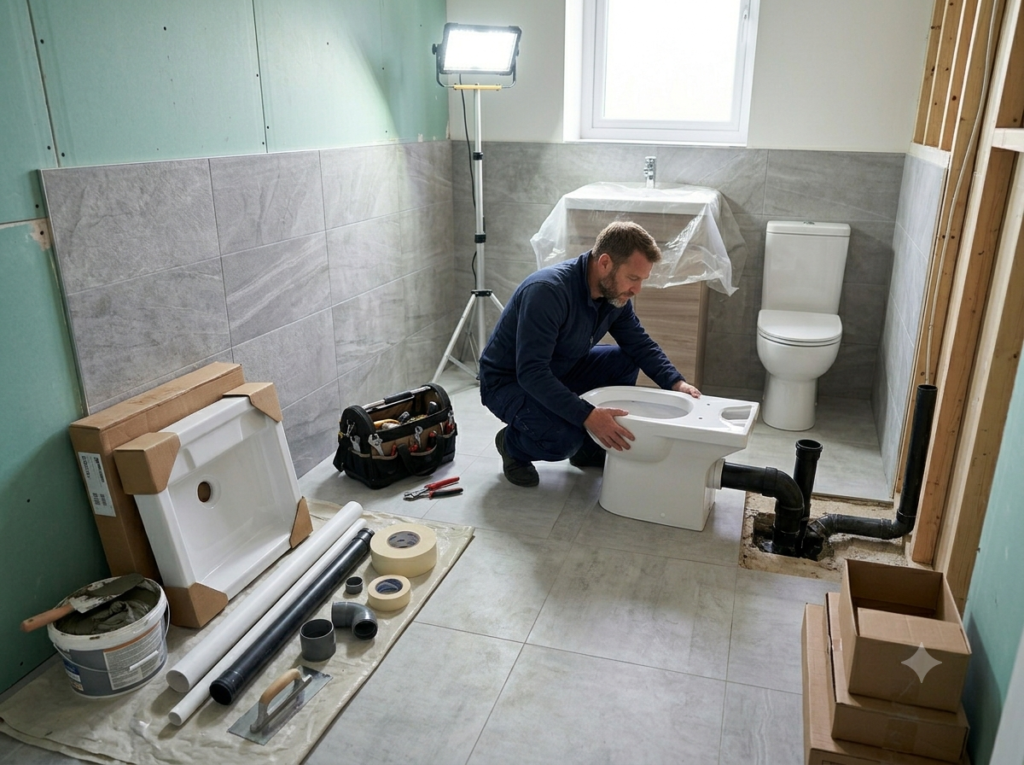
This is typically handled as part of a wider Bathroom Fitting project, where the toilet, basin, and other fittings are installed together to the same standard. For larger developments or refurbishments, our New Build Plumbing team handles full sanitary ware installation from first fix through to completion.
Looking After Your Toilet Plumbing Between Visits
A few simple habits go a long way toward avoiding avoidable call-outs:
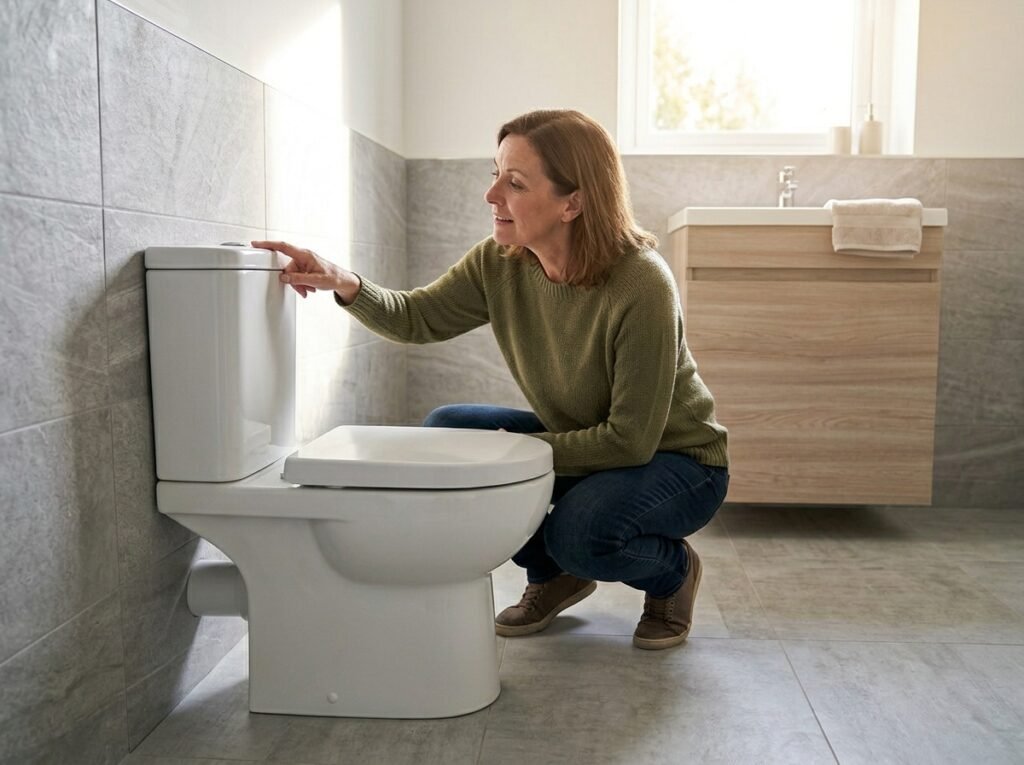
- Don’t ignore a running toilet. The sound becomes background noise, but the water waste doesn’t stop. A repair booked early is almost always smaller than the one booked six months later.
- Be careful what goes down the pan. Wet wipes, cotton buds, and sanitary products are common causes of blockages, even when packaging claims otherwise.
- Check around the base occasionally. Catching a small leak at the seal early prevents floor damage and a much bigger job later.
- Don’t force a stiff flush handle or button. If it’s not springing back properly, the mechanism is likely on its way out — better to have it looked at than to force it and risk a bigger fault.
- Consider planned maintenance if you manage more than one property. Our Residential AMC and Commercial AMC packages catch these faults on a schedule, rather than waiting for them to become urgent.
Who Catalyst Home Services Works With
Homeowners dealing with a fault that’s been quietly annoying them for months, or a sudden leak that needs sorting today.
Landlords and letting agents who need a fast, properly documented repair to meet their obligations to tenants — and the paperwork to prove it.
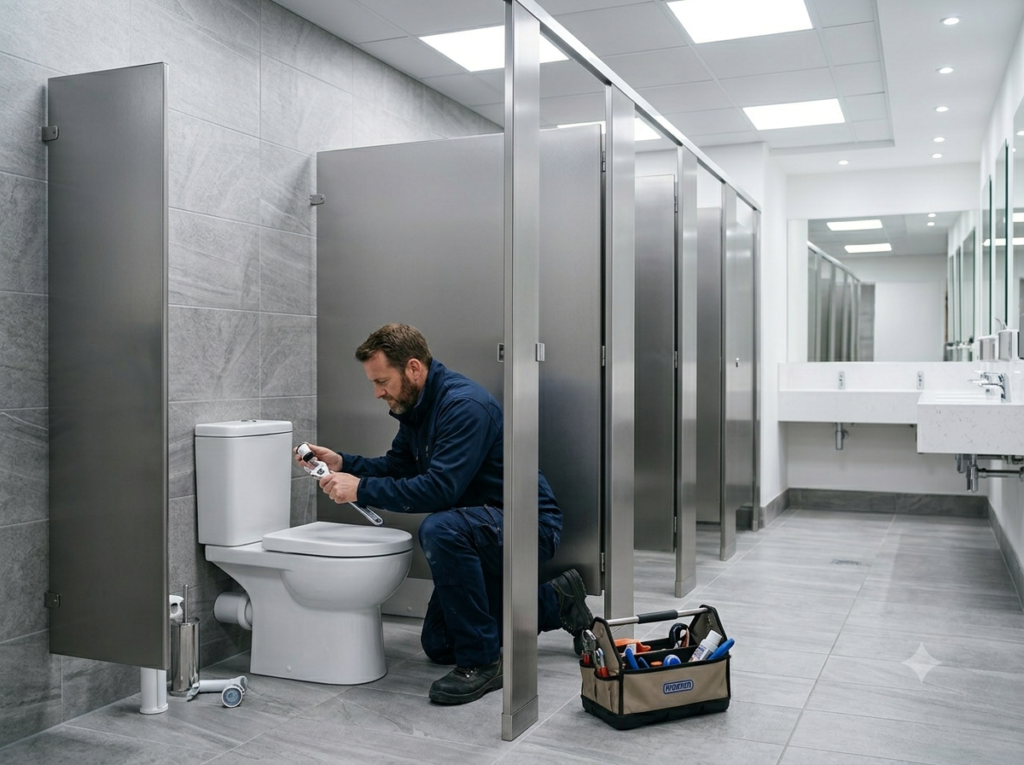
Commercial clients, including offices and public facilities, where high-use toilets fail more often and downtime affects more than one person. Our Commercial Plumbing team covers this end of the work.
Developers and contractors fitting out new builds who need a reliable fitting plumber for sanitary ware as part of a larger project.
Why Choose Catalyst Home Services
We’ve been carrying out plumbing and property maintenance work across London for years, and the reputation we’ve built comes down to a few consistent things: qualified engineers, honest pricing, and toilet plumbing work that holds up over time rather than coming back to bite you.

We offer same-day appointments and a 24/7 emergency line for situations that can’t wait. Engineers carry the most commonly needed toilet parts on the van, so most repairs are sorted in a single visit. Every quote is given before work starts, not adjusted afterwards. And every fitting plumber on our team works to current UK Water Regulations and Building Regulations standards.
You can read what London customers have said about working with us on our Reviews & Testimonials page, or find out more about our approach on Why Choose Us.
FAQs
Why does my toilet keep running after I flush?
This is almost always a worn flap valve or a fill valve that isn’t shutting off properly. Both are common, low-cost repairs once a fitting plumber identifies which one is at fault.
Is a leaking toilet base urgent?
Yes. Water at the base of the pan after flushing usually means the seal to the waste pipe has failed, and the water escaping is waste water rather than clean water. It’s worth getting looked at quickly rather than working around it.
How long does a toilet replacement take?
Most replacements, including removing the old toilet and connecting the new one, take two to three hours, depending on the toilet type and the condition of the existing waste connection.
Do I need a specific type of plumber for toilet work?
You need a fitting plumber familiar with current UK Water Regulations, particularly for anything touching the soil pipe or the mains water connection. Internal cistern repairs carry lower risk, but installation and waste connections should always be done to a proper standard.
Can a blocked toilet be a sign of a bigger problem?
Sometimes. If plunging and basic clearing don’t resolve it, the blockage may extend into the wider drainage system. It’s worth having this checked, particularly if more than one fitting in the property is draining slowly.
Book a Toilet Plumbing Repair or Installation in London
Whether it’s a running toilet you’ve been putting up with for months, a sudden leak, or a full bathroom installation, Catalyst Home Services offers same-day toilet plumbing across London with qualified engineers and no hidden charges.
Call us now on +44 7400 265421, use our 24/7 emergency line for urgent issues, or book a plumber online and we’ll confirm your appointment straight away. Check our service areas to confirm we cover your postcode.