
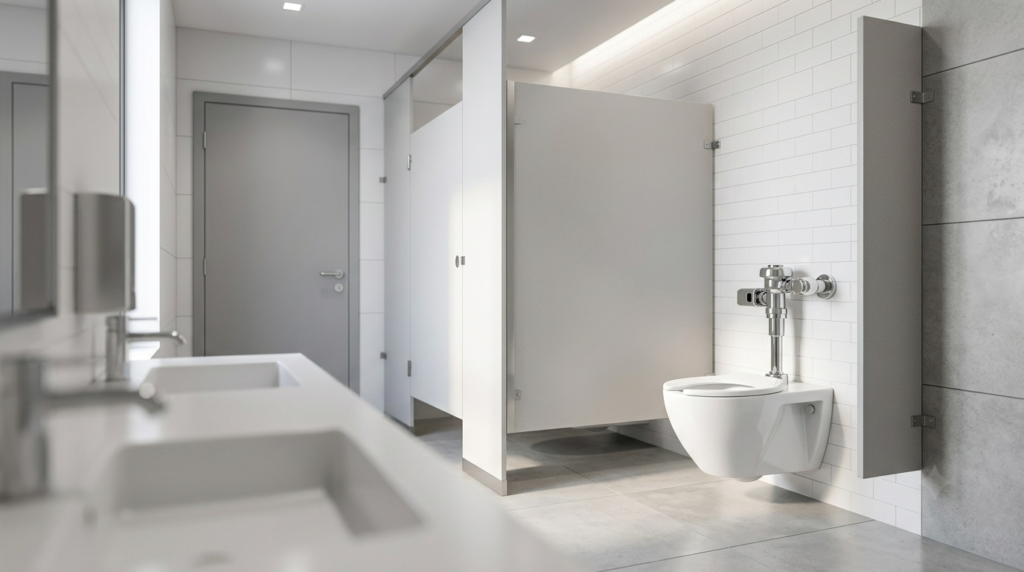
If you have ever used a public toilet, a gym changing room, or a busy office washroom, you have almost certainly used a flushometer valve toilet without realising it. These systems look nothing like the cistern toilets found in most UK homes — there is no tank sitting above or behind the bowl, just a chrome valve connected directly to the water supply line.
Flushometer valve toilets are common in commercial and high-traffic settings, but they are starting to appear in UK homes too, particularly in new builds and renovated properties looking for a sleek, low-maintenance bathroom fit-out. This guide explains how they work, the main types available, what installation involves, and the faults we see most often when called out to repair them.
What Is a Flushometer Valve Toilet?
A flushometer valve toilet uses a single, direct-flush valve instead of a gravity-fed cistern. When the valve is triggered — by a handle, push button, or sensor — it releases a fast, pressurised burst of water straight from the supply line into the bowl, then closes automatically once the flush cycle finishes.
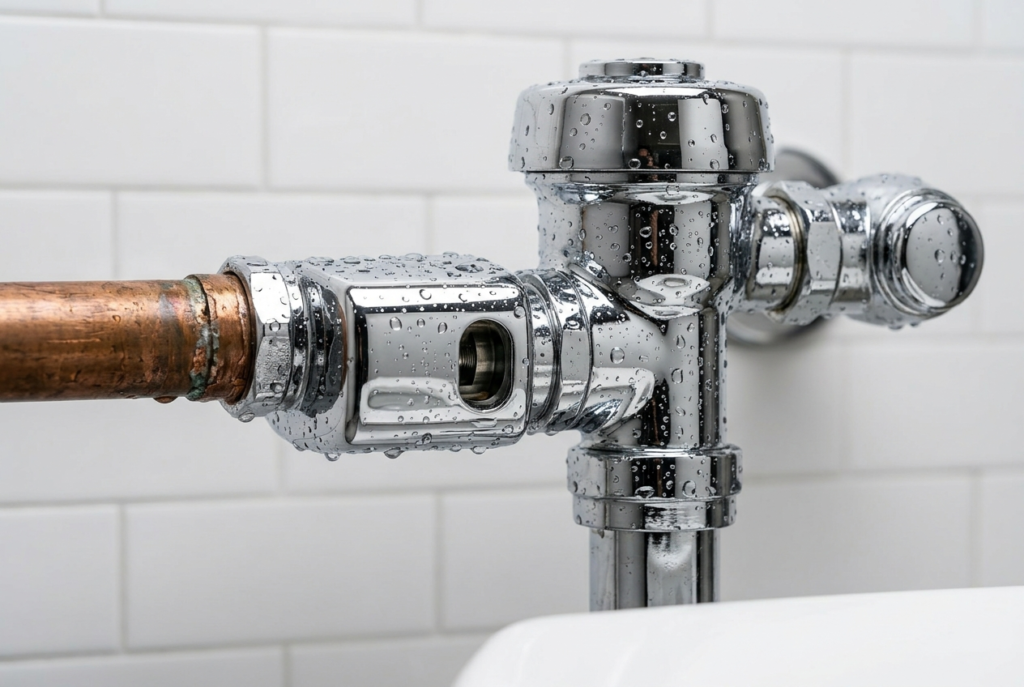
There is no waiting for a tank to refill between uses, which is exactly why these systems dominate commercial settings. A standard cistern toilet needs time to refill before it can flush again. A flushometer valve is ready almost immediately, which matters enormously in a venue with constant footfall.
Why Flushometer Valves Matter
The case for flushometer valve toilets comes down to three practical advantages.
Speed of recovery. Because there is no cistern to refill, the toilet is ready for the next user within seconds. This is the main reason airports, stadiums, schools, and offices fit them almost exclusively.
Space saving. Without a cistern, the unit takes up far less room. This makes flushometer valves a popular choice for compact downstairs toilets, en-suites, and cloakrooms where every centimetre counts.
Fewer internal parts to fail. A traditional cistern relies on a float, a fill valve, and a flap valve — three components that wear out over time. A flushometer valve has a simpler mechanism, which generally means a longer service life with the right maintenance.
The trade-off is that flushometer valves rely entirely on mains water pressure. If your property has low or inconsistent pressure, a flushometer system may not perform reliably — something worth checking before installation. If you are unsure where your property stands, our water pressure issues page covers the common causes and fixes.
Types of Flushometer Valves
Not all flushometer valves work the same way. The right type depends on the property, the water supply, and how the toilet will be used.
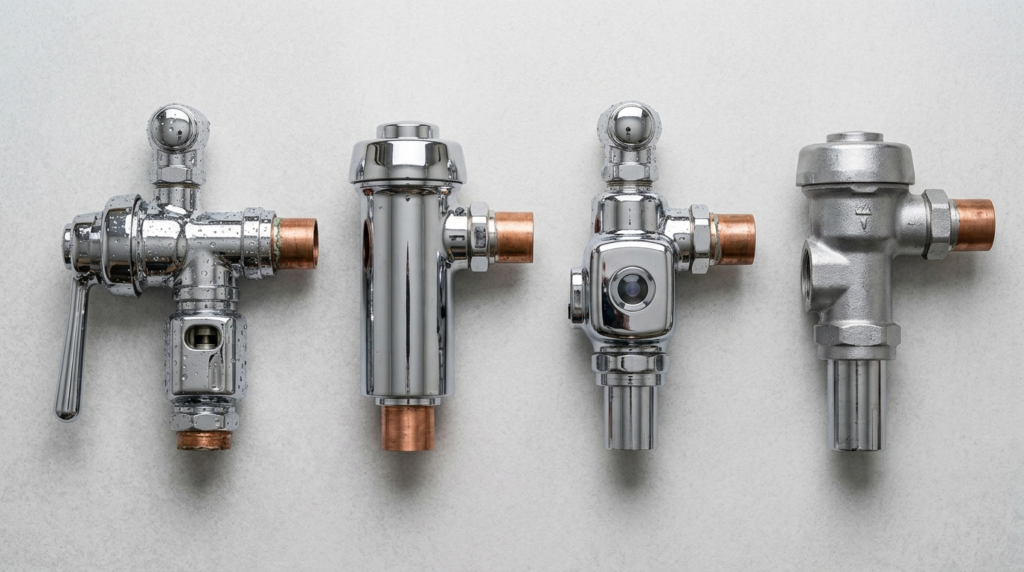
Diaphragm Flushometer Valves
Diaphragm valves use a flexible rubber diaphragm to control water flow through the valve. They are quieter in operation and generally considered easier to service, since the diaphragm can usually be replaced without removing the whole valve body. This makes them a sensible choice for properties that want lower long-term maintenance costs.
Piston Flushometer Valves
Piston valves use a solid metal piston instead of a rubber diaphragm. They tend to be more robust under very heavy, continuous use, which is why you will often find them in stadiums, transport hubs, and other extremely high-traffic commercial settings. They are typically louder than diaphragm valves and can be more involved to repair.
Manual Flushometer Valves
These are triggered by a handle or push button and remain the most common type in both commercial and domestic settings. They are straightforward to install, reliable, and the most affordable option of the three main types.
Sensor-Operated (Touch-Free) Flushometer Valves
Increasingly popular in commercial washrooms and higher-end residential bathrooms, these valves use an infrared sensor to trigger the flush automatically. They reduce surface contact, which has become a meaningful selling point for hygiene-conscious commercial clients since 2020, and they help prevent toilets being left unflushed in busy venues.
Installation Considerations
Fitting a flushometer valve toilet is a different job from installing a standard cistern toilet, and it is not generally a suitable DIY project. Three things matter most.
Water pressure and supply size. Flushometer valves need a minimum, fairly specific water pressure to function correctly — usually higher than what a standard domestic cistern requires. The supply pipework also typically needs to be a larger diameter than a standard toilet feed, so older properties sometimes need pipework upgrades before a flushometer system can be fitted.
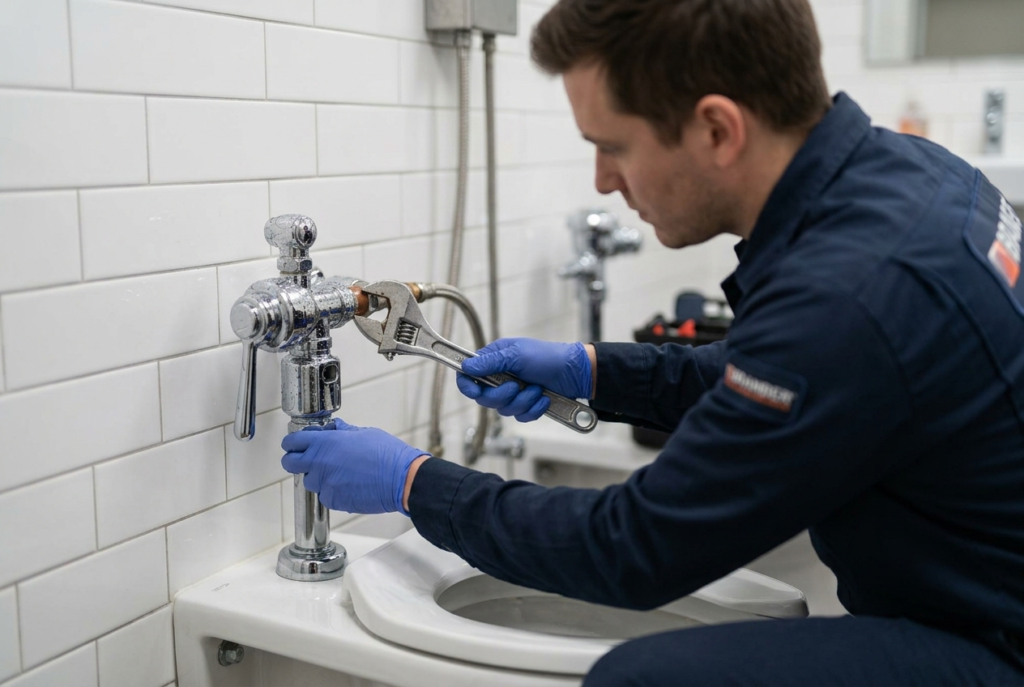
Pipe noise and water hammer. Because flushometer valves release water quickly under pressure, poorly installed pipework can cause a banging or knocking noise known as water hammer. This is usually solved at installation stage with the correct fittings, but it is a common complaint when a flushometer valve has been fitted without the right preparatory work.
UK Water Regulations compliance. Any fitting connected to the mains water supply — flushometer valves included — must meet the Water Supply (Water Fittings) Regulations 1999. This covers backflow prevention in particular, since a flushometer valve sits in a slightly different relationship to the water supply than a cistern-fed toilet. Getting this wrong is not just a performance issue; it is a compliance issue.
If you are planning a bathroom refit or fitting a flushometer system as part of a wider project, our bathroom fitting team can advise on whether your existing pipework supports it, and handle the installation from start to finish.
Common Flushometer Valve Problems
Most of the call-outs we get for flushometer valve toilets fall into a handful of recurring issues.
Continuous running or weak flush. Often caused by a worn diaphragm or a buildup of mineral deposits inside the valve, particularly in hard water areas across much of London. A worn diaphragm typically needs replacing rather than repairing.
Valve will not flush at all. Usually points to a blocked inlet, a sensor fault (on touch-free models), or a handle linkage that has come loose internally. Low incoming water pressure can also stop the valve triggering properly.
Water hammer or banging pipes. As above, this is often an installation issue rather than a fault with the valve itself, though it can also develop over time if a shock-absorbing fitting has degraded.
Leaking at the valve body or connections. Seals inside flushometer valves wear with constant use, particularly in high-footfall commercial settings where the valve may be triggered hundreds of times a day. A leaking valve in a commercial setting should be treated as urgent, since the water usage and bills can add up quickly.
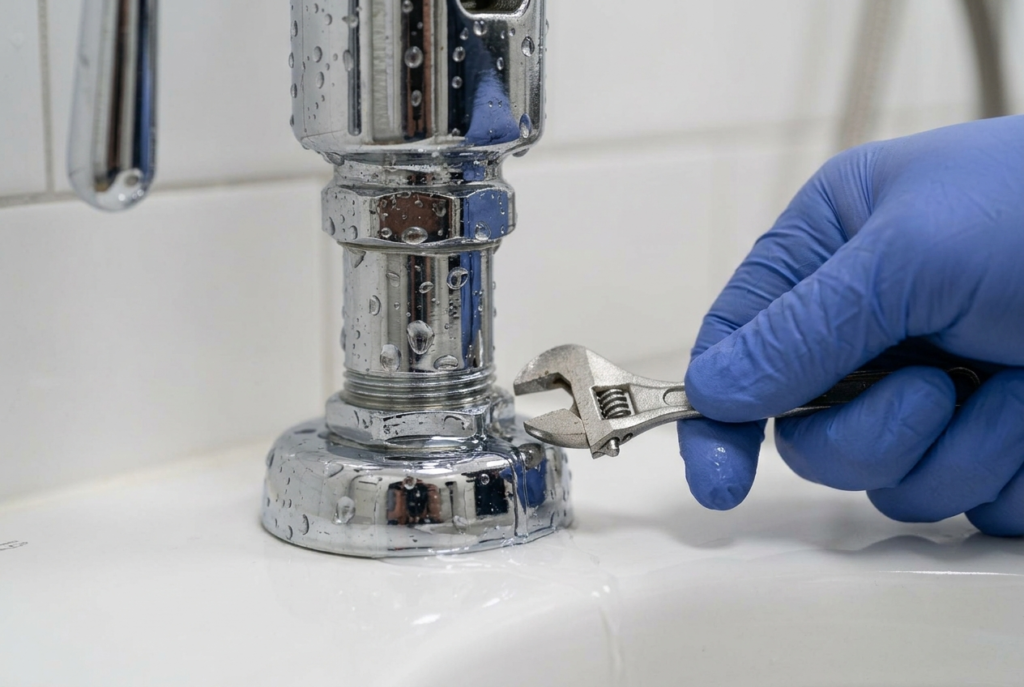
If your toilet — flushometer or cistern-fed — has stopped flushing properly or is leaking, our toilet repair and replacement service covers diagnosis and repair for all toilet types, including commercial flushometer systems.
Maintenance Tips for Flushometer Valve Toilets
A little routine attention keeps flushometer valves running reliably for years rather than months.
Descale regularly in hard water areas. Mineral buildup is the single biggest cause of premature valve failure in London and the South East, where water hardness is well above the UK average. Periodic descaling of the valve internals helps prevent this.
Don’t ignore a slow flush. A flush that has gradually become weaker over weeks is usually an early sign of internal wear or debris buildup — addressing it early is cheaper than waiting for a full failure.
Check seals and diaphragms on a maintenance schedule if the toilet sees heavy commercial use. For offices, retail premises, or any high-footfall site, this is exactly the kind of preventative work covered under a planned maintenance contract. Our Commercial AMC and PPM (Planned Preventive Maintenance) packages are designed for exactly this — catching wear before it becomes a breakdown.
Don’t force a stuck handle or button. If a manual flushometer valve feels stiff or unresponsive, forcing it can damage the internal linkage. It is a quick, inexpensive repair if caught early.
Flushometer Valves in Commercial Settings
If you manage an office, retail unit, restaurant, or any property with public washroom facilities, flushometer valve toilets are very likely already part of your building. High-use commercial toilets fail more often than domestic ones simply because of the volume of use, and a single faulty valve in a public washroom can affect dozens of users a day.
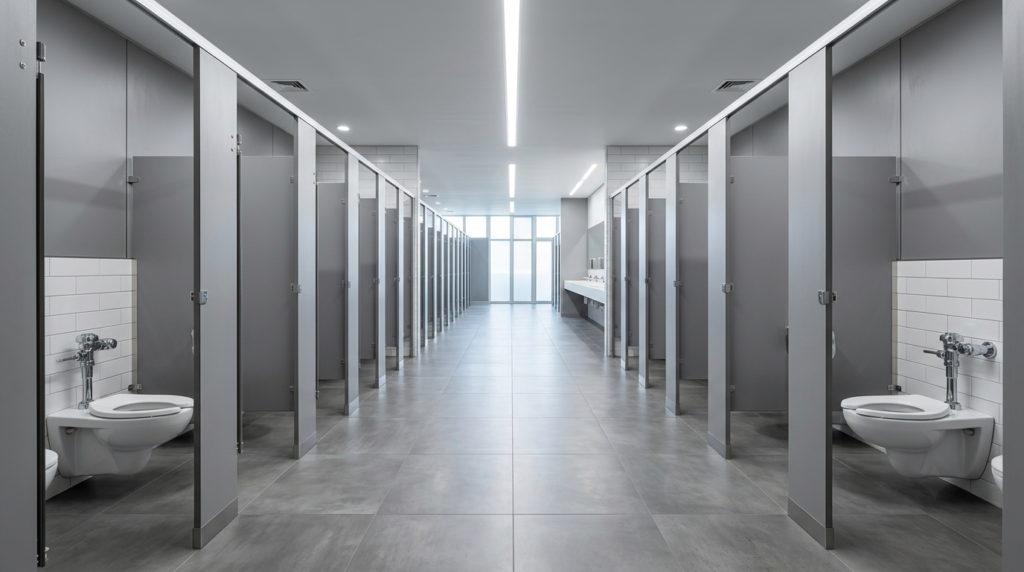
Our commercial plumbing team handles flushometer valve servicing and repair across London businesses, from single-unit repairs to full washroom refurbishments. For multi-site businesses or properties where downtime is costly, a Commercial AMC contract is usually the more cost-effective route — regular inspections catch the small faults before they turn into a washroom being out of action.
FAQs
Are flushometer valve toilets suitable for homes?
Yes, though they are more common in commercial buildings. They work well in domestic settings with strong, consistent mains water pressure and adequate pipe sizing. If you are considering one for a home renovation, it is worth having your water pressure checked first.
Why is my flushometer toilet making a loud banging noise when it flushes?
This is usually water hammer, caused by the sudden stop of fast-moving water in the pipework. It is typically resolved by fitting (or replacing) a shock-absorbing arrestor at installation, rather than something that can be fixed at the valve itself.
How long do flushometer valves last?
With reasonable maintenance, flushometer valves commonly last 10 to 15 years, though internal components like diaphragms and seals usually need replacing well before that, particularly under heavy commercial use.
Can a flushometer valve toilet be fitted in a low water pressure property?
Not reliably. Flushometer valves depend on a minimum water pressure to operate correctly, and low pressure typically results in a weak or incomplete flush. A pressure assessment before installation avoids this problem entirely.
Is fitting a flushometer valve toilet a notifiable plumbing job?
Connections to the mains water supply must comply with the Water Supply (Water Fittings) Regulations 1999, covering backflow prevention and correct fitting standards. This applies to flushometer valves as it does to any toilet connected to the mains.

Book a Flushometer Valve Toilet Repair or Installation
Whether you are dealing with a faulty valve in a busy commercial washroom or considering a flushometer system for a home renovation, Catalyst Home Services has the experience to get it right. We diagnose and repair flushometer valve faults, advise on suitability before installation, and handle full fitting for residential and commercial properties across London.
Call us on +44 7400 265421, use our 24/7 emergency line for urgent washroom faults, or book a plumber online to arrange an inspection. Check our service areas to confirm we cover your location.