
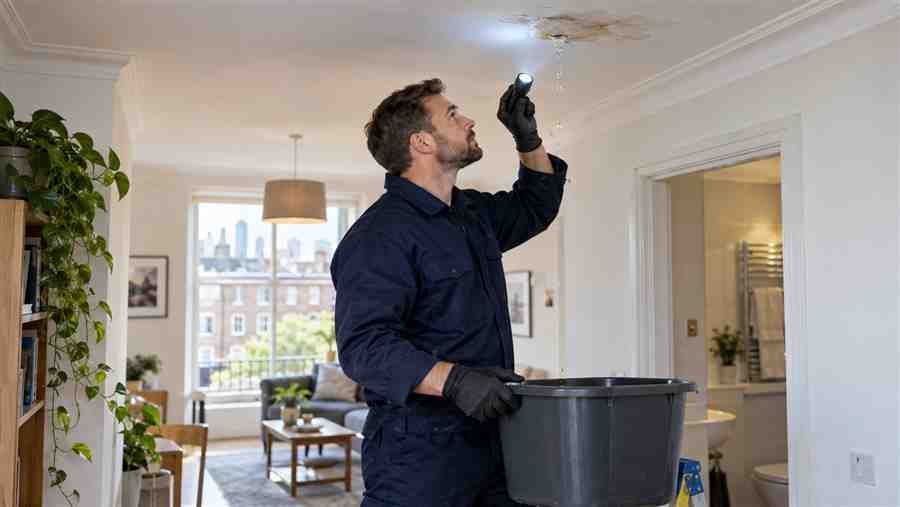
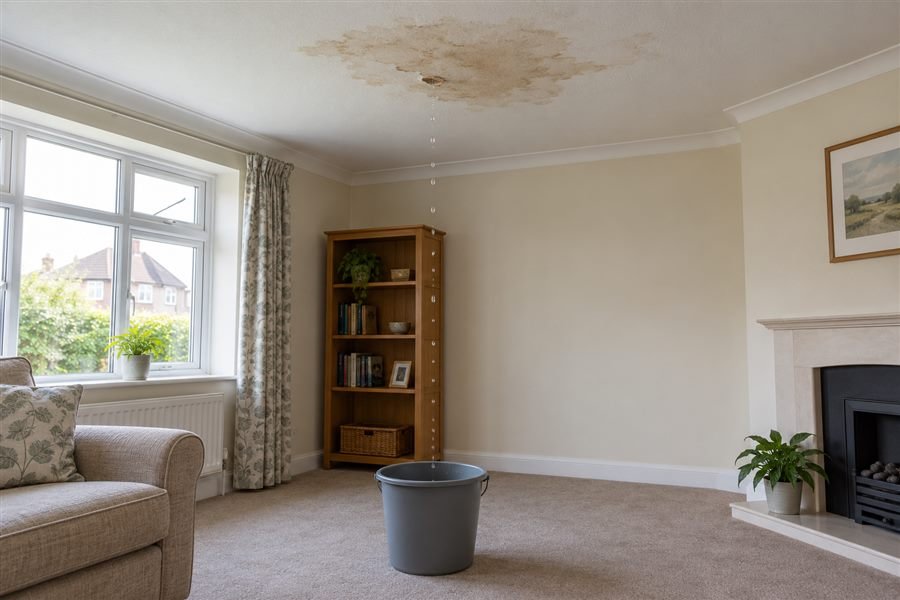
Water leak from ceiling? Act promptly. Even a small drip can damage plaster, flooring and electrics, while a bulging or sagging ceiling can be unsafe. First, keep people away from the affected area, place a container under the drip if it is safe to do so, and avoid touching light fittings or switches nearby.
If water is coming through a light fitting, the ceiling is bulging, or the leak is heavy, treat it as an emergency. Call a qualified plumber straight away. Catalyst Home Services provides 24/7 emergency plumbing support across London.
What to do if your ceiling is leaking water
- Move people, furniture and valuables away from the area. Keep clear of any ceiling that is sagging or visibly swollen.
- Avoid electrics. Do not touch a wet light fitting, switch or appliance. If you can safely do so without going near water, turn off the electricity supply for the affected area at the consumer unit. If you are unsure, leave it alone and call an electrician or emergency plumber.
- Catch the water safely. Put a bucket or a deep container beneath a steady drip. Lay towels around it to protect flooring.
- Turn off the water if you suspect a plumbing leak. The stopcock is often under the kitchen sink, in a utility cupboard or near the water meter. Turn it clockwise. In a flat, this may only isolate your own supply.
- Take clear photos. Photograph the leak, any ceiling stain and damaged belongings for your landlord, managing agent or insurer.
- Call for help. A fast repair limits secondary damage and helps prevent mould from developing afterwards.
Important: Never puncture a water-filled ceiling yourself. It may release a large volume of water unpredictably, damage wiring or cause part of the ceiling to fall.
How to stop a water leak in the ceiling
To stop a water leak in the ceiling, you need to stop its source. If a plumbing leak is suspected, stop using the bathroom fitting or appliance involved and turn off your internal stop tap if it is safe to reach. Keep clear of damaged plaster and wet electrics, then arrange a plumber to find and repair the fault.
Turn off the supply safely
A traditional stop tap usually closes clockwise. Turn it gently and do not force a seized valve. If you cannot find or operate it, tell the plumber immediately. In a flat, your stop tap may not control a leak from the property above or a communal pipe.
Understand why the ceiling may keep dripping
Water already trapped above the ceiling can continue to drain after the supply is isolated. Stored water or heating pipework may also be involved. A drip slowing down is useful information, but it does not prove that the fault is repaired. Keep people away and explain what changed to the attending plumber.
Avoid covering up the problem
Painting, sealing or patching the underside of a leaky ceiling will not repair a pipe or bathroom fitting above it. Do not drill into the ceiling or pull down wet plaster. For a suspected plumbing fault, arrange emergency plumbing support; a rain-related leak may need a roofer as well.
For further safety guidance, see WaterSafe’s advice on dealing with a leak and Electrical Safety First’s advice on water-damaged electrics.
Is water leaking from a ceiling an emergency?
It can be. Call an emergency plumber immediately when:
- water is close to, or coming from, a light fitting;
- the ceiling is bulging, cracking or sagging;
- water is flowing rather than dripping;
- the leak starts after using a shower, toilet, washing machine or boiler;
- there is a risk of water reaching electrical equipment; or
- you cannot stop the water at the stopcock.
For an urgent leak in London, call Catalyst Home Services on +44 7400 265421. We can trace the source, isolate the problem and carry out the repair needed to stop further damage.
Ceiling dripping water: what the timing can tell you
When a ceiling is dripping water, note when it started and what was happening beforehand. These observations help narrow the investigation; they are not a diagnosis. Do not run taps, flush toilets or use appliances to deliberately recreate an active leak.
| What you notice | Possible source to investigate | Useful next step |
|---|---|---|
| Dripping after a shower or bath | Waste fittings, supply connections or failed seals | Stop using the fitting and tell the plumber when the drip began. |
| A leak after flushing the toilet | A cistern connection, flush pipe or waste connection | Stop using that toilet until it has been checked. |
| Dripping when no fittings are in use | Supply pipework, heating pipework or stored water | Isolate the water if safe and arrange prompt investigation. |
| A damp patch during or after rain | Roof coverings, flashing or rainwater drainage | Record the weather and arrange an inspection from a safe location. |
| Widespread surface moisture after bathing | Condensation or ventilation problems; a hidden leak is still possible | Note whether moisture clears and have persistent staining checked. |
Common reasons water leaks through a ceiling
The location and timing of the leak usually offer useful clues. A professional inspection is still the safest way to confirm the cause.
A bathroom leak above
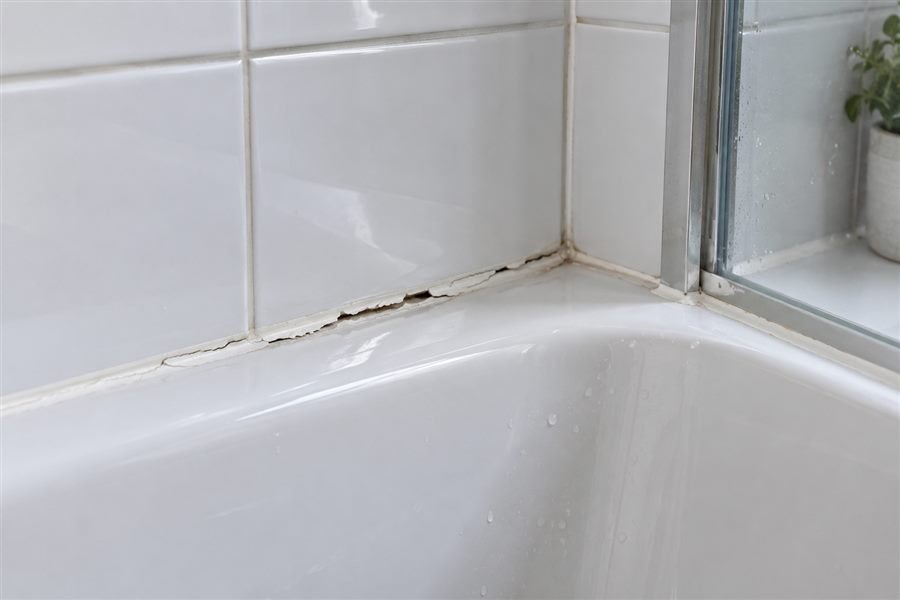
If the dripping begins after a shower, bath, toilet or basin is used upstairs, the cause may be a leaking waste pipe, failed sealant, loose shower connection, damaged grout or a worn trap. A leak below a bathroom can stay hidden for some time before it reaches the ceiling below.
A leaking pipe or central-heating pipework
Leaking pipe joints, corroded pipes and central-heating connections can cause a ceiling leak at any time. You may also notice reduced boiler pressure, damp patches or a musty smell. Turning off the water supply may slow a mains-water leak, but do not interfere with boiler components yourself.
A leak from a flat above
In a flat, the source may be in the property above, a shared riser or a communal pipe. Tell the occupier above, landlord or managing agent as soon as possible. Continue documenting the damage and arrange urgent leak detection if the source is unclear.
A roof, gutter or rainwater problem
If the leak only appears during or after heavy rain, it could be linked to the roof, flashing, gutters or an external drain. The water may travel a distance before it becomes visible, so the stain is not always directly below the entry point.
Condensation
In bathrooms, kitchens and poorly ventilated spaces, condensation can sometimes create damp patches or occasional drips. However, a recurring drip, a brown stain or a wet ceiling should be checked to rule out a plumbing or roof leak.
Bathroom ceiling leaking: what to check
A bathroom ceiling leaking water can mean two different things: water entering the bathroom from above, or water escaping from a bathroom into the room below. Explain which ceiling is affected when booking help, and mention whether there is another bathroom, a loft or a roof above it.
Water leaking into the room below a bathroom
If the leak from the ceiling follows a shower or bath, possible causes include the waste connection, overflow, supply pipework or a failed bath or shower seal. A toilet or basin can also be responsible. Water may follow joists or pipework before dripping through, so the stain may be some distance from the faulty fitting.
From a safe, dry position, note visible gaps around the bath or shower and any water around the toilet or basin. Leave panels, tiles and floorboards in place for the professional inspection. Adding silicone over an old seal without confirming the cause can hide damage and leave a pipe leak unresolved.
Water leaking through the bathroom ceiling itself
Think about what is above the room. An upstairs flat, loft pipework, a storage tank or the roof may need checking. Surface droplets after a hot shower may be condensation, but a growing stain, recurring drip or soft plaster needs investigation. Do not enter a wet loft or climb onto the roof to trace the source.
How does a plumber find the source of a ceiling leak?
The visible drip is often not where the leak began. A plumber will first make the area safe and ask when the leak occurs. They may then inspect appliances, pipework, sanitary fittings, seals, the heating system and nearby rooms. Depending on the property and symptoms, leak detection equipment or a targeted inspection may be needed.
The aim is to repair the cause before making good the ceiling. Repainting or plastering a ceiling before the source is fixed risks trapping moisture and repeating the damage.
Should I call my insurer or landlord?
If you rent, notify your landlord or managing agent promptly and keep a written record. If you own the property, check your home-insurance policy after making the situation safe. Many policies distinguish between repairing the source of the leak and repairing the resulting damage, so clear photographs and an engineer’s report can be helpful.
Insurance should not delay an urgent repair. Stop the leak first, then keep invoices, photos and any report from the attending engineer.
Can I use the room after a ceiling leak?
Do not use the affected room until it is safe. Avoid the space if the ceiling is soft, swollen, cracked or near electrics. Once the source has been repaired, allow the area to dry fully. A professional can advise whether the ceiling needs opening, drying, repair or replacement.
Repairing a leaky ceiling after the source is fixed
A ceiling leak repair has two parts: repairing the source and restoring the damaged area. Before redecorating, the professional handling the work should confirm that the leak has stopped, assess the ceiling and check any affected electrical fittings.
- Check the damage. Wet plaster, plasterboard and insulation may need repair or replacement. Keep away from loose or sagging sections until they are made safe.
- Allow proper drying. Drying time depends on how much water escaped, the materials and ventilation. A dry-looking surface does not guarantee that the space above is dry. Use drying equipment only after electrical safety has been checked.
- Repair and redecorate. Once the area is sound and sufficiently dry, damaged finishes can be repaired and any remaining stain treated before painting.
- Watch for recurrence. Tell the plumber if staining grows or dripping returns. Do not assume a new coat of paint has solved the problem.
To reduce the chance of another leaky ceiling, check accessible pipe joints and bathroom seals periodically, have small leaks repaired promptly and keep your stop tap accessible. For planned follow-up work, book a plumber with Catalyst Home Services.
Need help with a ceiling leak in London?
Catalyst Home Services provides fast, practical support for homes, landlords and businesses across London. Our team can investigate water leaks, repair damaged pipework and help prevent further property damage.
For urgent help, call +44 7400 265421. You can also book a plumber for a non-emergency visit.
Frequently asked questions
What should I do if my ceiling is leaking water but the drip is small?
Keep the area clear, avoid wet electrics and stop using a suspected fitting. Isolate a suspected plumbing leak if safe and arrange a prompt inspection. A small visible drip can be the first sign of hidden water damage.
Why is the ceiling still dripping after I turn off the water?
Water can remain in the ceiling void or in stored-water and heating systems. Alternatively, the source may be a roof or another property. Tell the plumber how long the dripping has continued and whether its rate has changed.
Can I paint over a ceiling stain once it looks dry?
Only after the leak has been repaired and the ceiling is confirmed sound and sufficiently dry. Painting too early may hide ongoing damp and lead to peeling or renewed staining.
Is a dripping ceiling dangerous?
It can be, particularly near electrics or where the ceiling is sagging. Keep away from the area, do not touch wet electrical fittings and call for urgent help if water is flowing or the ceiling is swollen.
Why is water leaking from my ceiling after a shower?
Common causes include a failed shower seal, damaged grout, a leaking waste pipe or a faulty shower connection. Avoid using the shower until the cause has been checked.
Who should I call for water leaking through my ceiling?
Call an emergency plumber when the source may be plumbing, heating or a bathroom fitting. If the leak is from an upstairs flat, also notify the occupant, landlord or managing agent. Call an electrician if water has reached electrical fittings.
Can a ceiling collapse from water damage?
Yes. Saturated plasterboard or plaster can lose strength and collapse. Keep clear of a bulging, sagging or cracked ceiling and seek urgent professional help.