
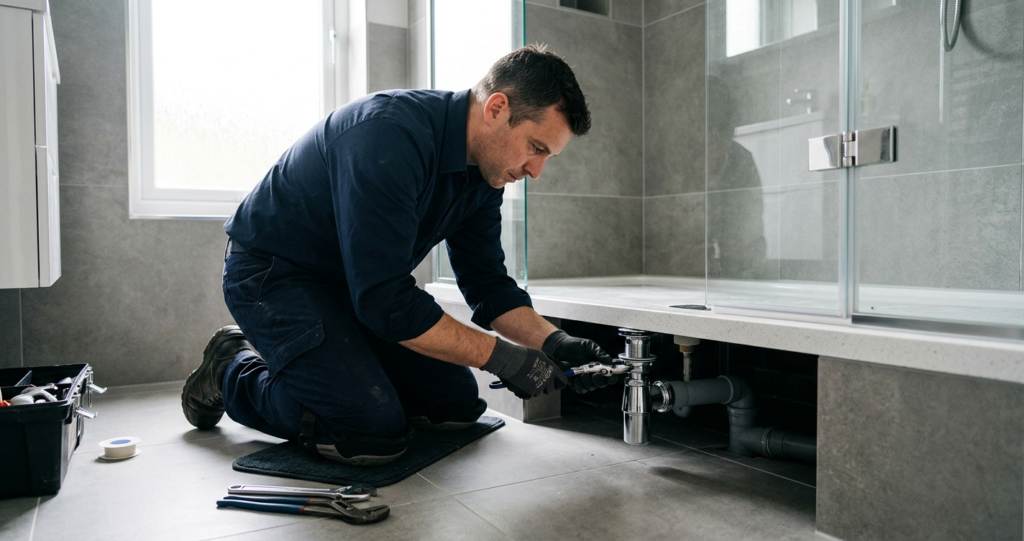
Most people never think about the small component sitting beneath their shower tray — until it causes a problem. The shower trap is one of the hardest-working parts of your bathroom plumbing. It silently prevents foul sewer gases from entering your home while draining away hundreds of litres of water every week.
In this guide, the team at Catalyst Home Services — trusted London plumbers — walks you through everything you need to know about shower trap plumbing: what it is, how it works, which type suits your bathroom, how to install or replace one, and how to fix the most common problems.
What Is a Shower Trap?
A shower trap is a plumbing fitting installed directly beneath your shower tray or wet room floor. It has two jobs:
- Allow wastewater to drain away quickly and cleanly.
- Trap a small amount of water in a U-bend (or similar curve) to create a water seal that blocks sewer gases and unpleasant odours from rising up through the drain.
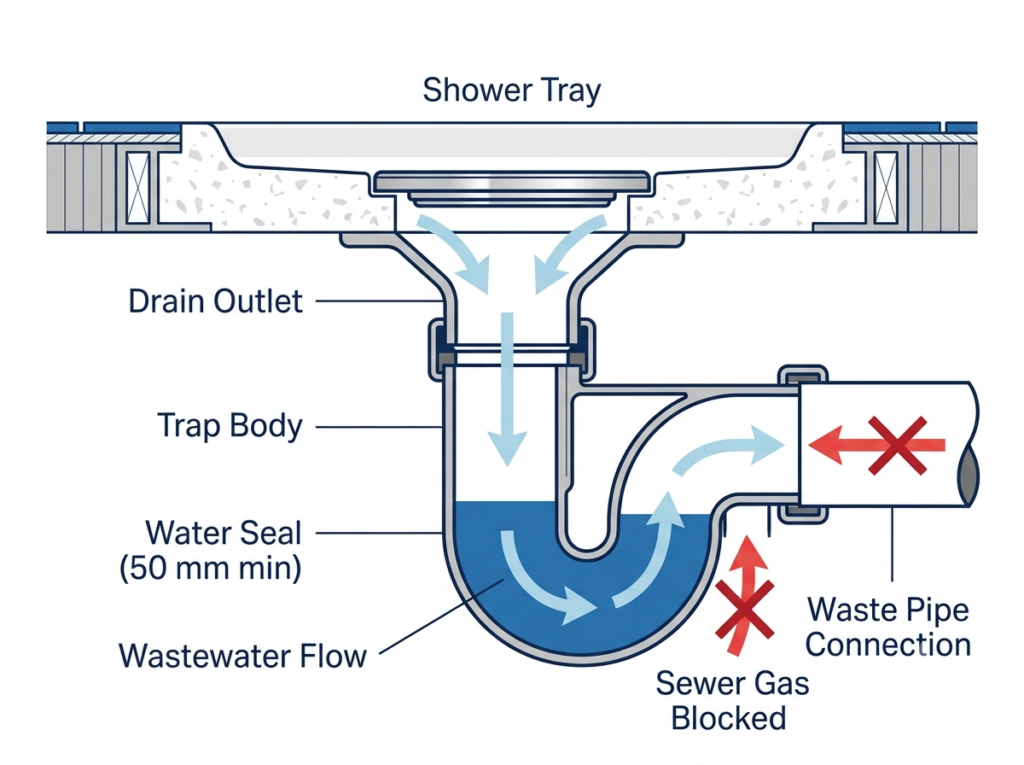
Without a properly functioning trap, your bathroom could fill with hydrogen sulphide gas — the smell of rotten eggs — and even pose a health risk. This is why Building Regulations (Part H) require every shower drain to incorporate a trap with a minimum 50 mm water seal.
If your shower is slow to drain or smells bad, your trap is usually the first place to investigate. Our blocked drain clearance service can diagnose and fix the issue quickly.
How Does Shower Trap Plumbing Work?
The mechanics are straightforward but cleverly designed:
1. Water flows down through the shower drain outlet and into the trap body.
- The trap retains a small amount of standing water in a curved or dipped section — the water seal.
- New water from the next shower pushes the old water through and out into the waste pipe.
- The waste pipe carries water to the soil stack and eventually to the sewer.
The water seal is the key. As long as the water level in the trap is maintained (at least 50 mm deep), gases cannot pass through. This is why traps can fail if a shower is unused for long periods — the water evaporates, breaking the seal.
Types of Shower Traps: Which One Do You Need?
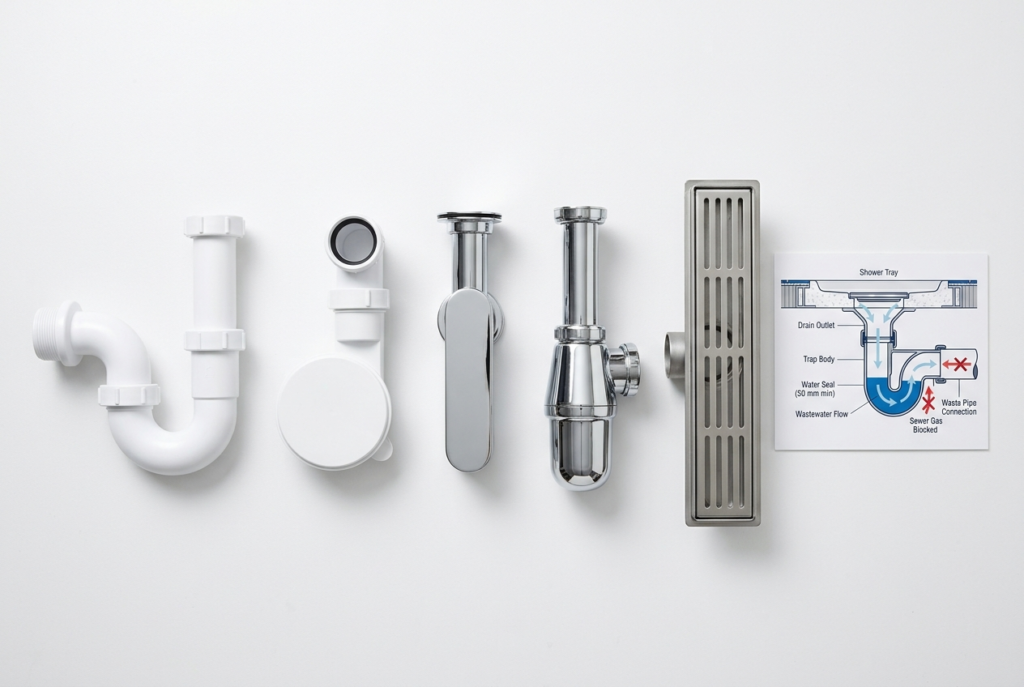
Not every shower trap is the same. The right choice depends on the depth of your floor void, the type of shower tray, and how much access you have for maintenance. Here are the main types:
1. Standard P-Trap or S-Trap
The classic U-bend style trap. The P-trap connects horizontally to the waste pipe; the S-trap connects vertically downward. These are deep (typically 65–100 mm) and require a reasonable floor void. They are reliable and easy to clean. Best suited for suspended timber floors or raised shower trays.
2. Shallow Shower Traps
Also called low-profile traps, these sit at just 55–75 mm deep, making them ideal for shower trays installed close to a solid concrete floor. They maintain the required 50 mm water seal in a flatter housing. A popular choice in modern UK bathrooms where floor space is limited.
3. Ultra-Flat / Slimline Traps
Designed specifically for wet rooms and level-access shower trays, these traps can be as shallow as 25–40 mm. They use a more intricate internal design to maintain the water seal at minimal depth. Many models include anti-dry-out mechanisms that prevent the seal from evaporating when the shower is unused.
4. Bottle Traps
A vertical, bottle-shaped unit often used when horizontal pipe runs are impossible. Less common for shower trays than for basins, but sometimes used in tight spaces. Easy to access for cleaning but can be slower to drain than other types.
5. Channel / Linear Drain Traps
Linear drains run the full length of one side of a wet room or walk-in shower. The trap is integrated into the channel body. They offer a sleek, contemporary look and are excellent for accessibility. The trap section is typically removable for easy cleaning.
6. 90 mm vs 110 mm Outlet Traps
Most domestic shower traps use a 90 mm waste pipe outlet. Some high-flow or commercial installations use 110 mm. Always match the trap outlet size to your waste pipe to avoid leaks at the connection.
Not sure which trap is right for your bathroom? Our bathroom fitting specialists can assess your floor void and recommend the best option.
Shower Trap Installation: Step-by-Step
Whether you are fitting a new shower tray or replacing an old trap, the installation process follows similar steps. Here is what a professional plumber does — and what you can do if you are confident with DIY.
What You Will Need
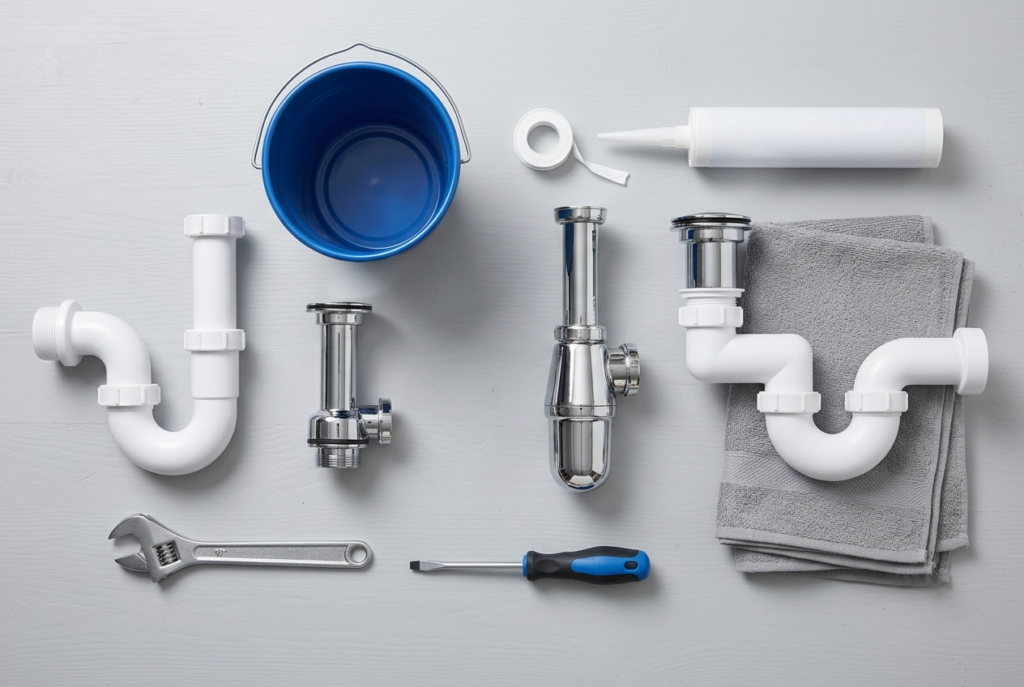
- New shower trap (ensure it matches your tray outlet diameter — usually 90 mm)
- PTFE tape (plumber’s thread seal tape)
- Silicone sealant (bathroom grade, mould-resistant)
- Adjustable spanner or multi-grips
- Flat-head screwdriver
- Bucket and old towels
Step 1: Turn Off the Water Supply
Turn off the water supply to the shower. If you are just replacing the trap (not the tray), the water supply does not need to be turned off — but it is good practice. Run the shower briefly to empty any water in the pipes.
Step 2: Remove the Existing Trap
Unscrew the drain cover from the shower tray. Most covers clip or screw in place. Underneath you will see the trap body. Unscrew or unclip it from the tray outlet and disconnect it from the waste pipe. Have a bucket ready — residual water will spill out.
Step 3: Clean the Outlet
Remove any old sealant or debris from around the shower tray outlet using a scraper. The new trap needs a clean, flat surface to seal against.
Step 4: Fit the New Trap
Apply a thin bead of silicone sealant around the underside of the new drain flange. Thread it up through the tray outlet from below (for most traps) and hand-tighten the locking nut. Do not overtighten — you can crack the tray or strip the thread.
Step 5: Connect to the Waste Pipe
Connect the trap outlet to your existing waste pipe using the push-fit connector supplied with the trap, or a suitable compression fitting. Wrap the threads with PTFE tape for a watertight seal. Ensure the pipe has a minimum fall of 1:40 (25 mm drop per metre) toward the soil stack to prevent water pooling.
Step 6: Test for Leaks
Run the shower for several minutes. Check underneath the tray for any drips or seepage. Gently tighten connections if necessary. Allow silicone to cure (usually 24 hours) before heavy use.
If your shower is tiled or the tray is set in mortar, accessing the trap can be genuinely difficult. In these cases, it is always safer to call a professional. Our residential plumbing team handles shower trap replacements throughout London without unnecessary damage to your bathroom.
Common Shower Trap Problems — and How to Fix Them
1. Slow Draining Shower
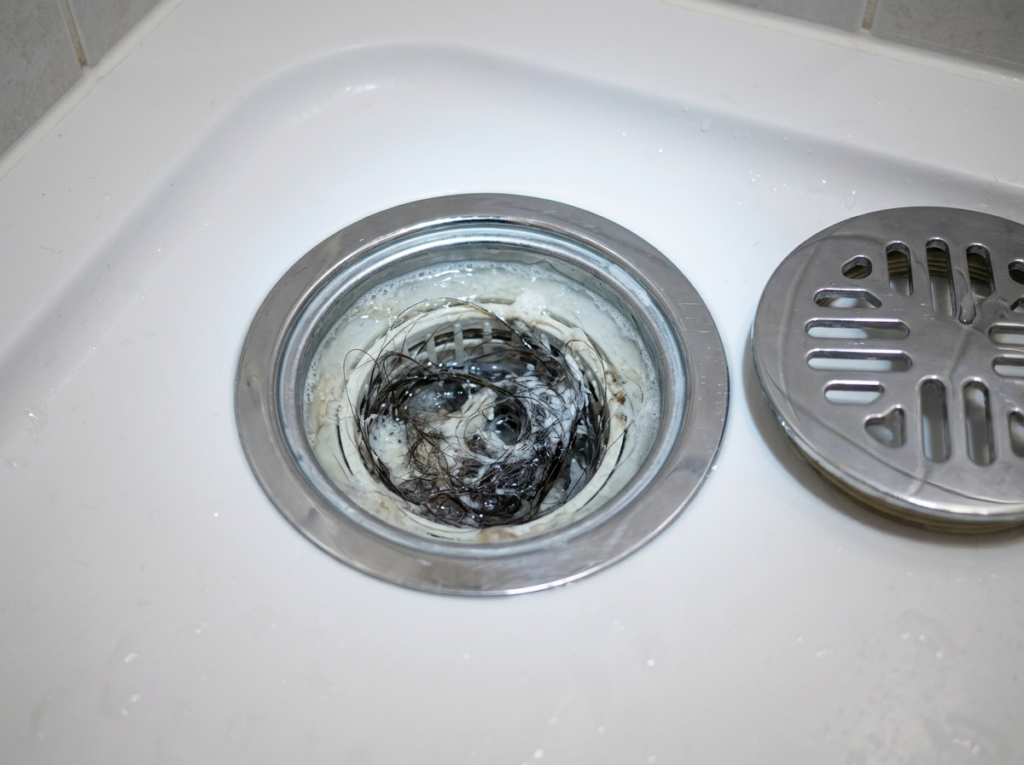
This is the most common complaint. The usual cause is a build-up of hair, soap scum, and limescale inside the trap body. Most shower traps have a removable cover and basket that you can clean by hand.
- Remove the drain cover and pull out any visible hair or debris.
- Pour a kettle of boiling water (not if you have PVC pipes — use hot, not boiling) or a biological drain cleaner down the outlet.
- If the problem persists, the blockage may be further down the waste pipe. Our blocked drain clearance specialists can clear it quickly.
2. Bad Smells Coming from the Shower Drain
If your shower smells of rotten eggs or sewage, the water seal in the trap has likely dried out — common if a shower has not been used in weeks. Simply run the shower for a minute or two to refill the trap. If the smell returns quickly, the trap may be faulty, cracked, or incorrectly installed and losing its seal.
Persistent sewer smells can also indicate a more serious drainage problem. Our CCTV drain survey service can identify the root cause without guesswork.
3. Leaking Shower Trap
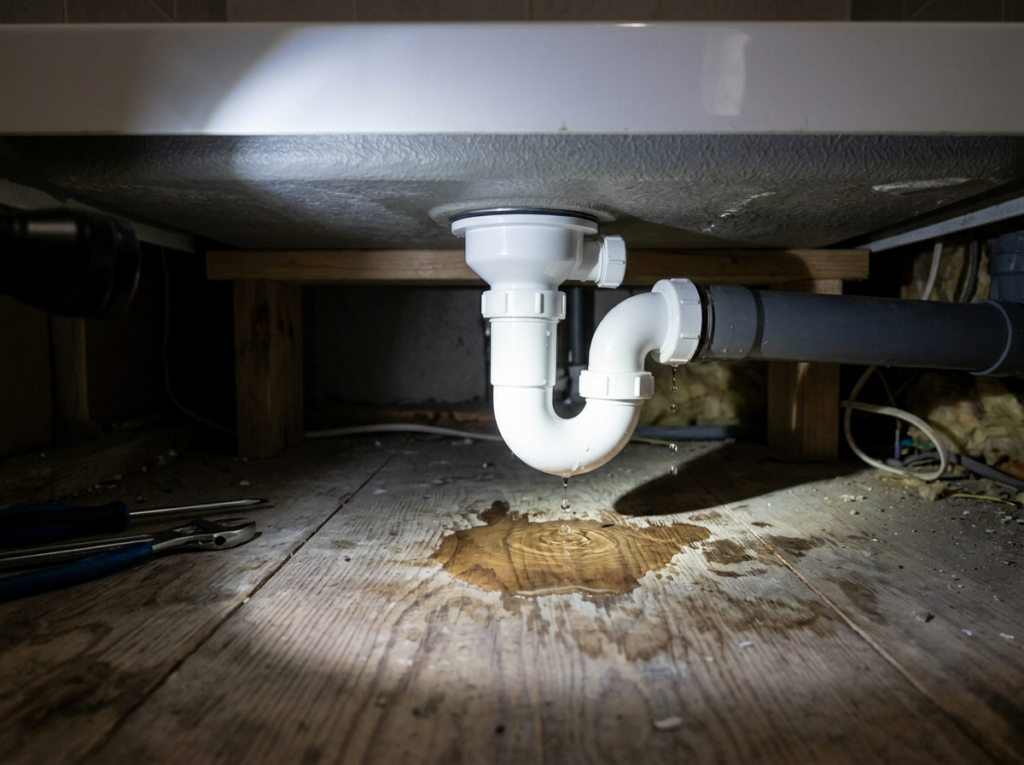
Leaks usually appear at one of three points: the tray-to-trap joint, the trap body itself (a crack), or the trap-to-waste-pipe connection.
- Tray-to-trap joint: The silicone or rubber washer has degraded. Disassemble, clean, and reseal.
- Cracked trap body: Replace the trap — cracks cannot be reliably repaired.
- Trap-to-pipe connection: Tighten the push-fit connector or reapply PTFE tape.
Even a small leak under a shower tray can cause significant timber floor damage over time. If you suspect a leak, our leak detection and repair team can locate and fix it before it becomes costly.
4. Gurgling Noises
Gurgling after the shower drains usually means the waste pipe is not properly vented, or there is a partial blockage elsewhere in the system causing negative pressure to pull air through your trap. This can break the water seal over time. A plumber can install an air admittance valve (AAV) to resolve venting issues.
5. Trap Keeps Drying Out
If a shower is used infrequently — for example, a guest bathroom — the water seal can evaporate within a few weeks. Choose a trap with a built-in anti-dry-out mechanism, or pour a small amount of cooking oil into the drain occasionally; this floats on top of the water and slows evaporation.
Shower Trap Maintenance: Keep It Working Properly
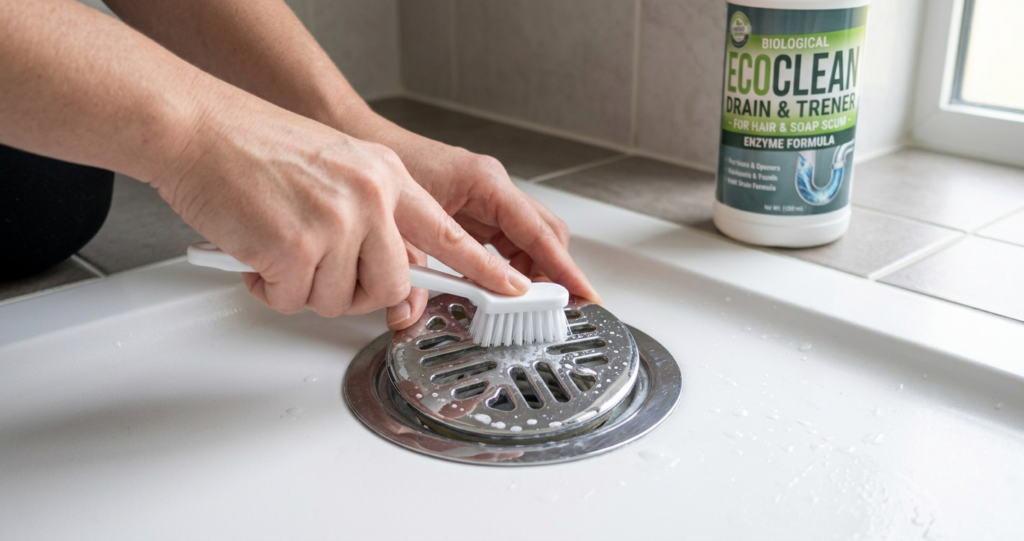
A little regular maintenance prevents most shower trap problems.
- Clean the drain cover and basket weekly to remove hair and soap residue.
- Pour a biological drain cleaner down the shower once a month to break down grease and soap scum build-up deeper in the trap.
- Check the silicone seal around the drain annually and reseal if it shows signs of cracking or discolouration.
- If the shower is used infrequently, run it briefly once a week to maintain the water seal.
- Avoid pouring cooking fats, oils, or harsh chemical drain unblockers into shower drains — these can degrade the trap seals over time.
For peace of mind, our Annual Maintenance Contract (AMC) includes regular plumbing inspections to catch problems before they escalate.
Choosing the Right Shower Trap: A Quick Reference
| Trap Type | Depth | Best For | Notes |
|---|---|---|---|
| Standard P/S-Trap | 65–100 mm | Timber floors, raised trays | Easy to clean; needs good floor void |
| Shallow Trap | 55–75 mm | Trays on solid floors | Good balance of depth and drainage |
| Ultra-Flat / Slimline | 25–40 mm | Wet rooms, level-access showers | Anti-dry-out models available |
| Bottle Trap | Variable | Tight horizontal spaces | Slower drainage |
| Channel / Linear Drain | Variable | Walk-in showers, wet rooms | Stylish; easy maintenance access |
When to Call a Professional Plumber
Some shower trap jobs are genuinely straightforward DIY tasks — cleaning the basket, refilling a dry seal, or replacing a cracked trap on an exposed pipe run. But call a professional if:
- The shower tray is tiled in and you cannot access the trap without cutting tiles.
- You have persistent leaks that reappear after resealing.
- Multiple drains in your home are slow at the same time (this suggests a shared blockage or collapsed drain).
- You can hear gurgling in other fixtures (toilet, basin) when the shower drains.
- You notice wet patches, staining, or soft flooring around the shower area — signs of a long-term leak.
The Catalyst Home Services team is available 24/7 for emergency plumbing across London. We cover everything from a simple trap replacement to a full bathroom fitting, sewer line repair, and CCTV drain surveys.
Shower Trap Plumbing: FAQs
How deep should a shower trap water seal be?
UK Building Regulations require a minimum 50 mm water seal. Most standard traps provide 50–75 mm as standard.
Can I use any shower trap with any shower tray?
No. You must match the trap outlet diameter (usually 90 mm for domestic trays) and ensure the trap is shallow enough to fit in your available floor void. Always check the manufacturer’s specifications before purchasing.
How often should I replace a shower trap?
A quality trap in a well-maintained bathroom can last 15–20 years. Replace sooner if you notice persistent leaks, cracks in the housing, or if the seal mechanism is no longer holding water.
Why does my shower still smell after cleaning the trap?
If the smell persists after cleaning and the water seal is intact, the odour may be coming from the waste pipe itself or from a faulty seal further down the drain system. A CCTV drain survey will identify the source.
Is shower trap plumbing covered under building regulations?
Yes. Part H of the Building Regulations covers drainage and waste disposal in England and Wales, including requirements for trap depth, pipe fall, and ventilation. Any new installation or significant alteration should comply.
Need Help With Shower Trap Plumbing in London?
Whether you need a trap cleaned, replaced, or a full wet room installation, Catalyst Home Services has the experience and the tools to do it right. We provide:
- Same-day shower drain repairs
- Bathroom fitting and shower tray installation
- Blocked drain clearance and CCTV surveys
- Emergency plumbing 24 hours a day, 7 days a week
- Transparent, upfront pricing — no hidden charges
Book a plumber online or call our 24/7 emergency line any time. We serve homeowners and businesses across North London, Camden, Enfield, and the surrounding boroughs.
You can also explore our full range of plumbing and drainage services or read more helpful guides on our blog.