
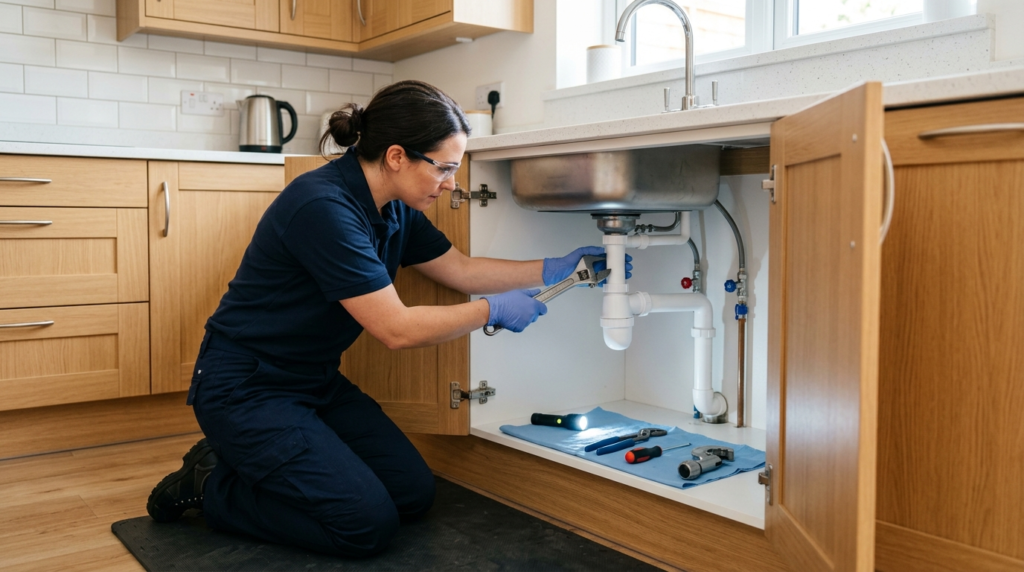
If you’ve ever noticed a curved section of pipe under your sink and wondered what it actually does, you’ve found a plumbing trap. It looks like a small, unremarkable bend in the pipework — but it’s doing one of the most important jobs in your entire drainage system.
At Catalyst Home Services, our engineers deal with traps every single day, whether that’s clearing a blocked one, replacing an outdated S-trap, or fixing the mysterious smell coming from a bathroom that nobody can quite place. This guide covers everything you need to know about trap plumbing: what it is, the different types, UK regulations, and how to spot and fix the most common problems.
If you’re dealing with a smelly drain or a blocked trap right now, call us on +44 7400 265421 or book a plumber online for same-day help across London.
What Is a Trap in Plumbing?
A plumbing trap is a curved or U-shaped section of pipe fitted beneath a sink, basin, bath, shower, or floor drain. Its job is simple but essential: it holds a small amount of water inside the curve, and that water creates a seal.
This seal blocks sewer gases, odours, and even small pests from travelling back up through the pipe and into your home. Every time you run a tap or empty the basin, fresh water passes through and tops up the seal, so it keeps working as long as the fixture is used regularly.
Without a trap, your home would be directly connected to the sewer network with nothing in between. Every drain, every sink, and every floor gulley would have an open path for gases like methane and hydrogen sulphide to drift back into your living space. That’s not just unpleasant — in poorly ventilated areas, a build-up of sewer gas can also be a genuine safety concern.
How Does a Trap Actually Work?
The principle behind a trap is straightforward once you picture it. The pipe dips down and curves back up before continuing on to the main drain. Water naturally settles in the bottom of that curve rather than draining away completely, because gravity holds it there once the flow stops.
That standing water becomes a physical barrier. Gas can’t pass through liquid, so whatever is sitting in the sewer pipe beyond the trap stays exactly where it should — outside your home.
The seal only fails if the water disappears. This can happen for a few reasons:
- Evaporation — if a sink, shower, or floor drain isn’t used for a long time, the water in the trap slowly evaporates and the seal breaks.
- Siphonage — a sudden rush of water elsewhere in the system (like a toilet flushing nearby) can pull the water out of a neighbouring trap if the system isn’t vented properly.
- Physical damage — a cracked or corroded trap simply can’t hold water at all.
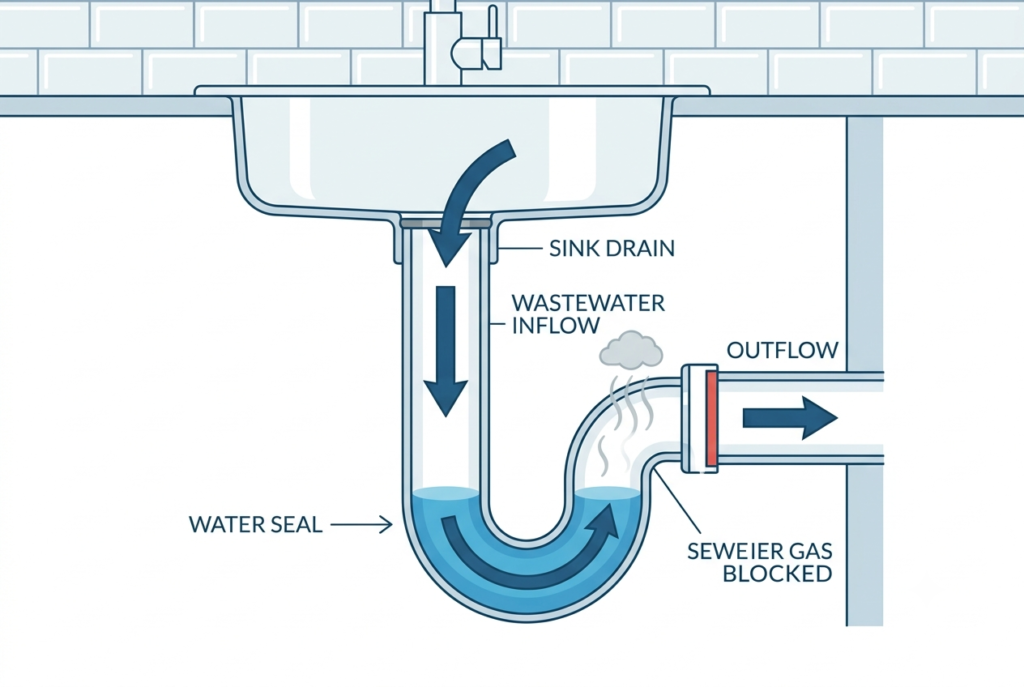
This is exactly why a trap that’s rarely used — in a guest bathroom, for example — can start to smell even though nothing is actually wrong with it. The fix is often as simple as running the tap for a minute to refill the seal.
Why Trap Plumbing Matters More Than People Realise
It’s easy to overlook a component that’s hidden under a sink and rarely thought about, but traps do more than stop bad smells.
They protect your health. Sewer gas contains compounds that are unpleasant at low concentrations and genuinely hazardous at higher ones. A properly sealed trap is your first line of defence against this entering your home.
They keep pests out. Drains connect to a much larger network, and an unsealed pipe is an open invitation for insects and even rodents to find their way up into your property.
They’re a legal requirement. Under UK Building Regulations, every sanitary fitting connected to a drainage system must have a trap fitted. This isn’t optional or a matter of preference — it’s a compliance issue that’s checked during building inspections and property surveys.
They protect the wider system. Many traps also act as the first point of access if something needs retrieving from the drain — a ring, a small toy, or a clump of debris — without needing to dig into the wall or floor.
Types of Plumbing Traps
Not every trap looks the same, and the right type depends on the fixture, the available space, and how the pipework is routed. Here are the types you’re most likely to come across in a UK home.
P-Traps
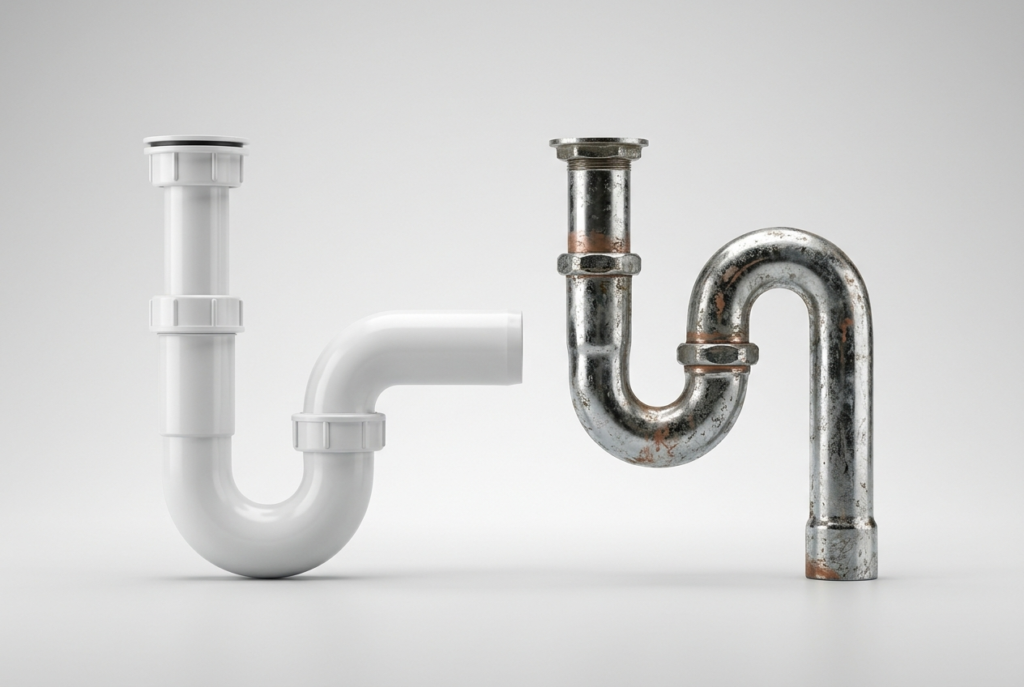
The P-trap is the standard choice in modern UK plumbing and the one you’ll find under most kitchen sinks and bathroom basins. Viewed from the side, the pipework resembles the letter “P” — water drops down, curves through the seal, and then runs out horizontally to connect with the waste pipe in the wall.
The horizontal outlet is the key feature. It allows the trap to connect to a vented waste system, which keeps air pressure balanced and stops the seal from being siphoned out. P-traps are reliable, easy to access for cleaning, and the preferred option wherever the layout allows for one.
S-Traps
An S-trap performs the same basic function but drops straight down into a floor-level outlet rather than running out horizontally. You’ll mostly find these in older properties, since this design was common before modern venting requirements became standard.
The problem with S-traps is that they’re prone to siphonage. Because there’s no horizontal vent run, a strong flow of water through the pipe can pull the seal water out completely, leaving the drain unprotected. This is why S-traps are now considered outdated and are generally not used in new installations or refits — if you have one, it’s worth having it assessed.
Bottle Traps
Bottle traps are a compact, often chrome-finished alternative used where space is tight or where the pipework is visible, such as under a wall-hung basin with no cabinet to hide it. Instead of a smooth curved bend, they use a cylindrical chamber that holds the water seal and can be unscrewed at the base for cleaning.
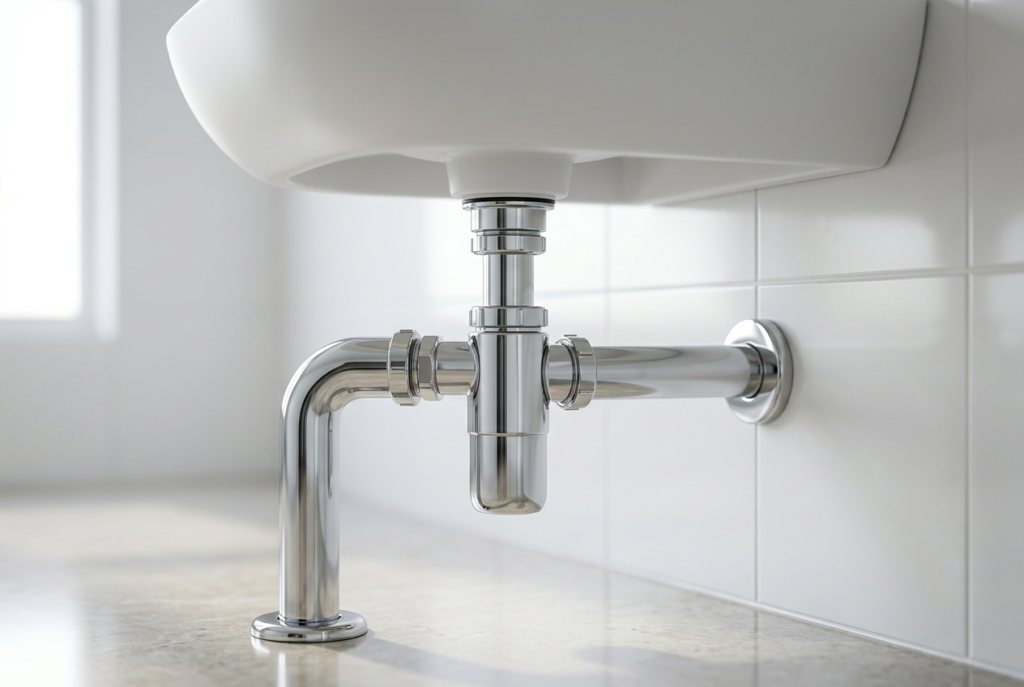
They’re a popular choice for stylish, exposed plumbing in modern bathroom designs, though they can be slightly more prone to debris build-up inside the chamber than a P-trap.
Gully Traps and Floor Traps
Outside the home, gully traps sit at ground level to collect wastewater from outside drains, downpipes, or utility outlets before it joins the main drainage system. Floor traps serve a similar purpose indoors, typically in utility rooms, garages, or basements, where a floor-level drain needs its own water seal.
Running Traps and Interceptor Traps
On older properties, particularly those with a traditional combined drainage system, you may find an interceptor trap positioned in the last inspection chamber before the connection to the public sewer. These have a deeper water seal — often 100mm rather than the standard 50-75mm — and act as a final barrier between the property’s private drainage and the public network.
Trap Plumbing and UK Building Regulations
Trap installation in the UK isn’t left to guesswork — it’s governed by Building Regulations Approved Document H, which covers drainage and waste disposal. The key requirements are worth knowing if you’re planning any plumbing work:
- Every sanitary fitting connected to the drainage system must have a trap.
- Minimum water seal depths apply: typically 75mm for WCs, and 50mm for sinks, basins, baths, and showers.
- Traps must remain accessible for cleaning and maintenance — they can’t be permanently boxed in without an access point.
- The wider drainage system must be adequately vented to prevent siphonage from breaking the seal.
- Traps and fittings should conform to British and European standards, including BS EN 274 for plastic waste fittings.
If you’re having a kitchen or bathroom refitted, or adding a new fixture anywhere in the property, getting the trap and venting right the first time avoids problems — and call-backs — later. Our bathroom fitting team handles this as standard on every installation.
Common Trap Plumbing Problems (and What Causes Them)
Most trap issues fall into a handful of recognisable patterns. Here’s what we see most often on call-outs across London.
A Smelly Drain With No Obvious Cause
If a sink or shower that’s barely used starts to smell, the trap has almost certainly dried out. This is extremely common in spare bathrooms, utility room sinks, and basement floor drains that don’t see regular water flow. Running the tap for a minute or two is often all it takes to restore the seal.
Gurgling Sounds When Another Fixture Drains
A gurgling noise from one drain when you flush a toilet or empty a bath elsewhere is a classic sign of siphonage — air is being pulled through the system and disturbing the trap seal. This points to a venting issue in the wider drainage system rather than a fault with the trap itself, and it’s worth having it looked at before the seal fails completely.
A Blocked or Slow-Draining Trap
Because traps sit at a low point in the pipe, they’re a natural place for hair, soap residue, food particles, and grease to collect. Over time this builds up and restricts flow, eventually causing a full blockage. This is one of the most frequent causes of a blocked drain, and it’s usually one of the easier ones to put right.
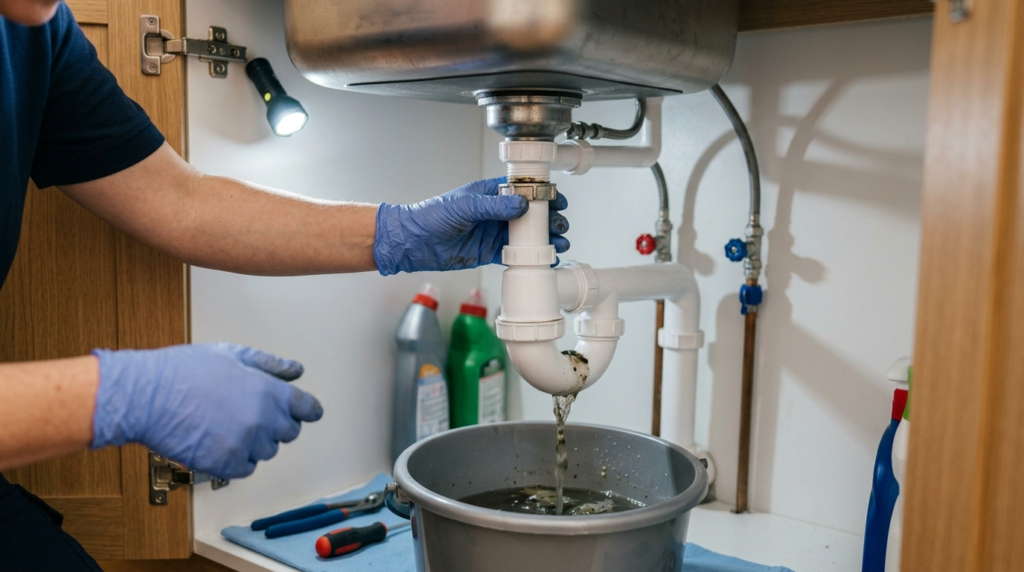
Leaking From Around the Trap
Compression joints on traps can loosen over time, especially on traps that get knocked or disturbed during cleaning under a sink. A leak here often shows up as a damp patch in the cabinet below rather than an obvious puddle, so it’s worth checking periodically if you store items under your sink. Persistent leaks of this kind are exactly what our leak detection and repair service is built to find and fix.
An Old or Failing S-Trap
If you have an older S-trap that keeps losing its seal or has started to corrode, replacement with a properly vented P-trap is usually the most sensible long-term fix rather than a repeated patch-up job.
How to Clean a Plumbing Trap
For straightforward blockages, cleaning a trap is a manageable task, though it’s not the most pleasant job in the house.
- Place a bucket underneath the trap to catch any water and debris when you open it.
- Loosen the slip nuts at either end of the trap by hand or with pliers if they’re tight.
- Remove the trap and empty the contents into the bucket, not down another drain.
- Check inside the trap for hair, grease build-up, or any object that’s fallen down the sink.
- Rinse the trap thoroughly before refitting it.
- Reconnect and tighten the slip nuts, then run water through to check there are no leaks and that the seal refills properly.
If the trap is corroded, cracked, or the slip nuts won’t seal properly even when tightened, it’s time to replace rather than repair. And if the blockage is further down the pipe rather than in the trap itself, this approach won’t reach it — at that point it’s worth calling in a professional rather than risking a bigger mess.
When to Call a Professional
A lot of trap problems are simple enough to handle yourself, but there are situations where it’s worth getting an engineer involved:
- The smell or gurgling persists even after the trap has been cleaned and refilled with water
- You suspect the issue is venting-related rather than a simple blockage
- An older S-trap needs converting to a compliant, vented P-trap
- The blockage is beyond the trap and into the wider waste pipe
- You’re renovating a kitchen or bathroom and need traps and venting installed to current regulations
Our engineers deal with trap and drainage issues across London every day, from a five-minute fix to a full system upgrade. If you’re not sure which category your problem falls into, book a plumber and we’ll assess it properly rather than guessing over the phone.
FAQs
What is the purpose of a trap in plumbing?
A trap holds a small amount of water inside a curved section of pipe to create a seal. This seal stops sewer gases, odours, and pests from travelling back up through the drain into your home.
Why does my drain smell even though it’s not blocked?
This is almost always caused by a dry trap, usually in a fixture that isn’t used often. The water seal has evaporated, leaving a direct path for sewer gas to escape. Running water through the fixture for a minute or two should restore the seal and clear the smell.
Is an S-trap illegal in the UK?
S-traps aren’t outright banned on existing installations, but they no longer meet the venting standards expected in modern plumbing and are not used in new work. If you have one and it’s causing repeated problems with siphonage, replacing it with a properly vented P-trap is the recommended fix.
How often should I clean my plumbing trap?
There’s no fixed schedule, but if a sink or basin is draining slowly, or you notice a smell developing, it’s a good sign the trap needs attention. Kitchen sink traps tend to need cleaning more often than bathroom traps due to grease and food debris.
Can a faulty trap cause a blocked drain?
Yes. Because traps sit at a low point in the pipework, they’re one of the most common places for hair, grease, and debris to accumulate and eventually cause a blockage. If cleaning the trap doesn’t resolve a slow or blocked drain, the issue may be further down the system — our blocked drain clearance service can identify and clear it properly.
Do all sinks need a trap?
Yes. Under UK Building Regulations, every sanitary fitting connected to the drainage system — sinks, basins, baths, showers, and floor drains — must have a trap fitted with an adequate water seal.

Get Expert Help With Trap Plumbing in London
Whether you’re dealing with a persistent smell, a blocked trap, or an old S-trap that needs upgrading, Catalyst Home Services is here to help. Our qualified engineers work across London with honest pricing and same-day availability.
📞 Call us now: +44 7400 265421
📅 Book a Plumber Online
🚨 24/7 Emergency Line
📍 Check Our Service Areas
⭐ Read Our Customer Reviews