
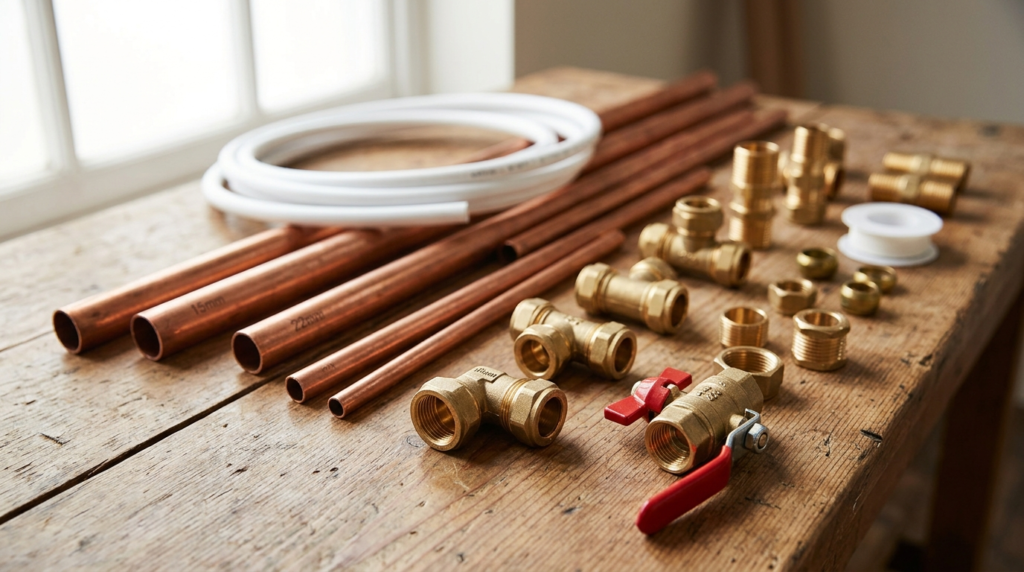
If you’ve ever stared at a leaking joint under the sink or wondered why your garden tap won’t hold pressure, you’ve already met two of the most common culprits in any home: plumbing pipes and fittings. They’re the unglamorous backbone of every property’s water system, and when they’re working properly, you never think about them. When they’re not, they’re often the first sign that something bigger needs attention.
At Catalyst Home Services, we deal with pipes and fittings every single day across London — from Victorian terraces with original lead supply lines to new-build flats fitted with the latest plastic push-fit systems. This guide pulls together everything you need to know: what the different types of pipes and fittings actually do, how to spot trouble early, and where a confident DIY fix ends and a job for a qualified plumber begins.
Why Plumbing Pipes and Fittings Matter More Than You Think
Pipes and fittings are the network that gets water where it needs to go — into your home, through your taps, and safely away again. A fitting is simply any component that joins, redirects, seals, or controls the flow of water along that network: elbows, tees, valves, couplings, and tap connectors all fall under this umbrella.
It’s easy to assume that “it’s just a pipe” until something goes wrong. But poor-quality pipework or the wrong fitting for the job is one of the most common causes of:
- Hidden leaks that quietly damage walls, floors, and ceilings
- Reduced water pressure throughout the property
- Discoloured water from corroding pipe material
- Costly burst pipes during cold weather
Getting pipework right isn’t just about avoiding inconvenience — it’s a compliance issue too. Plumbing work in UK homes must meet the Water Supply (Water Fittings) Regulations 1999, which set out the approved materials and installation standards for anything connected to the mains supply. Using the wrong fitting, or installing it incorrectly, can mean a system that fails inspection, or worse, fails when you least expect it.
The Main Types of Plumbing Pipes
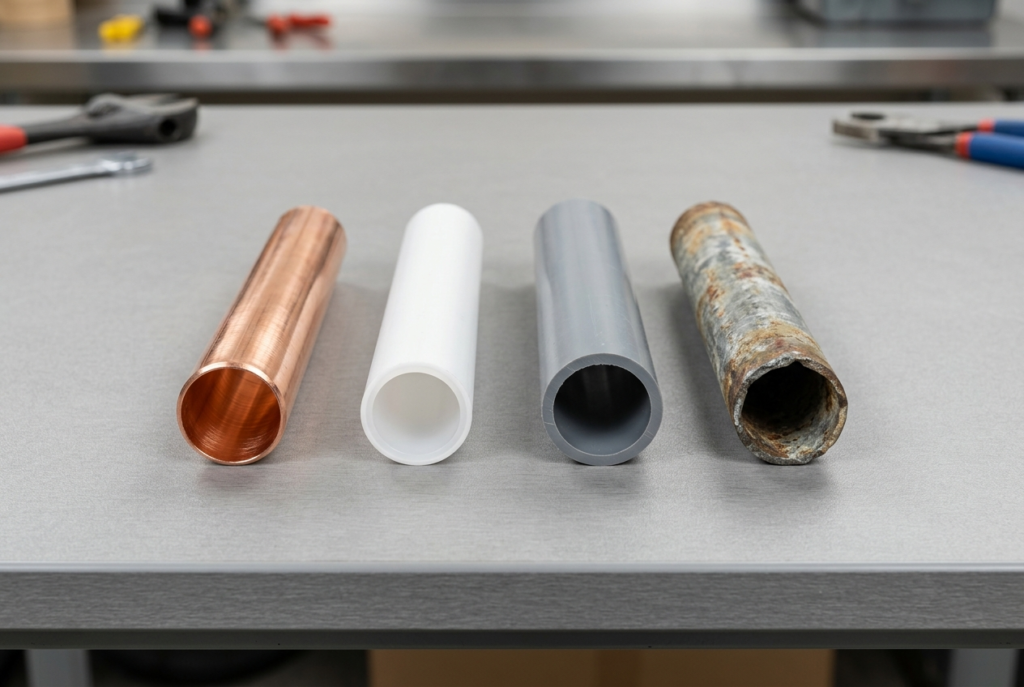
Not all pipes are created equal, and the material matters as much as the diameter. Here’s what you’re likely to find in a UK property, old or new.
Copper Pipe
Copper has been the standard for decades, and for good reason. It’s durable, resistant to most forms of corrosion, and can handle both hot and cold water systems comfortably. It’s joined using soldered (compression or capillary) fittings, which require a reasonably steady hand and the right tools to get a watertight seal.
Plastic Pipe (PEX and PVC)
Modern installations increasingly favour plastic pipework, particularly PEX (cross-linked polyethylene). It’s flexible, doesn’t corrode, resists scale build-up, and is significantly faster to install using push-fit or crimp fittings rather than soldering. PVC is commonly used for waste and drainage pipework rather than supply lines.
Lead Pipe (Older Properties Only)
If your home was built before the 1970s, there’s a chance some of the original supply pipework is still lead. This is no longer permitted in new installations and is actively discouraged by water authorities wherever it’s found. If you’re unsure what’s running into your property, it’s worth having it checked — our team carries out pipe replacement on lead supply lines regularly, and some water companies will even contribute towards the cost.
Galvanised Steel and Iron
Common in older properties, these pipes corrode from the inside over time, gradually narrowing the bore and reducing flow. Discoloured or rust-tinged water is often the first clue that galvanised pipework is reaching the end of its life.
Common Fittings You’ll Come Across
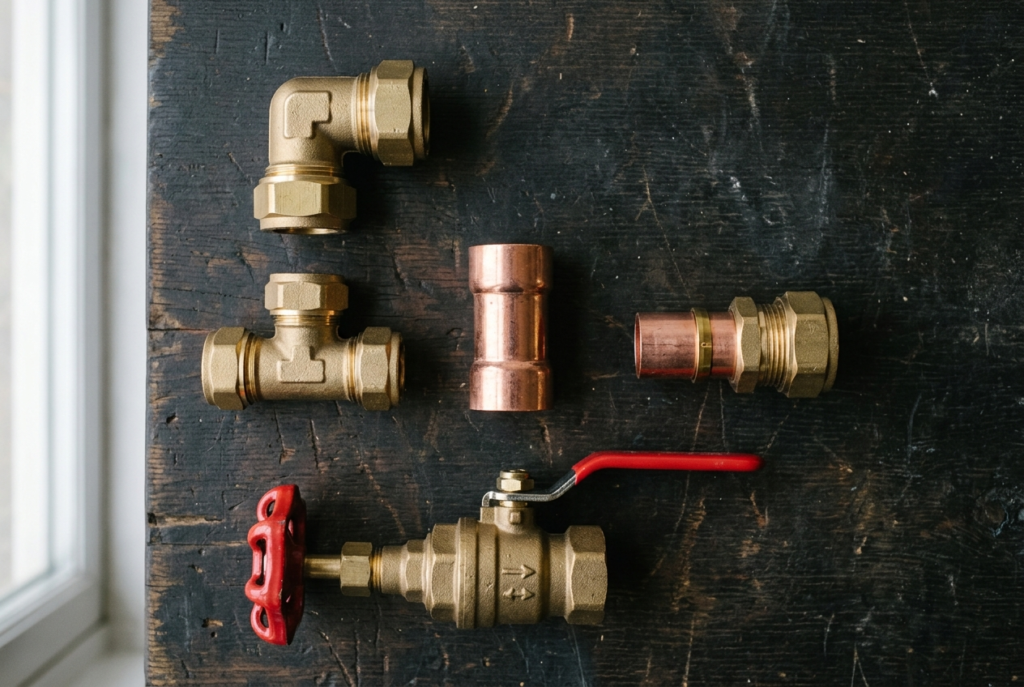
Fittings are where most leaks and failures actually happen — a length of straight pipe rarely fails on its own, but a poorly seated joint will let you know about it quickly.
- Elbows — change the direction of a pipe run, typically at 45° or 90°
- Tees — split one pipe into two, often used where a branch line feeds a tap or appliance
- Couplings — join two lengths of pipe together in a straight line
- Compression fittings — use a metal ring (olive) compressed against the pipe to create a watertight seal; reliable but require careful tightening
- Push-fit fittings — increasingly popular on plastic pipe systems, allowing a secure connection without tools, soldering, or compression
- Valves and stopcocks — control or shut off flow, essential for isolating a section of pipework during repairs
Each of these has a correct use case, and mixing materials or fitting types incorrectly — for example, joining copper directly to certain plastics without the right adaptor — is one of the most frequent causes of slow, hard-to-trace leaks.
Garden Taps: A Closer Look at One Fitting That Causes Real Trouble
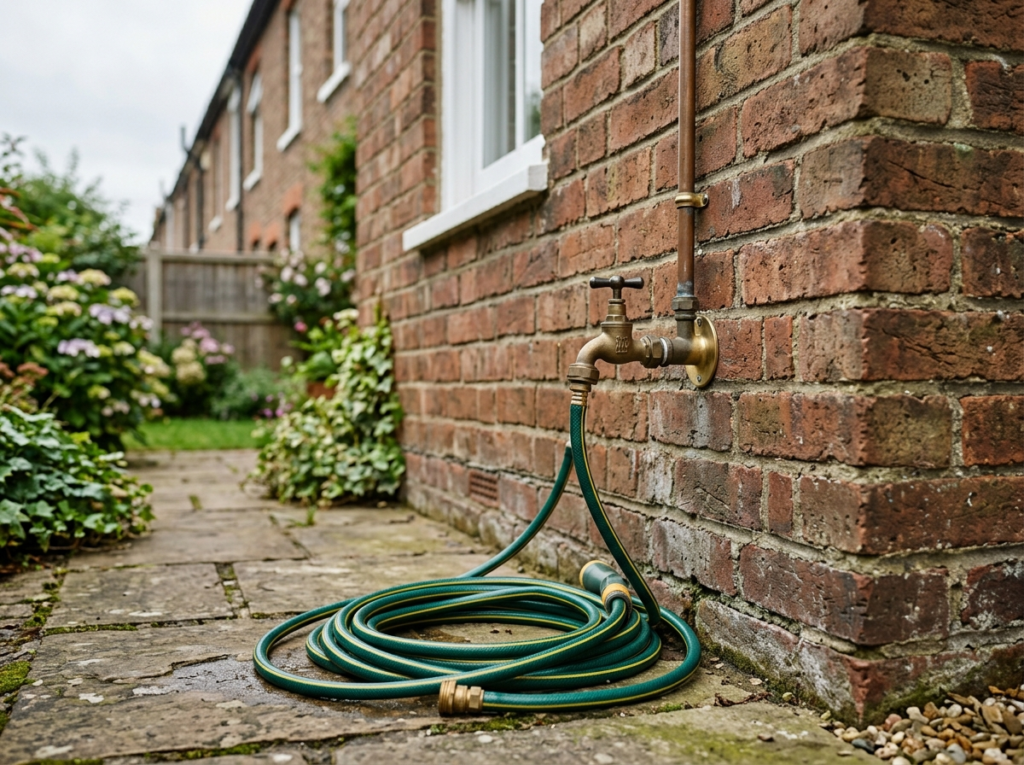
Among all the fittings in a typical home, garden taps deserve a special mention. They’re outdoors, often neglected, and exposed to weather conditions that indoor fittings never have to deal with — which makes them one of the most common sources of seasonal plumbing call-outs we see across London.
Why Garden Taps Matter More Than They Seem To
A garden tap (sometimes called an outside tap or bib tap) is usually fed by a branch line off your internal supply pipework, fitted with its own isolation valve where possible. It seems like a minor fixture, but a failed garden tap can cause real damage: a slow drip wastes water continuously, while a cracked tap body or frozen pipe can flood an external wall cavity or, in some cases, find its way into the property itself.
Because garden taps sit at the boundary between your indoor plumbing and the outside world, they’re also one of the more revealing fittings on a property. A struggling garden tap is sometimes the first visible sign of a wider issue with water pressure or supply pipe condition further back in the system.
Types of Garden Taps
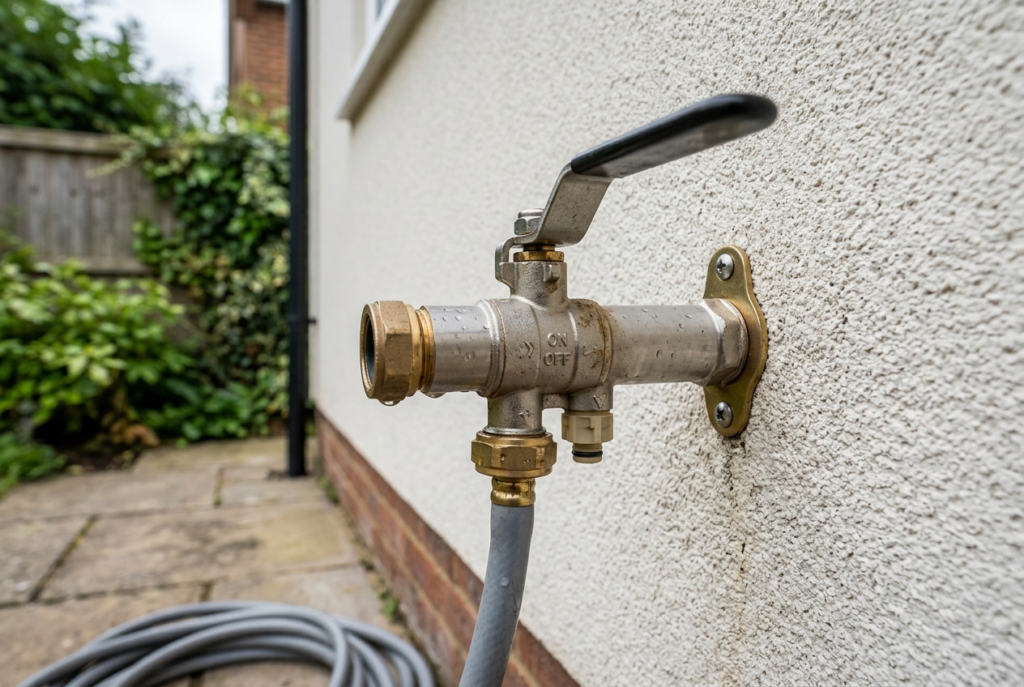
Standard bib taps are the simplest option — a basic on/off valve fitted to an external wall, usually in brass or chrome-plated brass for corrosion resistance.
Self-draining (frost-free) taps are designed with the shut-off valve positioned inside the wall, in the warmer internal space, rather than at the tap head itself. This allows any residual water in the exposed section to drain away after use, which is the single most effective way to prevent freeze damage over winter.
Hose union bib taps include a threaded connector designed specifically for attaching a hose, often with a built-in non-return valve to prevent contaminated water being siphoned back into your mains supply — a requirement under UK water regulations.
Lockable garden taps add a removable handle or key-operated valve, useful for properties where water usage needs to be controlled or where the tap is in a position accessible to others.
Installing a Garden Tap the Right Way
A garden tap installation typically involves running a new branch pipe from an existing internal supply line, drilling through the external wall, and fitting the tap with proper bracketry to prevent strain on the pipework. A few details make the difference between a tap that lasts and one that fails within a year or two:
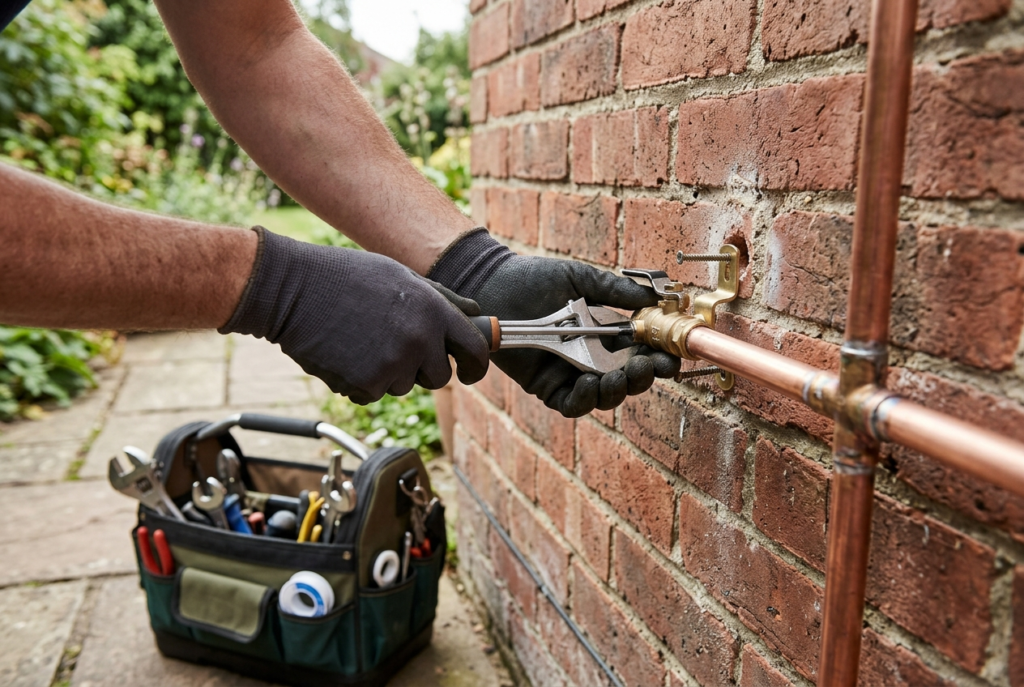
- Always fit an isolation valve on the internal side of the wall, so the tap (and the pipework feeding it) can be shut off and drained independently of your main stopcock.
- Use a self-draining tap wherever the installation allows it. The small additional cost upfront is far cheaper than a burst pipe after the first hard frost.
- Support the pipework properly with wall brackets, rather than relying on the tap body itself to bear the weight of the pipe run.
- Fit a double-check valve if the tap will be used with a hose, to comply with water supply regulations and prevent backflow contamination.
- Insulate any exposed external pipework, particularly on older properties where the branch line runs through an unheated space before reaching the tap.
This is genuinely one of those jobs where a confident DIYer can get the basic plumbing right, but the wall penetration, pipe routing, and regulatory compliance (particularly the backflow prevention requirement) are where it’s worth getting a professional involved. It’s a small part of our bathroom fitting and broader installation work, and one we’re happy to handle as a standalone job too.
Maintaining a Garden Tap
Garden taps don’t need much, but a little seasonal attention goes a long way:
- Before the first frost each year, disconnect any hose, drain the tap fully, and if it’s not a self-draining model, consider fitting an insulated tap cover.
- Check the washer annually. A dripping tap is almost always a worn washer — an inexpensive part, but one that’s easy to put off replacing until it’s worse.
- Inspect the isolation valve periodically to make sure it still turns freely; valves that are never used can seize over time.
- Look for green staining or limescale build-up around the tap body, which often indicates a slow leak at the joint rather than the tap itself.
Common Garden Tap Problems
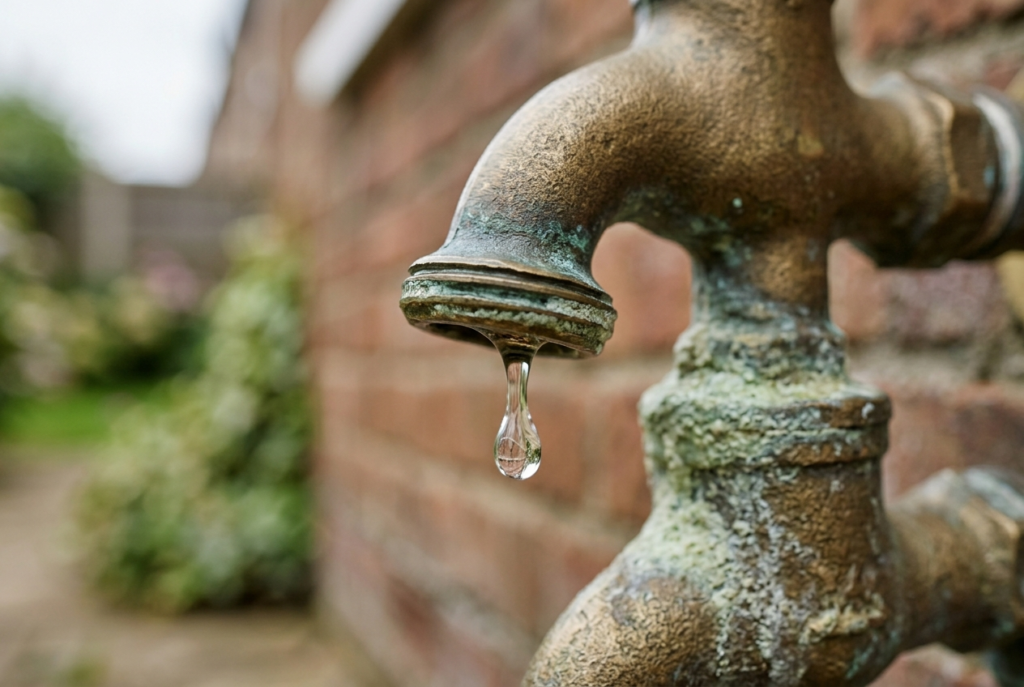
Dripping or running tap is almost always a perished washer or worn tap valve — a quick fix once the water supply is isolated.
No water reaching the tap despite normal pressure elsewhere can point to a frozen section of pipe, a closed isolation valve, or in colder months, ice within the tap body itself. Never apply direct heat to thaw a frozen pipe — gentle, gradual warming is safer and avoids the risk of pipe damage.
Cracked tap body, usually caused by a hard freeze when water trapped in the tap expands, will need the whole fitting replaced rather than repaired.
Leaking at the wall, where the pipe passes through the external wall, often indicates the original seal has degraded and needs attention before water ingress causes damp inside the property — something we’d treat as a leak detection and repair job rather than a simple tap fix.
If your garden tap is showing any of these signs, our tap and faucet repair team can usually resolve it in a single visit.
Signs Your Pipes and Fittings Need Attention
Across the whole property, not just outdoors, a few warning signs are worth acting on quickly rather than waiting for a full failure:
- Unexplained damp patches on walls, ceilings, or floors
- A noticeable, unexplained increase in your water bill
- Discoloured or metallic-tasting water
- Banging or knocking noises in the pipework (often linked to pressure issues)
- Visible corrosion, green staining, or limescale around joints
- A consistent drop in water pressure at one or more outlets
Any one of these on its own might be minor. Several together, or a problem that’s getting worse over time, usually means it’s worth having a professional leak detection and repair survey carried out before the damage spreads.
DIY Maintenance vs. Calling a Professional
There’s a sensible middle ground here. Replacing a tap washer, tightening an accessible compression joint, or fitting an insulated cover over an outside tap are all reasonable DIY tasks for a confident homeowner.
Where we’d always recommend bringing in a qualified plumber:
- Any work connecting to the mains supply pipe, which falls under UK water regulations
- Soldered or capillary joints, where a poor seal can fail months later, out of sight
- Any pipework buried in walls, under floors, or underground
- Suspected lead pipework, given the health implications of incorrect handling
- Persistent leaks where the source isn’t immediately obvious
Getting it wrong on a fitting that’s hard to access can mean a small job becomes a major one — a slow leak inside a wall, for instance, can cause far more damage by the time it’s discovered than the original joint would have cost to do properly the first time.
How Catalyst Home Services Can Help
We’ve spent years working with the full range of pipework and fittings found across London’s varied housing stock — from original Victorian plumbing through to the latest plastic push-fit systems in new-build developments. Whether it’s a dripping garden tap, a suspected hidden leak, or a full pipe replacement or relining project, our engineers carry out every job to current UK water regulations, with clear, written quotes before any work begins.
If you’re dealing with a plumbing issue right now, our 24/7 emergency line is there for anything that can’t wait. For everything else, you can book a plumber online or call us directly on +44 7400 265421. Landlords and property managers looking to stay ahead of pipework problems before they start may also want to take a look at our residential AMC plans, which include regular inspections as part of a planned maintenance schedule.
Check our service areas page to confirm we cover your part of London, and see what our customers have to say on our reviews and testimonials page.
Need help with plumbing pipes, fittings, or garden taps at your property? Contact Catalyst Home Services today for fast, professional plumbing across London.