
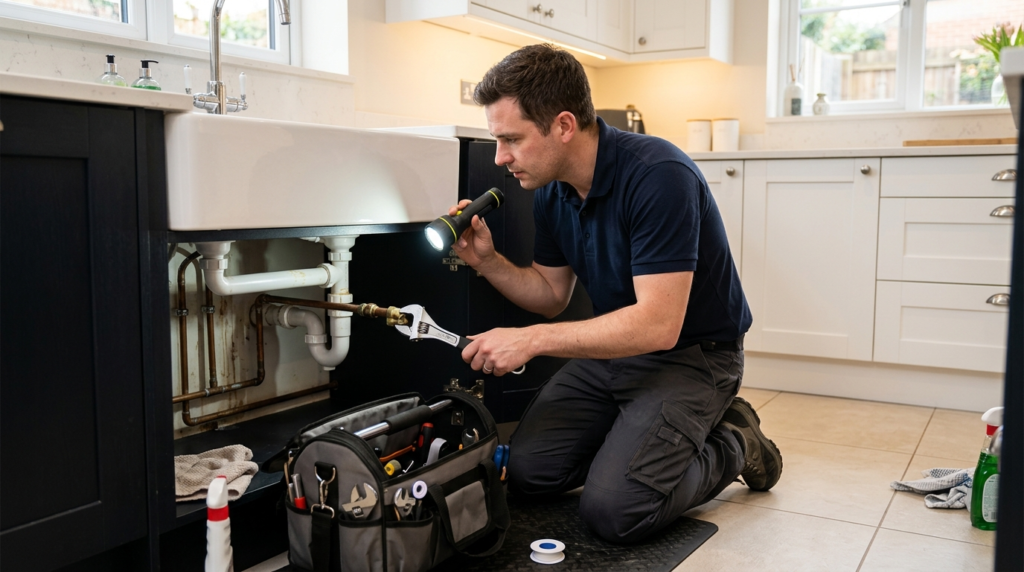
A leak rarely announces itself loudly. It starts as a faint hiss behind a wall, a slightly damp patch under the sink, or a water bill that’s £15 higher than last quarter for no reason you can think of. By the time most people actually call someone, the leak has usually been running for weeks.
This guide walks through everything you need to know about leak repair — what causes leaks, how much they typically cost to fix in the UK, what you can safely handle yourself, and when it’s time to bring in a professional. We’ll also cover the parts nobody tells you about: insurance, water company responsibility, and the longer-term damage a “small” leak can cause if it’s left alone.
If you’ve already found water somewhere it shouldn’t be and need a leak detection and repair team out today, you can call +44 7400 265421 or book a plumber online. For everything else, read on.
What Counts as a “Leak Repair”?
Leak repair covers a broader range of work than people usually assume. It’s not just a dripping tap — it includes:
- Visible leaks — a tap that won’t stop dripping, a toilet cistern that runs constantly, a washing machine hose leaking onto the floor
- Hidden leaks — water escaping inside a wall, under a floor, or underground, often with no visible sign until damage appears
- Pipe leaks — a pinhole in copper pipework, a failed joint, or a split caused by frost
- Fixture leaks — seals and joints around baths, sinks, and showers that have aged or perished
- Appliance leaks — dishwashers, washing machines, and boilers that leak from internal connections rather than the pipework itself
Each type needs a slightly different approach, but the repair process generally follows the same three stages: find the source, stop the water, and fix the cause — not just the symptom.
Common Causes of Leaks in UK Homes
Understanding why leaks happen makes it much easier to spot one early and to know whether what you’re dealing with is a five-minute fix or something bigger.
Worn washers and seals. The single most common cause of a dripping tap. Rubber washers harden and crack with age and constant use, and once the seal fails, water finds its way past it.
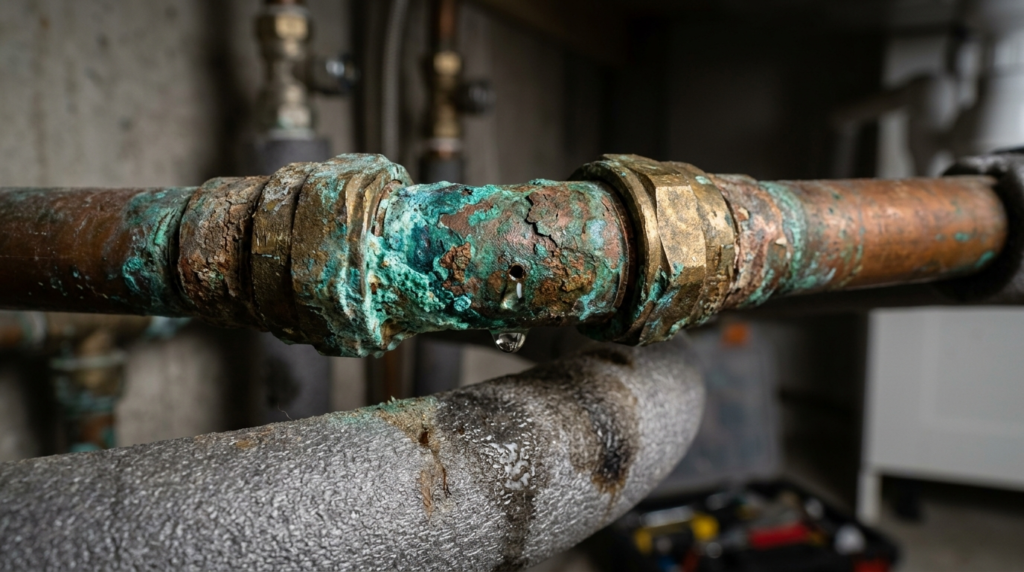
Corroded or perished pipework. Older copper pipes can develop pinhole leaks as the metal thins over decades. Plastic push-fit fittings can also fail if they weren’t seated correctly during installation.
Frozen and burst pipes. UK winters are mild compared to many countries, but pipes in lofts, garages, and external walls still freeze. Ice expands inside the pipe, and the split often only becomes obvious once the ice thaws and water starts flowing again.
Failed joints and fittings. Every joint in a plumbing system is a potential weak point. Compression fittings can loosen slightly over time with vibration and temperature changes, and soldered joints can fail if they weren’t done properly the first time.
High water pressure. Mains pressure that’s too high puts constant strain on pipework, joints, and appliance connections. If you’re getting repeat leaks in different places, this is worth checking — our guide to water pressure issues explains what normal pressure should look like.
Ground movement and subsidence. Underground supply pipes can crack if the ground around them shifts, which is more common on clay soil after long dry spells followed by rain.
Old or degraded sealant. Silicone around baths, showers, and sinks doesn’t last forever. Once it cracks, water gets behind tiles and fittings even if there’s no fault with the pipework itself.
Signs You Have a Leak (Even If You Can’t See It)
Most leak damage happens during the period before anyone notices anything is wrong. These are the signals worth paying attention to:
- A water bill that’s risen without any change in your household’s usage
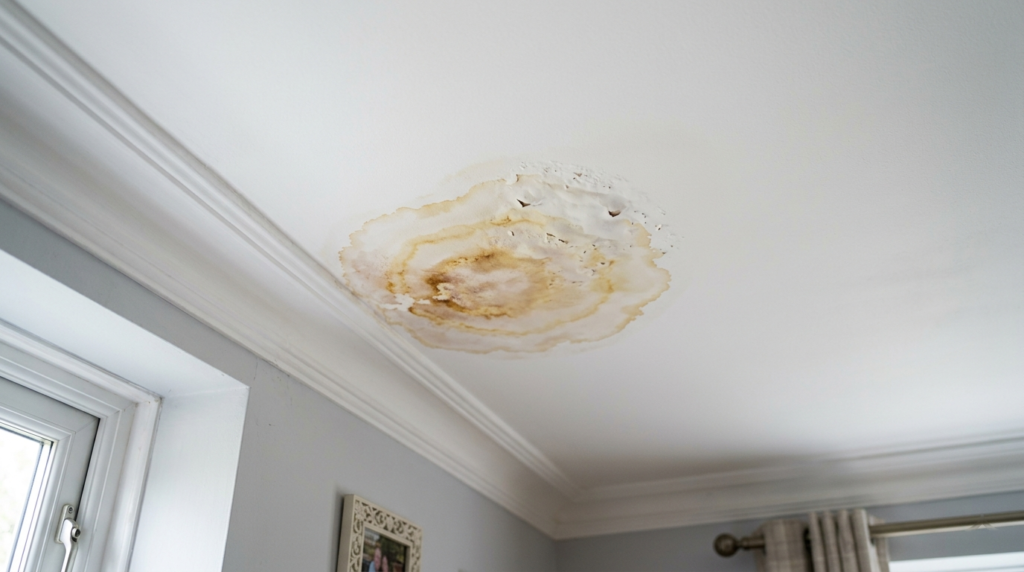
- Damp patches, discolouration, or bubbling paint on walls or ceilings
- A musty smell in one specific area that wasn’t there before
- The sound of running water when every tap and appliance is switched off
- A noticeable drop in water pressure at one or more taps
- Warm patches on flooring where there’s no underfloor heating
- Cracked tiles or a floor that’s lifted slightly in one spot
- A water meter that keeps moving after you’ve turned off every outlet in the house
That last one is the most reliable check you can do yourself, and it takes two minutes: turn everything off, note the meter reading, wait fifteen minutes, and check again. If it’s moved, water is escaping somewhere.
DIY Leak Repair: What You Can Safely Fix Yourself
Plenty of leaks are genuinely within reach of a confident homeowner with basic tools. Here’s what’s usually safe to tackle, and what each one typically involves.
Fixing a Dripping Tap
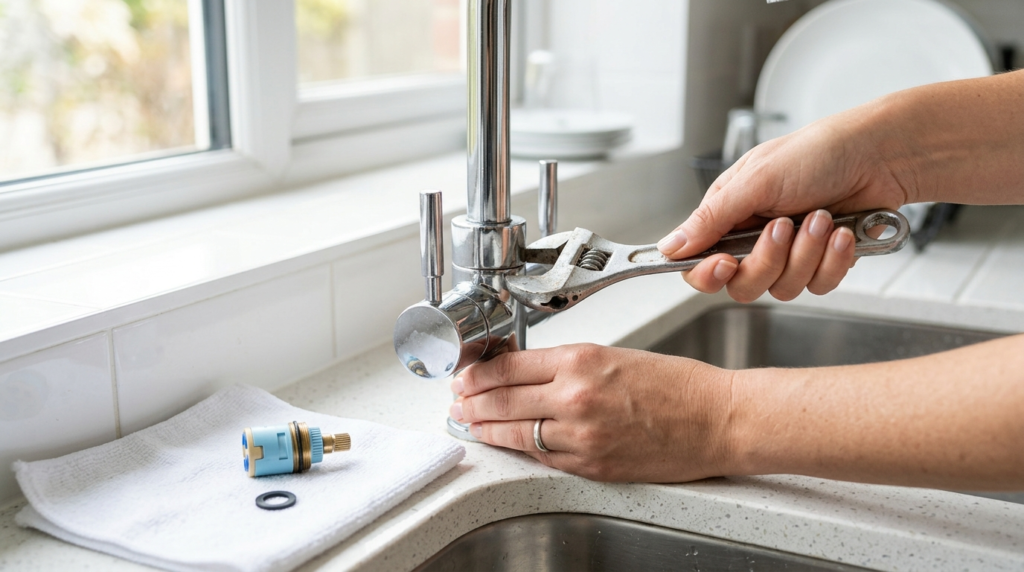
This is the most common DIY plumbing job in the country, and it’s usually a washer or cartridge replacement. Turn off the isolation valve under the sink (or the stopcock if there isn’t one), remove the tap handle, and replace the worn part with one that matches your tap model. We’ve written a full step-by-step version of this in our guide to fixing a leaking tap, including how to identify which type of tap you have before you start.
Reapplying Sealant Around a Bath or Sink
If silicone has cracked or peeled, removing the old bead and reapplying fresh sealant is straightforward. The key step people skip is letting the area dry completely and removing every trace of the old silicone first — new sealant won’t bond properly over old residue.
Tightening a Loose Compression Fitting
A slow drip from a joint under a sink can sometimes be solved by gently tightening the nut with an adjustable spanner. Go slowly — overtightening can crack the fitting and turn a drip into a proper leak.
Replacing a Toilet Cistern Valve
A toilet that runs constantly is usually a worn fill valve or flush valve, both of which are inexpensive and widely available. This is a slightly more involved job than a tap washer but still manageable for most people comfortable with basic tools.
When DIY Isn’t Enough — Call a Professional
Some leaks are simple. Others are not, and trying to handle the wrong kind yourself can turn a manageable repair into an expensive one. Bring in a qualified plumber if:
- You can’t find the source. If water is appearing somewhere but you can’t trace where it’s coming from, guessing and opening up walls or floors speculatively almost always costs more than getting it found properly the first time. This is exactly what professional leak detection equipment is for — acoustic and thermal tools locate the source without unnecessary damage.
- The leak is underground or in the mains supply. Anything between your property boundary and your home is your legal responsibility under UK Water Regulations, and digging it up without knowing exactly where the fault is wastes time and money.
- There’s a burst pipe. A pipe that’s actually split rather than dripping needs immediate attention — shut off the stopcock and call for help. Our burst pipe repair guide covers what to do in the first few minutes while you wait.
- The leak is connected to your boiler or central heating. Pressure loss in a heating system can come from several different points in the circuit, and working on the wrong part of a pressurised system without the right knowledge is a genuine safety risk.
- You’ve already tried a DIY fix and it hasn’t worked. A repeat leak in the same spot usually means the underlying cause wasn’t actually addressed.
- There’s any chance of structural or electrical involvement. Water near electrics, or water that’s been sitting long enough to soften timber or plasterboard, needs a professional assessment before anyone touches anything.
How Much Does Leak Repair Cost in the UK?
Costs vary a lot depending on what’s actually wrong, but here’s a realistic general picture for England and the wider UK:
| Type of Repair | Typical Cost Range |
|---|---|
| Tap washer / cartridge replacement | £60–£120 |
| Toilet cistern valve replacement | £70–£130 |
| Visible pipe joint repair | £80–£180 |
| Hidden leak detection (no repair) | £150–£350 |
| Hidden leak detection + repair | £250–£600+ |
| Underground/mains pipe leak repair | £300–£900+ |
| Emergency call-out (evenings/weekends) | +£50–£100 on top of standard rates |
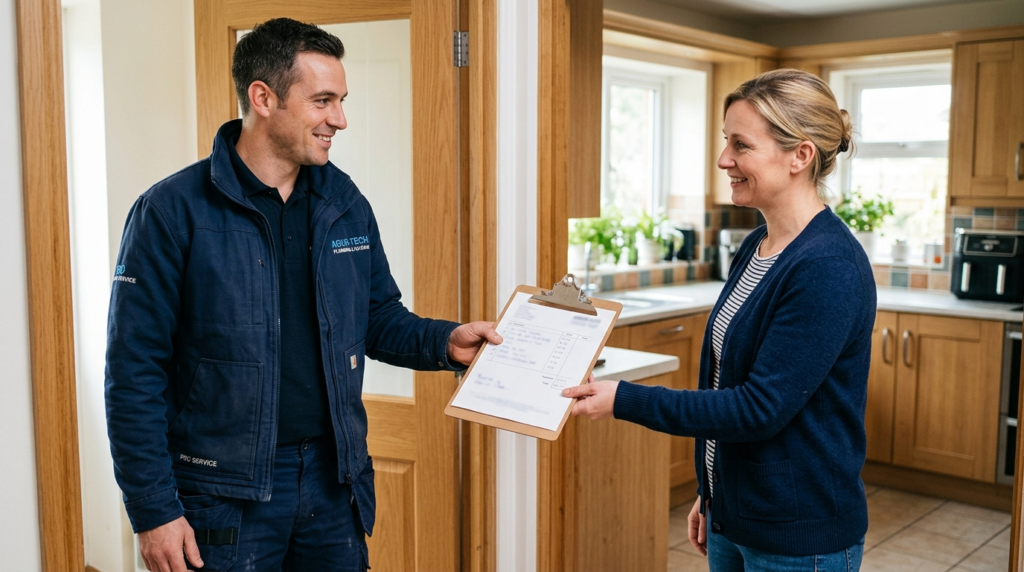
These figures are a general guide, not a quote — the real cost depends on accessibility, how much investigation is needed, and the extent of any associated damage. A reputable plumber should always give you a clear price before starting work rather than an open-ended hourly estimate. You can see what that looks like in practice on our reviews and testimonials page.
Does Home Insurance Cover Leak Repair?
This is one of the most common questions we get, and the honest answer is: it depends on your policy and what’s actually leaking.
Most UK home insurance policies include trace and access cover, which pays for the cost of finding a hidden leak — including any plasterwork, flooring, or tiling that has to be opened up to locate it. The repair of the leak itself (replacing a section of pipe, for example) is sometimes excluded, since insurers generally treat plumbing maintenance as the homeowner’s responsibility, separate from the resulting damage.
What’s usually covered, subject to your specific policy:
- The cost of detecting where a hidden leak is located
- Damage caused by the leak — damp walls, ruined flooring, water-damaged ceilings
- Reinstating any areas opened up to reach the leak
What’s often not covered:
- The plumbing repair itself, if it’s classed as wear-and-tear or lack of maintenance
- Leaks that have been left for an extended period without action (insurers can argue this counts as negligence)
- Gradual damage that built up over months, as opposed to a sudden failure
The practical takeaway: get a leak looked at as soon as you suspect one, keep any reports or invoices from the engineer who attends, and check your policy wording before assuming either way. An engineer’s report from a qualified plumber gives you the documentation insurers typically ask for when assessing a claim.
Who’s Responsible for a Leak: You or the Water Company?
This trips a lot of people up. In the UK, the rule of thumb is based on location, not on who installed the pipe:
- From the property boundary to your home (the “supply pipe”) — this is your responsibility, even though part of it sits under public land like a pavement.
- From the water main to the property boundary — this is the water company’s responsibility.
If you’re unsure which side of the boundary a leak falls on, your water company can usually confirm this for free, and many will investigate suspected leaks on the public side at no charge. For anything on your side of the boundary, that’s where a plumber comes in — our underground and mains pipe leak service covers exactly this kind of work, including the excavation and reinstatement.
Why Ignoring a Small Leak Costs More Than Fixing It
It’s tempting to put off a minor leak, especially if it’s only a slow drip or a faint damp patch that isn’t causing any obvious problem yet. But water is patient, and it doesn’t stay contained to where it started.
A leak that’s left untreated can lead to:
- Structural damage — prolonged moisture weakens timber joists and beams, and in serious cases can contribute to subsidence
- Mould growth — which affects indoor air quality and can be a genuine health concern, particularly for anyone with respiratory conditions
- Rising damp — once moisture gets into masonry, it can travel upward through capillary action, turning a single damp patch into a much larger area
- Higher water bills — even a small constant drip can waste thousands of litres a year
- More expensive repairs later — fixing a pinhole leak today is far cheaper than replacing a section of rotted subfloor in six months
If you’ve spotted two or more of the warning signs mentioned earlier in this guide, the maths almost always favours acting now rather than waiting to see what happens.
How Professional Leak Detection Works
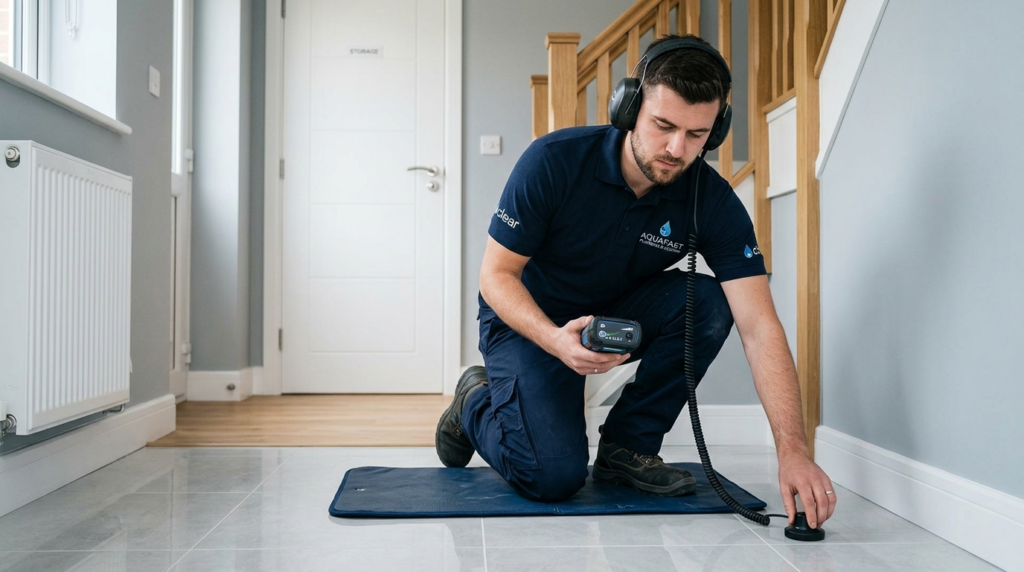
For leaks you can’t see or trace yourself, professional detection uses purpose-built equipment rather than guesswork:
- Initial assessment — an engineer reviews your symptoms and plumbing layout to narrow down where the problem is likely to be
- Pressure testing — checking specific sections of pipework for pressure loss, which helps isolate the affected area
- Acoustic detection — specialist listening equipment picks up the sound of water escaping a pressurised pipe, even through walls, floors, and underground
- Thermal imaging — used for hot water and underfloor heating leaks, identifying temperature differences invisible to the eye
- Targeted repair — once the exact point is confirmed, only that specific area is opened up, keeping disruption and reinstatement costs to a minimum
This non-invasive approach is the standard most professional plumbers now work to, because it avoids the old method of opening up walls speculatively until something is found. Our full leak detection and repair page goes into more detail on each stage if you want to understand exactly what to expect from a callout.
FAQs
Can a leak fix itself or go away on its own?
No. A leak is a sign that something — a seal, a joint, a section of pipe — has already failed. Pressure and movement in the system tend to make the gap larger over time, not smaller. Even leaks that seem to stop are usually just slowing down temporarily, not resolving.
How quickly should I get a leak repaired?
As soon as reasonably possible. Even a slow leak compounds in cost the longer it runs, both in wasted water and in the damage building up behind the scenes. If you have an active leak that’s actively flowing, treat it as urgent and shut off the water supply at the stopcock while you arrange a repair.
Is a leaking pipe an emergency?
A dripping joint can usually wait for a same-day or next-day appointment. A burst pipe, a leak near electrics, or water that’s actively flooding a room is an emergency — turn off your stopcock immediately and call an emergency plumber.
How do I find the source of a leak I can’t see?
Start with the water meter test described earlier in this guide. If that confirms a leak but you still can’t locate it, this is exactly where professional acoustic and thermal detection earns its cost — it finds the precise location without you needing to open up walls or floors on a guess.
What’s the difference between leak detection and leak repair?
Detection is the process of finding exactly where a leak is, especially when it’s hidden. Repair is fixing it once it’s found. For visible leaks like a dripping tap, you can usually skip straight to repair. For hidden leaks, detection has to happen first, or any repair work risks targeting the wrong spot entirely.
Get Your Leak Fixed Properly
Whether it’s a tap you’ve been meaning to sort for months or a leak you can hear but can’t find, the right move is the same: deal with it before it gets bigger and more expensive. Catalyst Home Services provides same-day leak detection and repair across London, backed by qualified engineers and transparent pricing with no surprises on the invoice.
Call us on +44 7400 265421, use our 24/7 emergency line for urgent situations, or book a plumber online to get a same-day appointment confirmed.