
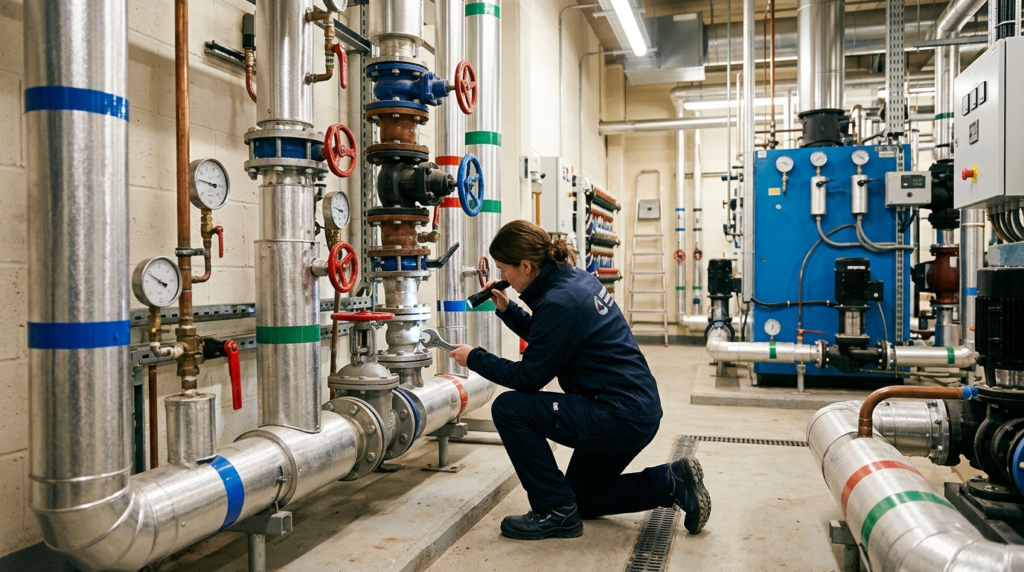
If you run a business, manage a commercial property, or look after a block of offices, shops, or flats, your plumbing works harder than you might think. Commercial plumbing isn’t just “bigger” versions of the pipes under your kitchen sink at home. It’s a specialist field with its own rules, risks, and equipment — and getting it wrong can be far more costly than a dripping tap.
In this guide, we’ll walk through what commercial plumbing actually covers, why it matters, the most common problems business owners face, and how to keep your systems compliant and running smoothly. Whether you’re a facilities manager, landlord, or small business owner, this article will help you make informed decisions about your property’s plumbing.
What Is Commercial Plumbing?
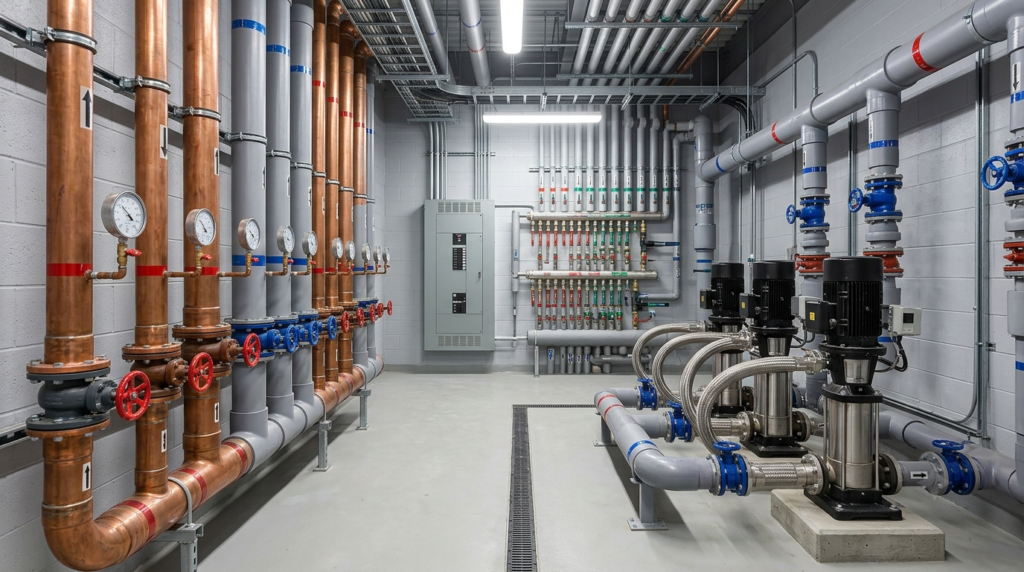
Commercial plumbing refers to the design, installation, maintenance, and repair of water, drainage, and heating systems in non-residential buildings. This includes offices, restaurants, retail units, schools, hotels, care homes, warehouses, and managed residential blocks.
The core principles are the same as domestic plumbing — moving water in and waste out safely — but the scale and complexity are very different. A single office block might serve hundreds of people a day, while a restaurant kitchen puts constant strain on drainage through grease, food waste, and heavy daily use. Commercial systems are typically larger, more heavily used, and subject to legal compliance requirements that simply don’t apply to a private home.
This is why commercial plumbing services are usually handled by engineers with specific training and experience in business environments, rather than a general residential plumber.
Why Commercial Plumbing Matters
For a homeowner, a plumbing fault is an inconvenience. For a business, it can mean something far more serious.
Lost trading time. A blocked drain in a restaurant kitchen or a burst pipe in a retail unit can force you to close your doors, directly costing you revenue.
Compliance risk. UK commercial properties are subject to regulations that don’t apply to homes, including water safety standards and Legionella risk management. Falling short can mean enforcement action or fines.
Reputational damage. Customers and staff notice when washrooms are out of order or ceilings are stained from a leak. First impressions matter, especially in hospitality and retail.
Higher repair costs. Commercial systems are more complex, and a small issue left unaddressed can escalate into an expensive emergency repair or full system replacement.
Because the stakes are higher, it pays to work with a plumbing partner who understands commercial environments specifically — not just someone comfortable fixing a leaking tap.
Common Types of Commercial Plumbing Systems
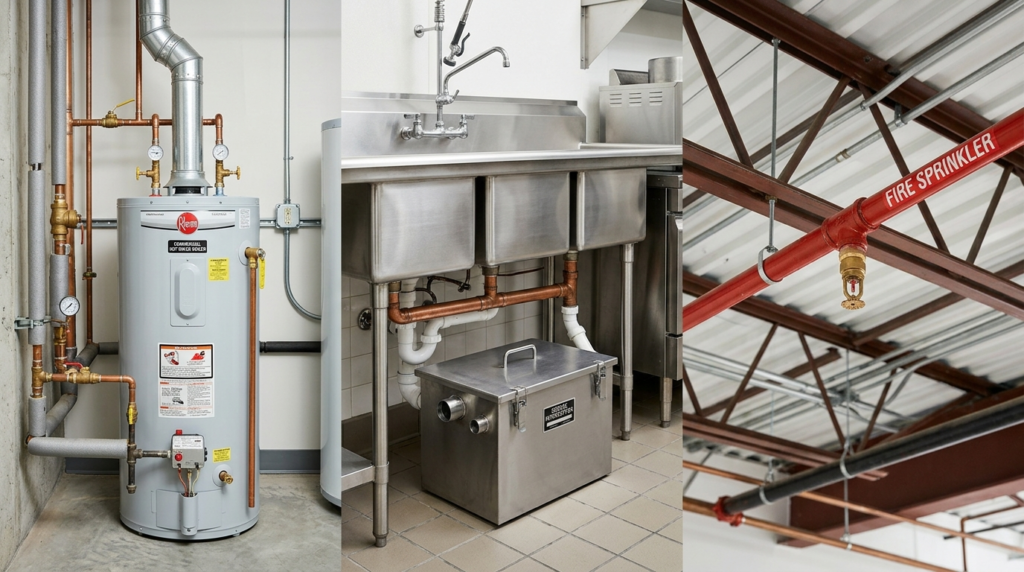
Every commercial property has a slightly different setup depending on its use, but most fall into a few broad categories.
Water supply systems bring fresh water into the building and distribute it to washrooms, kitchens, and appliances. In larger buildings, this often includes pressurised systems and booster pumps to maintain consistent flow across multiple floors.
Drainage and waste systems remove used water and waste from the building. Commercial kitchens, in particular, need robust drainage with grease management to prevent blockages.
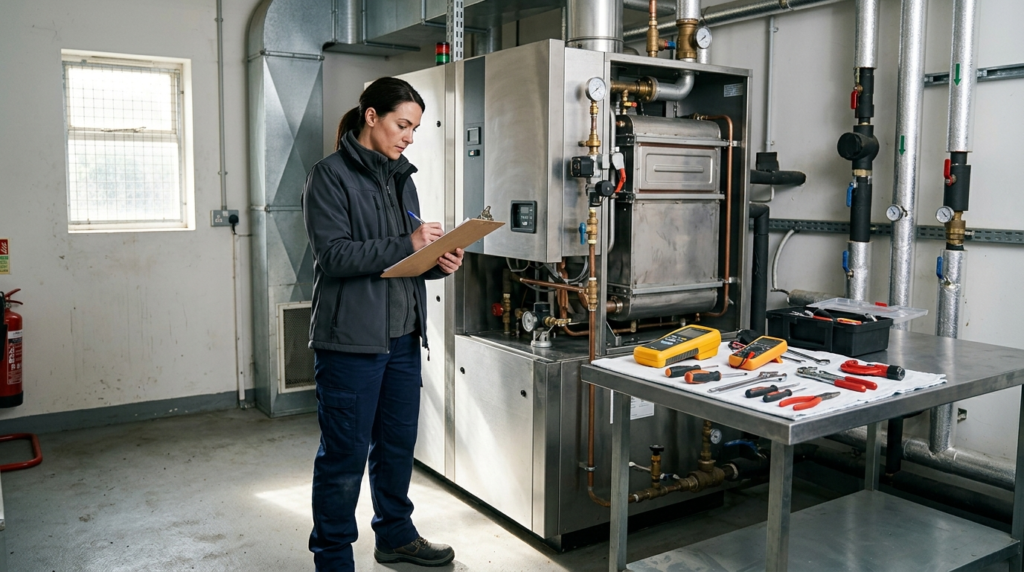
Commercial hot water and heating systems are usually larger and more heavily used than domestic boilers, often supporting an entire building’s heating and hot water needs. Regular boiler and water heater servicing is essential to keep these systems safe and reliable.
Fire and safety systems in some commercial buildings also rely on plumbing infrastructure, such as sprinkler systems, which require specialist knowledge to install and maintain correctly.
Common Commercial Plumbing Issues
Certain problems come up again and again in commercial settings. Recognising them early can save you significant time, money, and disruption.
Blocked Drains
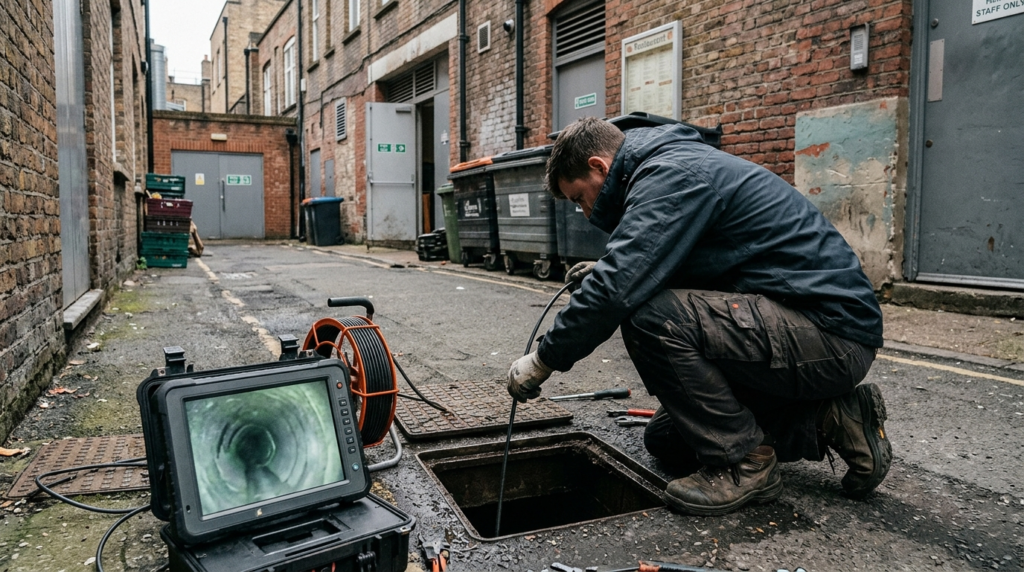
Commercial kitchens, busy washrooms, and shared drainage systems are especially prone to blockages from grease, food waste, and high daily traffic. A blocked drain isn’t just inconvenient — in a food business, it’s a hygiene risk that can lead to enforcement notices. Regular drain clearance and periodic CCTV drain surveys help catch build-up before it becomes a full blockage.
Leaks and Burst Pipes
Older commercial buildings often have ageing pipework that’s more prone to corrosion and failure. A leak behind a wall or under a floor can go unnoticed for weeks, causing structural damage and rising water bills. Prompt leak detection and repair limits the damage, and in many cases, ageing pipework can be extended in life through pipe relining rather than a full, disruptive replacement.
Poor Water Pressure
Inconsistent or low water pressure is common in taller commercial buildings or those with older infrastructure. This can affect everything from washroom facilities to commercial kitchen equipment. A proper diagnosis of water pressure issues usually resolves the problem at its source, rather than masking the symptoms.
Boiler and Heating Failures
A heating or hot water outage in a hotel, care home, or office can mean closing your doors or breaching duty-of-care obligations to staff and residents. Commercial boilers work harder than domestic units and need more frequent attention.
Toilet and Washroom Faults
High footfall means washroom fittings wear out faster in commercial settings than in a home. Faulty flush mechanisms, leaks, and blockages need quick attention to avoid complaints and hygiene concerns, which is why many businesses schedule regular toilet repair and replacement checks as part of routine maintenance.
UK Compliance: What Commercial Property Owners Need to Know
Commercial plumbing in England and Wales sits within a distinct legal framework that doesn’t apply to private homes. Understanding the basics helps you stay on the right side of the law and avoid nasty surprises.
Water Supply (Water Fittings) Regulations 1999 set standards for water fittings in non-domestic premises, designed to prevent contamination and wastage. Non-compliant installations can result in action from your local water authority.
Legionella risk management, guided by the HSE’s Approved Code of Practice (L8), places a legal duty on commercial property operators to assess and control the risk of Legionella bacteria in water systems. This applies to almost any business with a water system, from offices to hotels and care homes.
Gas Safety (Installation and Use) Regulations 1998 require annual servicing of all gas appliances in commercial premises by a Gas Safe registered engineer, with records kept and available on request.
These obligations are a key reason commercial plumbing needs specialist attention. A qualified commercial engineer will not only carry out the work but flag compliance issues and provide the documentation you need to demonstrate you’ve met your legal duties.
Preventive Maintenance: The Smarter Approach
The most cost-effective way to manage commercial plumbing is to stay ahead of problems rather than reacting to them. This is where planned, scheduled maintenance makes a real difference.

A structured maintenance programme typically includes regular inspections, servicing of heating and hot water systems, drain checks, and Legionella monitoring support, all backed up with written compliance records. Many businesses find that an Annual Maintenance Contract pays for itself simply by preventing one avoidable emergency call-out, while also giving you cost predictability across the year.
For larger organisations with more complex compliance needs, a Planned Preventive Maintenance (PPM) schedule takes this further, mapping out engineer visits and servicing across your entire plumbing and heating infrastructure for the year ahead.
What to Look for in a Commercial Plumbing Contractor
Not every plumber is set up to handle commercial work. When choosing a contractor for your business or property, look for:
- Relevant qualifications, including Gas Safe registration for any gas-related work
- Experience with commercial environments, not just residential jobs
- 24/7 emergency availability, since plumbing faults don’t respect business hours
- Transparent, written quotations with no hidden call-out fees
- Compliance documentation provided as standard after every visit
- Flexibility around your operating hours, so work can be scheduled early morning, evening, or weekends where needed
A contractor who understands these priorities will minimise disruption to your business while keeping you compliant and protected.
How Catalyst Home Services Supports London Businesses

At Catalyst Home Services, our commercial plumbing team works with businesses across London, from independent cafés to multi-site retail chains, offices, schools, and managed residential blocks. Our engineers are fully qualified and Gas Safe registered where applicable, and we understand the specific compliance requirements that apply to UK commercial properties.
Our services cover everything from 24/7 emergency plumbing and drain clearance to boiler servicing, pipe relining, and fully managed maintenance contracts. We provide clear, upfront quotations, work around your business hours wherever possible, and leave you with the compliance paperwork you need.
If you also manage residential units alongside your commercial space, we can help there too — take a look at our residential plumbing services for mixed-use properties.
📞 Call us 24/7: +44 7400 265421
📅 Book online: Book a Plumber
📍 Check coverage: Our Service Areas
⭐ See what our clients say: Reviews & Testimonials