
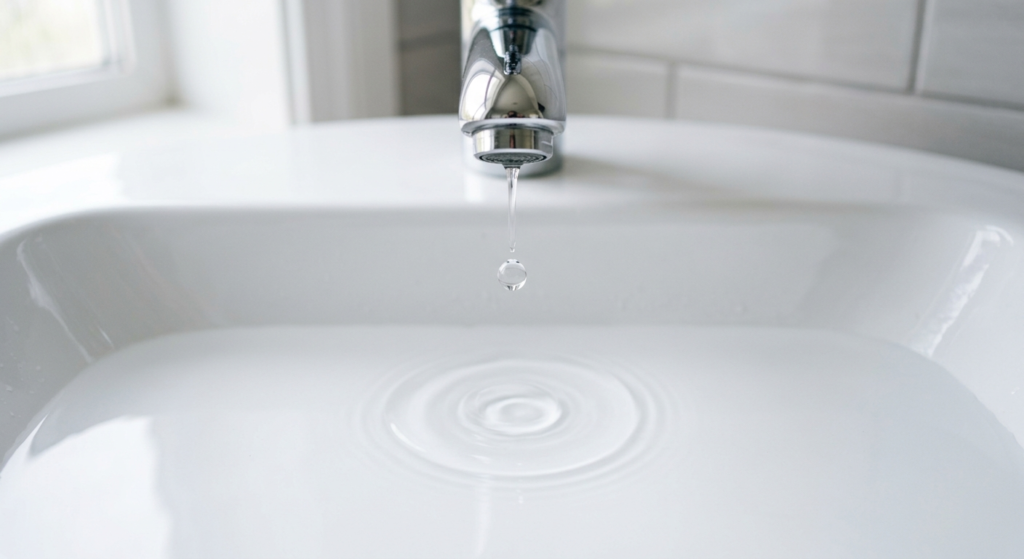
How to Fix a Leaking Tap: Step-by-Step Guide for UK Homeowners
A dripping tap is one of the most common household problems in the UK and one of the most ignored. At Catalyst, we handle hundreds of these repairs every year — and most of them start with a homeowner who waited too long. Whether it’s a slow drip from the spout or a steady trickle at the base, knowing how to stop leaking tap problems early can save you money, protect your home from water damage, and prevent a small annoyance from turning into a costly repair. This guide walks you through everything you need, from identifying your tap type to replacing a washer or cartridge all in plain, jargon-free English.
Why You Shouldn’t Ignore a Leaking Tap
It’s easy to put a dripping tap to the back of your mind. But the numbers tell a different story.
A tap dripping just once per second wastes over 30 litres of water every day, that’s more than 10,000 litres a year. If you’re on a water meter (as many UK households now are), that waste goes straight onto your bill. Thames Water estimates a dripping tap can add up to £180 per year to your water costs.
Beyond the water bill, a persistent leak can cause:
- Limescale build-up around the spout and basin, making future repairs harder
- Water damage to the cabinet beneath the sink or worktop surfaces
- Mould and damp in poorly ventilated bathrooms and kitchens
- Pipe stress that can lead to more serious plumbing failures
If your tap has been leaking for a while and you’re unsure how far the problem extends, it’s worth having a professional carry out a leak detection and repair check before attempting a DIY fix.
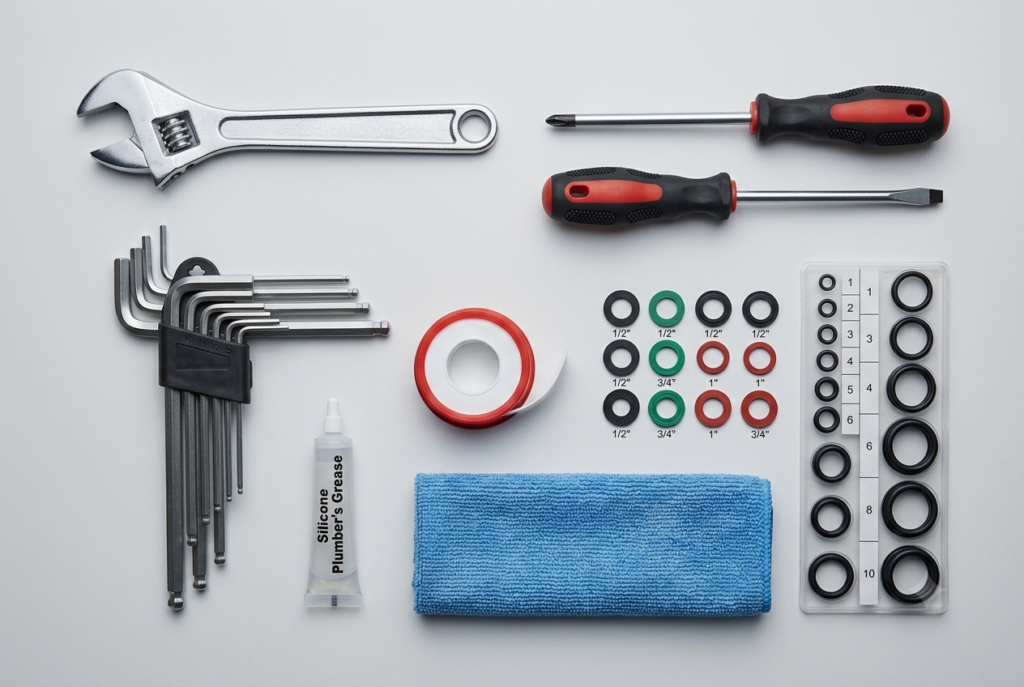
What You’ll Need for a Leaking Tap Repair
Most tap repair jobs require only basic tools you can pick up at any UK DIY store: Screwfix, B&Q, or Wickes.
Tools:
- Adjustable spanner (or basin wrench for tight under-sink spaces)
- Flat-head and Phillips screwdrivers
- Allen key set (for tap handles with grub screws)
- Cloth or old towel (to protect the basin and catch drips)
- Small bowl or bucket
Materials:
- Replacement tap washer (rubber, 3/4″ or 1/2″ check your tap size)
- O-ring set (various sizes)
- Replacement tap cartridge (for ceramic disc taps match your tap brand)
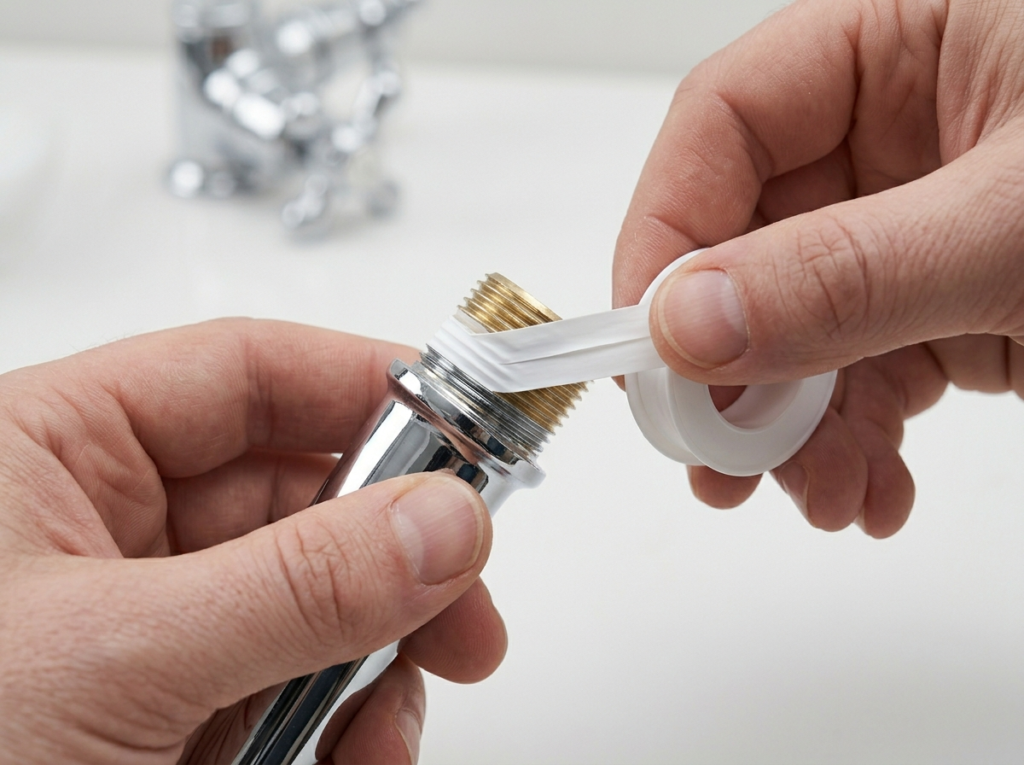
- PTFE tape (thread seal tape essential for joints)
- Plumber’s grease (silicone-based)
Pro Tip: Before you buy anything, take your old washer or cartridge to the shop with you, or photograph it next to a coin for scale. Tap parts aren’t universal, the right size matters.
How to Identify Your Tap Type
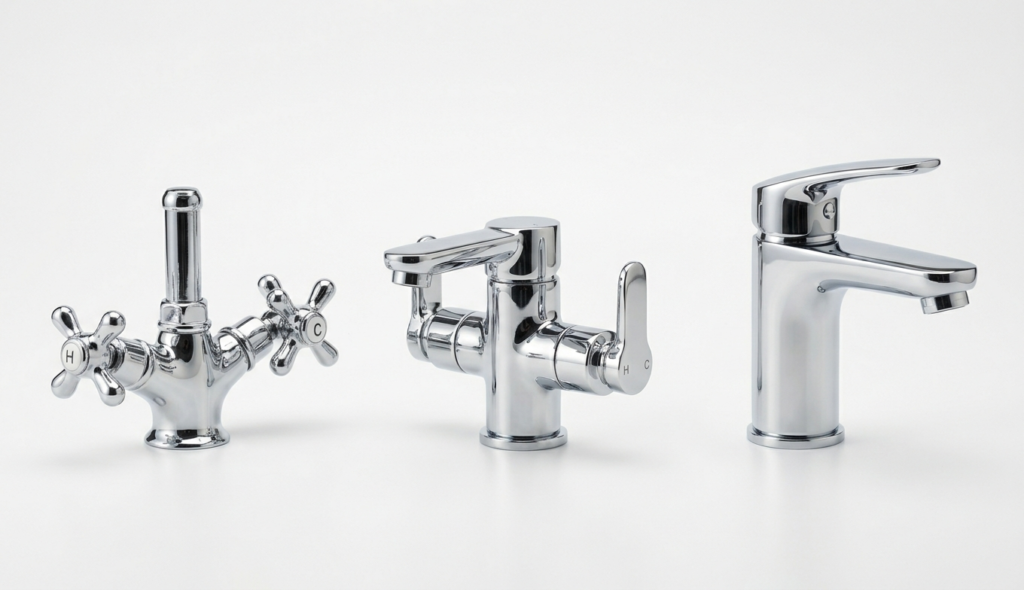
Knowing what kind of tap you have determines exactly what you’ll need to replace. There are three main types found in UK homes:
Compression Tap (Traditional)
The oldest and most common type in older UK properties. It has separate hot and cold handles that you turn fully to open or close. Inside, a rubber washer is pressed against a valve seat to stop the flow of water. When the washer wears out, the tap drips. These are the easiest to repair yourself.
Ceramic Disc Tap
Common in modern bathrooms and kitchens. Instead of a rubber washer, two ceramic discs rotate against each other to control flow. They require a quarter-turn to operate. When they fail, you replace the ceramic cartridge rather than a washer. Ceramic discs can crack, which is harder to diagnose.
Mixer/Monobloc Tap
A single-body tap with one or two handles that controls both hot and cold water from a single spout. Found on most modern kitchen sinks and bathroom basins. A monobloc mixer tap uses either a cartridge or a ceramic disc mechanism internally. Leaks can occur from the spout, the base, or the handle each requiring a slightly different fix.
How to Fix a Leaking Tap: Step-by-Step
Tap Leaking From the Handle
If water is escaping from the handle area rather than the spout, the problem is almost always a worn O-ring or a loose packing nut just beneath the handle. Follow the same steps above — remove the handle, locate the O-ring in its groove, replace it with a matching size, and apply a thin smear of plumber’s grease before reassembling.
Tap Leaking From the Top
A tap leaking from the top — water escaping around the spindle or from beneath the handle — usually points to a degraded O-ring on the headgear or worn gland packing on older taps. Turn off the water supply, remove the handle and shroud, replace the O-ring, reassemble, and test. Don’t leave this one — water tracking down the outside of a tap body can get behind tiles or into cabinetry without being obvious until the damage is done.
Pro Tip: Before you touch anything, locate your stop tap (usually under the sink or near the water meter) and turn off the water supply. If there’s no under-sink isolation valve, you’ll need to turn off the mains. Then turn the tap on to release any remaining pressure and drain the line.
Here is the core process for fixing a dripping tap this applies to most compression and ceramic disc taps:
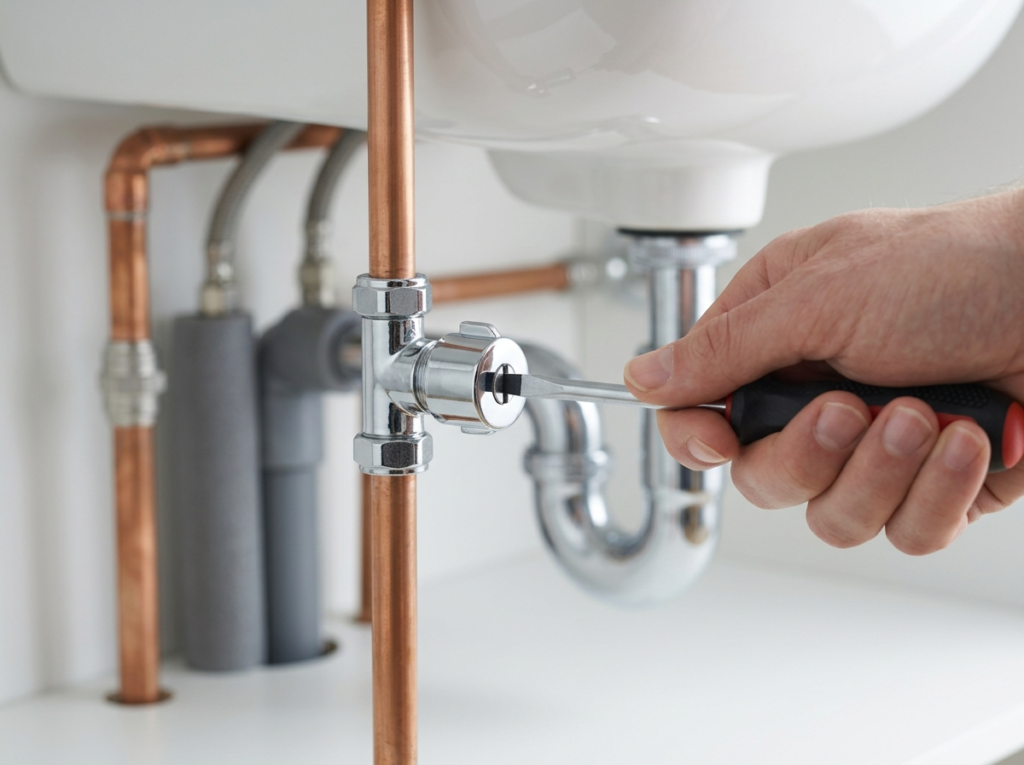
- Turn off the water supply. Use the isolation valve under the sink (a flat-head screwdriver slot — turn 90°) or the main stop tap. Confirm the water is off by turning the tap on — it should run dry within a few seconds.
- Plug the drain. Put the plug in the basin before you start. Small screws and washers vanish down drains very easily.
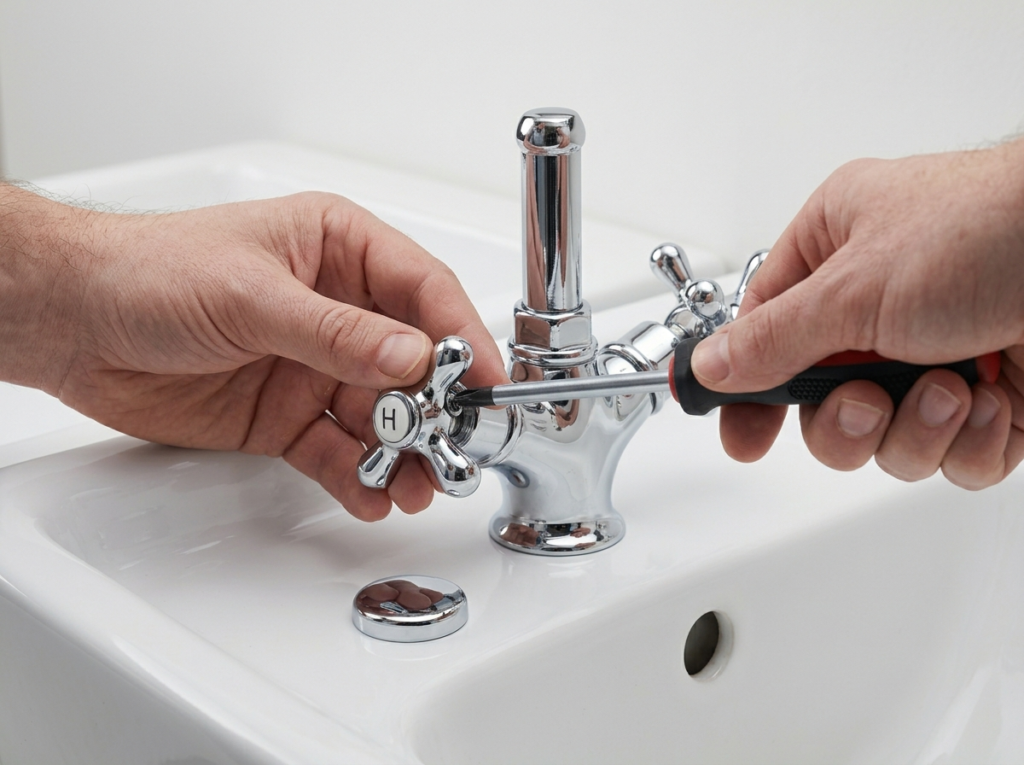
- Remove the tap handle. Look for a decorative cap on top of the handle (hot/cold indicator). Prise it off with a flat-head screwdriver. Beneath it is a screw — undo it and lift the handle away. Some modern taps use a grub screw on the side of the handle, which requires an Allen key.
- Remove the tap cover/shroud. Some taps have a decorative shroud (outer casing) that unscrews by hand or with a spanner. Wrap your spanner jaw in cloth to avoid scratching chrome finishes.
- Unscrew the headgear. This is the main valve body. Use an adjustable spanner to turn it anticlockwise. It may be stiff — apply steady pressure rather than forcing it.
- Replace the washer or cartridge.
- Compression tap: The rubber washer is held at the bottom of the headgear by a small nut. Undo it, pull off the old washer, and press the new one into place. Apply a small amount of plumber’s grease.
- Ceramic disc tap: Slide out the old cartridge. Take it to the shop to find an exact match — or order by brand and tap model. Insert the new cartridge in the same orientation.
- Check the O-ring. While you have the tap apart, inspect the O-ring (a rubber ring around the body of the headgear). If it looks flattened, cracked, or deformed, replace it now. This is often the cause of leaks at the base of the tap rather than from the spout.
- Reassemble in reverse order. Refit the headgear (hand-tight first, then snug with a spanner — don’t overtighten), replace the shroud, refit the handle, replace the screw and decorative cap.
- Turn the water back on slowly and check for leaks. Run the tap for 30 seconds, then turn it off and watch for drips. Job done.
Fixing a Leaking Tap at the Base
If water pools around the base of the tap rather than dripping from the spout, the problem is almost always a worn O-ring on the body of the tap.
Follow steps 1–4 above to remove the handle and shroud. With the handle off, you should be able to see or feel the O-ring sitting in a groove around the tap body. Use a flat-head screwdriver to gently lever it out. Take it to the shop to match the diameter and thickness, then fit the new one.
Apply a thin smear of plumber’s grease before fitting the new O-ring, this helps it seat correctly and extends its life. Reassemble and test.
If the leak at the base persists after O-ring replacement, it may indicate a deeper issue with the tap body or supply pipe connection. In that case, it’s safer to call a professional rather than risk making the situation worse especially if the tap is older or the pipework beneath the sink hasn’t been touched in years. A damaged supply connection can escalate quickly into a burst pipe repair situation.
Fixing a Leaking Mixer Tap
When fixing a leaking tap of the mixer type, a drip from the spout usually means a failed cartridge. The process is similar to a standard ceramic disc tap:
- Turn off the water (both hot and cold isolation valves under the sink).
- Remove the handle(s) most monobloc mixer taps have a single lever with a grub screw on the underside.
- Unscrew and remove the cartridge retaining nut.
- Pull out the old cartridge and note its orientation before removing it.
- Fit the replacement cartridge in the same direction, reassemble, and test.
If a mixer tap is leaking at the spout joint or leaking under the sink from the supply connections, wrap the threaded fittings with PTFE tape (two or three layers, wound clockwise) before re-tightening. This creates a watertight seal on threaded plumbing joints.
A mixer tap leaking from the base of the spout (where it meets the sink deck) is typically caused by a failed base O-ring or a loose mounting nut underneath. Tighten the mounting nut from below with a basin wrench, or replace the base O-ring if the nut is already firm.
If you notice your mixer tap is leaking alongside reduced water flow or fluctuating pressure, this could indicate a wider issue — our team covers water pressure issues as part of our plumbing services.
When to Call a Professional Plumber
DIY tap repair is well within reach for most homeowners but there are situations where calling a professional is the smarter, safer choice.
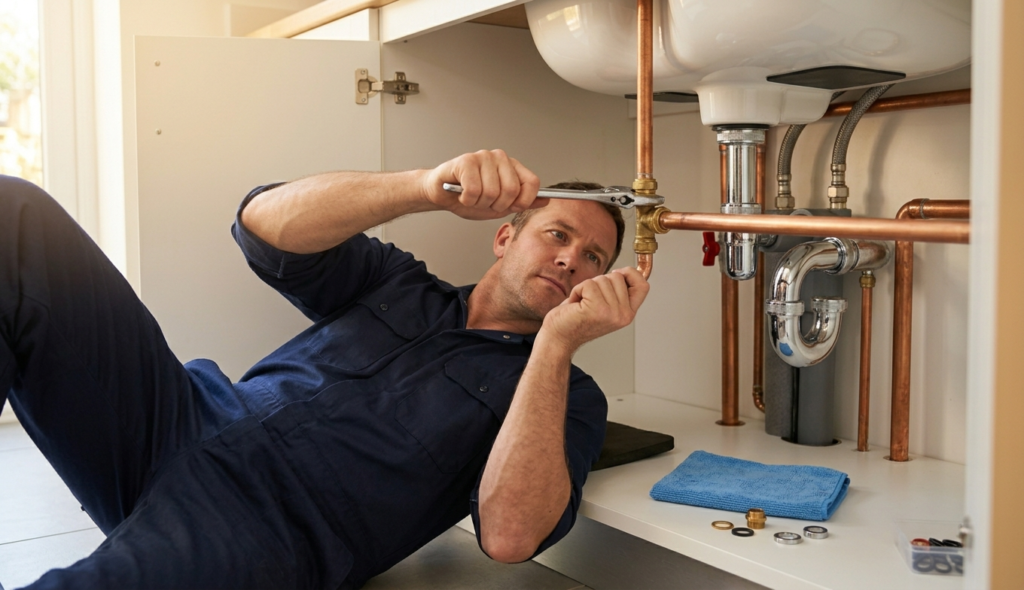
Call a plumber if:
- You can’t locate or turn off the water supply. If there’s no isolation valve and you can’t find the mains stop tap, don’t attempt the repair. Working on a live water supply is a recipe for flooding.
- The tap is still leaking after replacing the washer or cartridge. This can indicate a damaged valve seat (the surface the washer presses against) that needs re-grinding or replacing a job for a professional.
- Your tap is a ceramic disc and the disc is cracked or chipped. Ceramic fragments can travel into your water system if not handled correctly.
- The leak is under the sink from supply pipes or joints. A drip from a compression fitting or push-fit joint under the sink can worsen quickly and cause cabinet damage or floor damage. This falls under leak detection and repair territory.
- The pipework is old or corroded. On older UK properties (pre-1970s), the pipework beneath taps is sometimes lead or imperial-size copper. Disturbing old fittings without the right parts can cause more problems than it solves.
- It’s a new tap that’s already leaking. A brand-new tap leaking usually indicates an installation issue rather than a worn part, it needs to be re-seated correctly rather than repaired.
The Catalyst team of tap and faucet repair specialists handle all types of leaking tap repair across London, with same-day availability for urgent jobs. If you’d rather leave it to the professionals, you can book a plumber online in minutes.
How Much Does It Cost to Fix a Leaking Tap in the UK?
Costs vary depending on whether you go DIY or hire a professional.
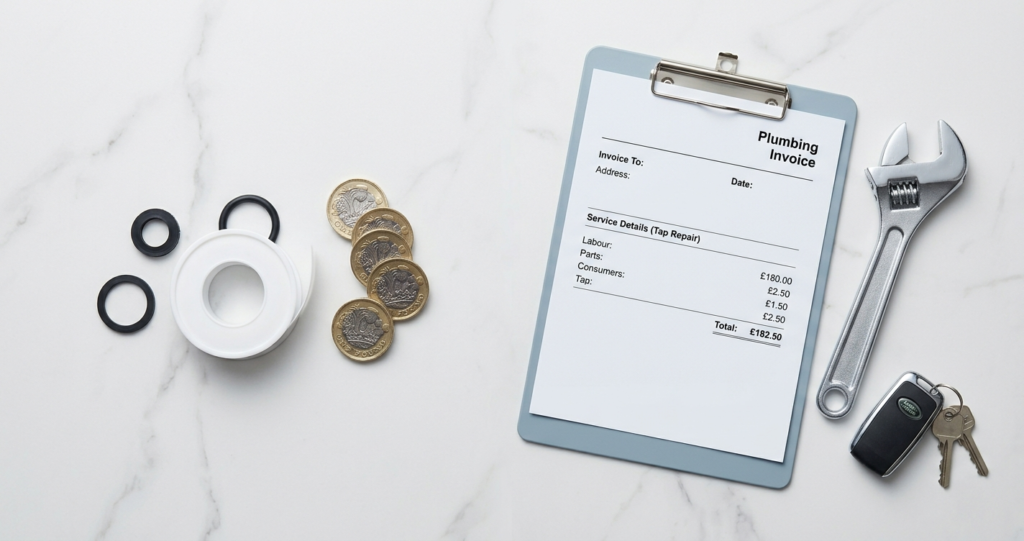
DIY repair costs:
- Replacement rubber washer: £1–£3
- O-ring set: £3–£8
- Ceramic cartridge: £8–£30 (varies significantly by tap brand)
- PTFE tape: £1–£2
- Full DIY kit: typically £10–£40
Professional plumber costs (UK average):
- Call-out fee: £50–£100
- Labour (per hour): £60–£120 in London, £40–£80 outside London
- Typical leaking tap repair (parts + 1 hour labour): £80–£180
- Tap replacement (new tap supplied and fitted): £150–£350+
Prices in London tend to be at the higher end of these ranges. For most simple washer or cartridge replacements, a professional plumber can complete the job in under an hour.
If your tap needs urgent attention outside normal working hours, our emergency plumbing team is available 24/7. For ongoing home maintenance and to avoid emergency call-out charges, our residential plumbing service offers planned maintenance packages across London.
FAQs
How do I know what type of tap I have?
Look at how the tap operates. If it has separate hot and cold handles that turn multiple times to open fully, it’s likely a compression tap with rubber washers. If the handles require only a quarter-turn, you have ceramic disc taps. A single-lever or single-body tap with one spout is a mixer/monobloc tap. When in doubt, remove the handle and look at the internal mechanism a rubber washer or a cartridge will be clearly visible.
Can a dripping tap cause water damage?
Yes, particularly if the drip is at the base of the tap or under the sink. Persistent moisture in enclosed cabinet spaces leads to swollen wood, mould growth, and eventually rot. On tiled surfaces, constant water exposure can loosen grout and allow water to penetrate behind tiles. A tap dripping inside the basin is lower risk, but limescale and staining will build up over time.
Is fixing a leaking tap a DIY job?
For most compression taps with worn rubber washers, yes, it’s one of the more accessible plumbing repairs a homeowner can tackle. Ceramic disc tap cartridge replacement is slightly more involved but still manageable. The main requirements are: knowing how to turn off your water supply, having the right replacement parts, and working carefully. If you’re in any doubt, or if the problem seems more complex than a simple washer, call a professional.
How long does it take to fix a leaking tap?
A straightforward washer replacement takes most DIYers 30–60 minutes from start to finish, including locating and turning off the water supply. A professional plumber will typically complete it in 20–40 minutes. Cartridge replacements take slightly longer 45–90 minutes for a DIYer — especially if sourcing the correct part requires a trip to a DIY store.
What if my tap is still leaking after replacing the washer?
If a tap continues to drip after a new washer has been fitted, the most likely cause is a damaged valve seat the metal surface inside the tap body that the washer presses against. Over years of use, the valve seat can become pitted or scored, preventing a proper seal. A plumber can re-grind the valve seat using a tap reseating tool, or replace the seat insert if available. Another possibility is an incorrect washer size even a small mismatch prevents a full seal. You can find answers to more common plumbing questions on our FAQ page.
Why is my new tap leaking?
A brand-new tap that leaks is almost always an installation issue. The most common causes are: insufficient PTFE tape on threaded connections, the cartridge not seated correctly, the tap body not fully tightened to the sink deck, or supply hoses cross-threaded at the valve connection. New taps should not need internal repairs — if yours is leaking immediately after installation, have the fitting checked rather than attempting to disassemble the tap mechanism.
How can I fix a leaking tap without replacing it?
In most cases, how to stop a leaking tap comes down to replacing just one internal part — the washer, O-ring, or cartridge — rather than the whole tap. Tightening loose fittings and re-applying PTFE tape to threaded joints can also resolve minor leaks at connections. A full tap replacement is only necessary when the tap body itself is cracked or the valve seat is beyond repair.
Still Not Sure? We’re Here to Help
Knowing how to repair a dripping tap is a useful skill when everything goes smoothly but plumbing doesn’t always cooperate. If the leak persists, the tap is older, or you simply don’t want the hassle, the Catalyst team is ready to help. Book a plumber online for a same-day or next-day appointment, or call our 24/7 emergency line if your leak can’t wait. We cover all tap types, all tap brands, and all London postcodes with transparent pricing and no hidden charges.